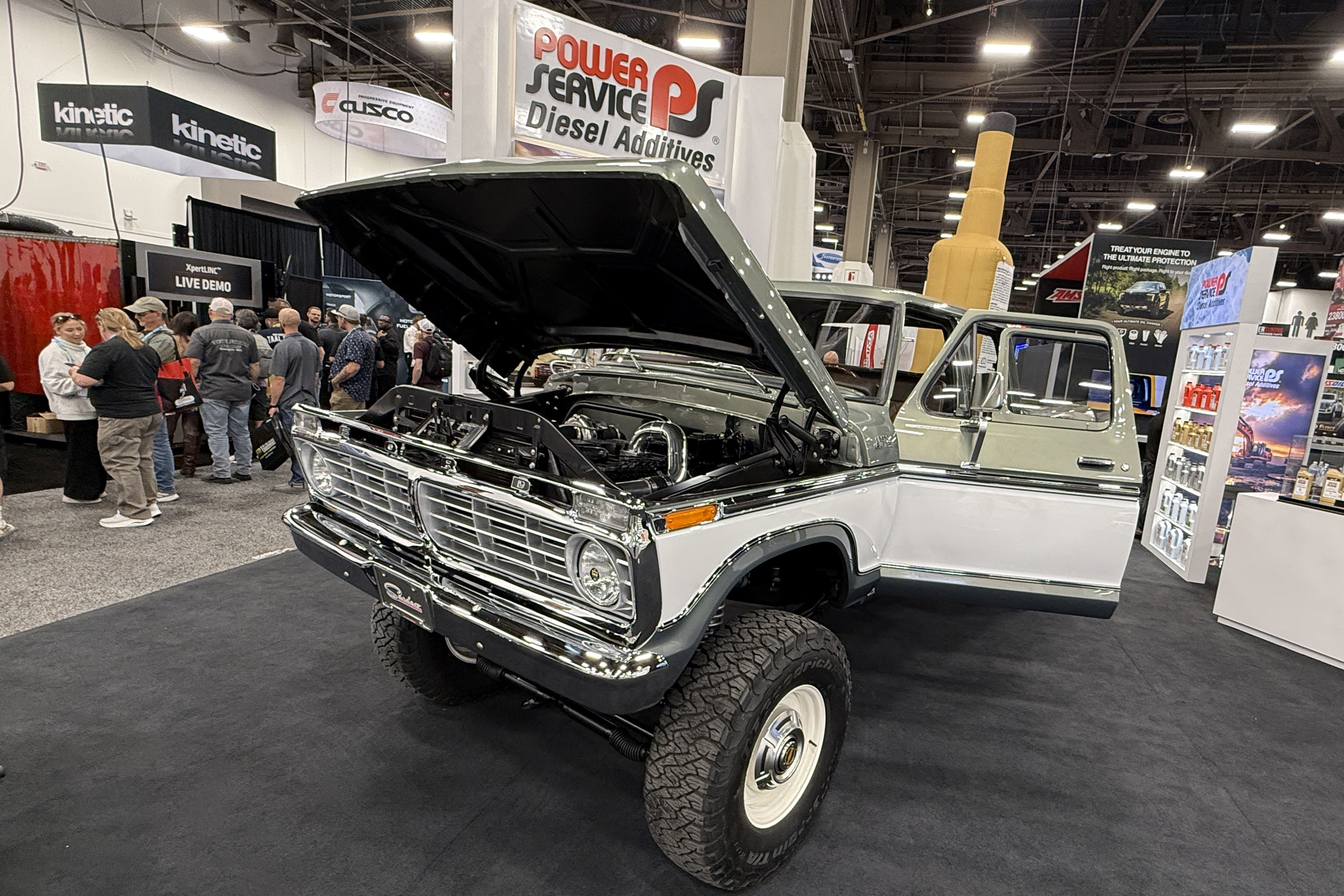
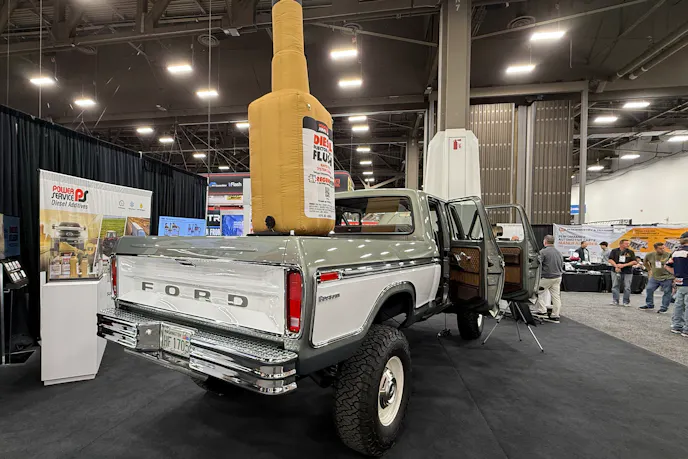
Walk the aisles at the SEMA Show and you’ll find no shortage of late-model trucks wearing more lights than a stadium. That’s exactly why the truck parked in the Power Service booth stops people in their tracks. It’s a 1977 Ford F-250 Crew Cab, dressed in two-tone Moss Green and white, riding on steel wheels with old-school hubcaps, and hiding a 12-valve Cummins that will make any mechanical-injection devotee grin.
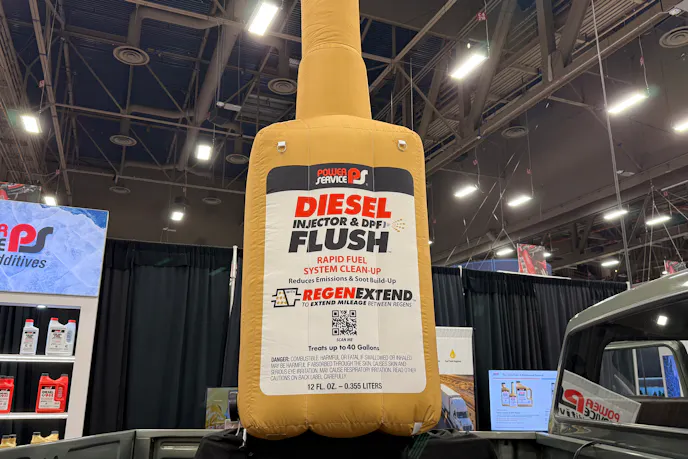
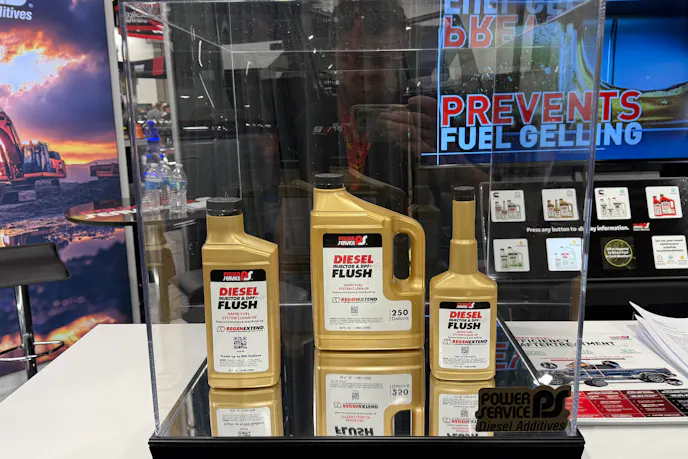
It’s also an interesting partner for the company’s biggest news of the week. Power Service used the show to release new field and dyno data marking one year since it launched Diesel Injector & DPF Flush, a product aimed squarely at the modern, emissions-equipped diesels that sit at the opposite end of the spectrum from this Ford. Spend a few minutes with both, though, and the pairing makes more sense than you might expect.


A Dentside That Looks The Part
The 1973 to 1979 Ford trucks, known to the faithful as “dentsides” for the indented body line that runs down their flanks, have become one of the hottest platforms in the classic truck world. Crew Cab versions are the hardest to find and the most coveted, and this one has been treated accordingly. It still wears its factory “F250 Custom” badging, along with bright trim that has clearly seen a polishing wheel or two.
The paint is the first thing that grabs you. Rather than chase a modern color, the builders went with genuine Ford Moss Green, mixed to code 915753 and laid down in PPG Deltron basecoat by Sanders Street Rods. Paired with a white lower body, it’s a period-correct combination that looks better here than it ever did on a dealer lot in 1977.
The wheels follow the same philosophy. Detroit Steel Wheels with OE-style hubcaps give the truck a factory-fresh look from a distance, while Warn locking hubs and a set of chunky all-terrain tires hint that this rig isn’t just for show.
Mechanical Cummins, Turned Up
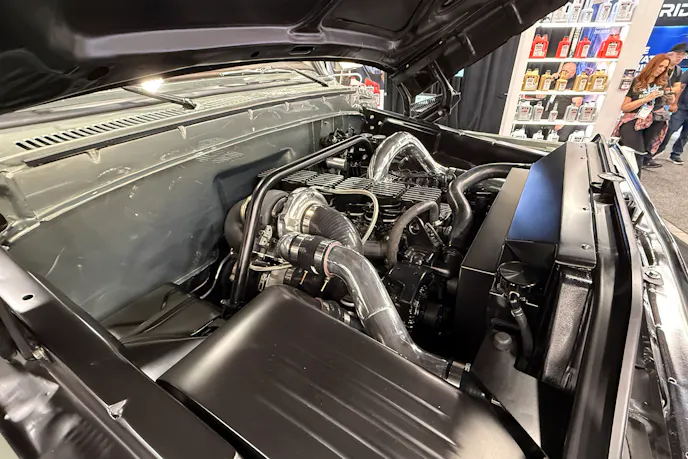
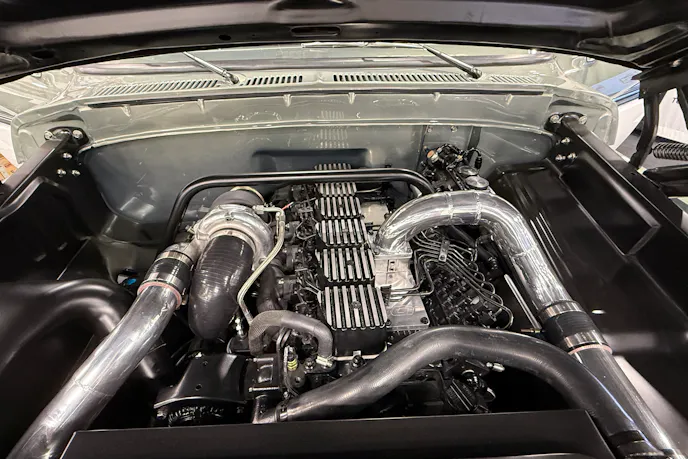
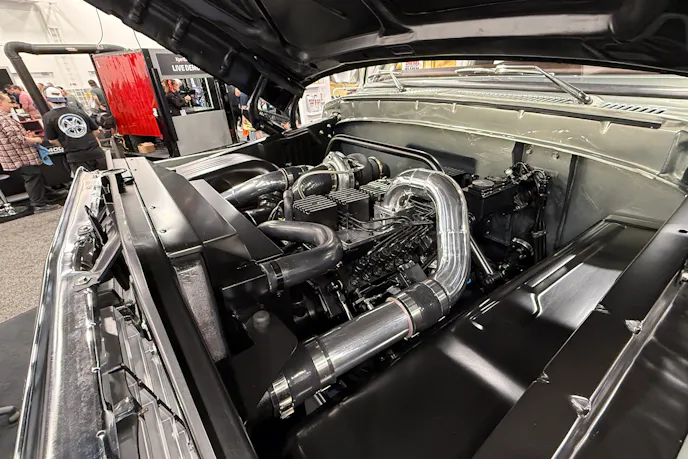
Pop the hood and the restomod story takes a hard turn toward performance. In place of whatever Ford originally installed sits a 12-valve Cummins, the mechanically injected engine that built much of the diesel aftermarket. And this one has been given the full treatment.
Boost comes from a Diesel Power Source Stage 3 compound turbo kit pairing an S363 with an S480, a combination that delivers quick spool down low and serious airflow up top. Fueling upgrades start with Power Driven Diesel .025 delivery valves and 4K governor springs, which let the engine pull well past its factory rev limit. AFC tuning hardware, including a foot, max travel kit and live controller, sharpens the fuel delivery curve, and Dynomite Diesel Stage 2 SAC injectors put that fuel where it needs to go.
The builders didn’t stop at fuel and air. A Hamilton Cams 165-pound valve spring package with titanium keepers keeps the valvetrain under control at higher rpm, and ARP 425 head studs keep the head clamped down under boost. A FASS TS010 lift pump keeps the injection pump fed with clean, steady supply.


Built To Drive, Not Just Display
Power is only useful if the driveline can take it, so the original Ford transmission gave way to a 4L80 built with Jake’s Performance parts. The heavy-duty four-speed automatic is a proven choice behind high-output diesels and adds overdrive for more relaxed highway cruising.
Underneath, an FFS four-link kit provides six inches of lift, with King shocks handling damping duties. It’s enough height to give the truck a confident stance without tipping it into caricature, and the four-link setup should ride far better than the leaf-sprung front end it replaced.
The Flush, One Year Later
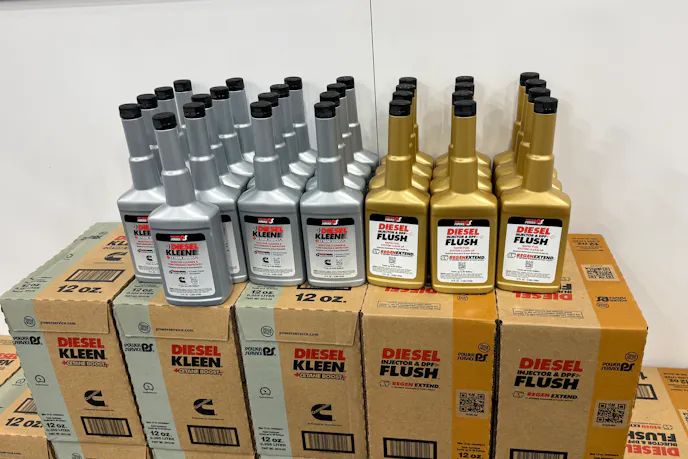
While the F-250 draws the crowd, Power Service’s data is what the company came to talk about. In a 20-tank commercial field study of 2025–2026 GMC Sierra 1500 Duramax trucks, a regular treatment regimen of Diesel Injector & DPF Flush and Diesel Kleen + Cetane Boost cut diesel exhaust fluid consumption by 60.2 percent and improved fuel economy by 11.53 percent.
In practical terms, the company says drivers covered more than 2,500 additional miles on a standard 5.4-gallon DEF tank, nearly halving the number of refills. The diesel-to-DEF dosing ratio fell from 2.8 percent to 1.1 percent, the interval between DPF regenerations stretched by 65.7 percent, and NOx output dropped 29 percent. Separate dynamometer testing showed an immediate 6.9 to 8.5 percent gain in peak torque and horsepower.
The explanation starts at the injector. As internal deposits build, spray patterns degrade from a fine mist into a coarser stream, and fuel that doesn’t burn completely turns into soot. That soot loads the DPF, triggers fuel-wasting active regens and forces the SCR system to work harder, consuming more DEF. Clean the injectors, the reasoning goes, and every stage downstream benefits.
“Injector deposits build up slowly, so most drivers don’t notice the lost power and mileage until it’s already costing them,” said Garth Redifer, Vice President of Sales at Power Service.
With diesel averaging near $6.30 a gallon nationally, Power Service estimates the fuel economy gains alone could save a typical pickup owner about $600 a year, based on 15,000 miles annually and a 16-mpg baseline. As with any manufacturer-run testing, individual results will vary, but the numbers are substantial enough to get the attention of anyone running a modern diesel.
The product’s proprietary REGENEXTEND formula targets deposits in the injectors, turbo components, EGR and DPF, and it’s available in 12-, 26- and 64-ounce sizes at retailers including Walmart, Amazon, Tractor Supply, Love’s and Pilot Flying J.
Why The Pairing Works
At first glance, a mechanically injected 1977 Ford with no DPF or DEF tank seems like an odd showcase for an aftertreatment story. But both share the same fundamental truth: a diesel only makes power when fuel is delivered and burned cleanly. The builders of this F-250 spent heavily on injectors, delivery valves and a quality lift pump for exactly that reason. Power Service’s pitch is that modern diesel owners can protect that same principle from a bottle, and with Diesel Injector & DPF Flush approved for everything from farm equipment to personal pickups, there’s a case for treating the old iron too.
Either way, the Moss Green Crew Cab proves that diesel enthusiasm spans generations, and Power Service’s latest data suggests that the newest trucks on the road still have plenty to gain from a clean burn.


You might also like
Billet Beauty: The Aluminum Cummins That Stole AMSOIL’s SEMA Spotlight
Fleece Performance's 4,000-hp-capable billet aluminum Cummins block took center stage in Amsoil's SEMA booth.