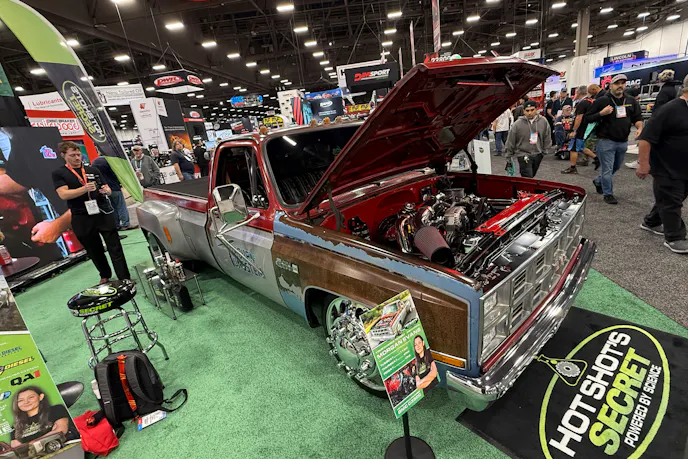
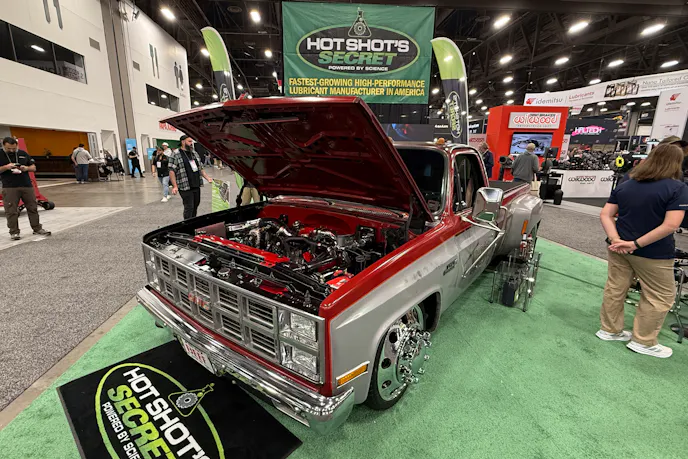
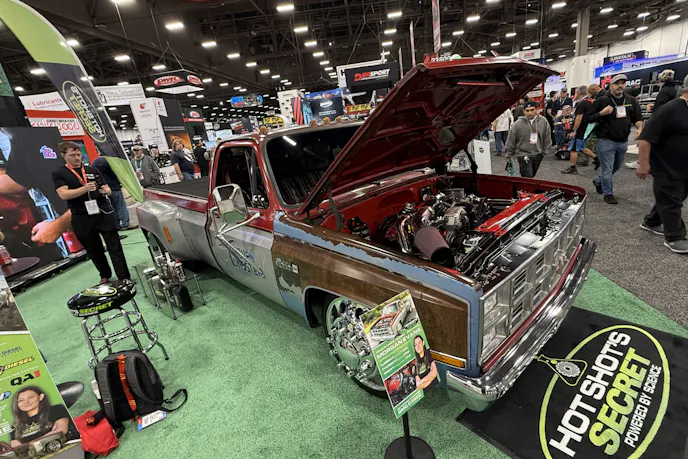
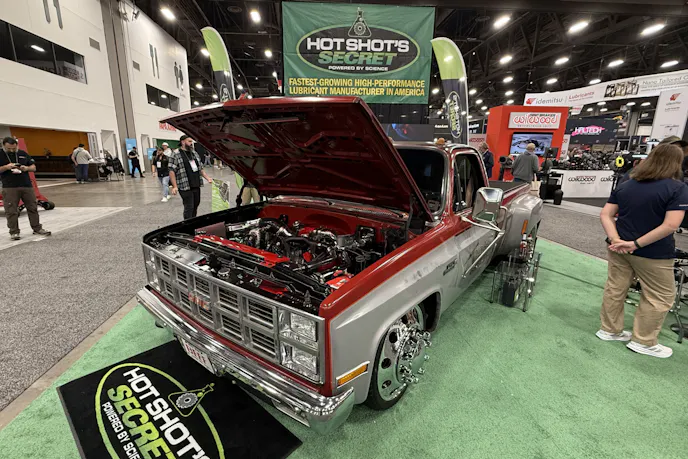
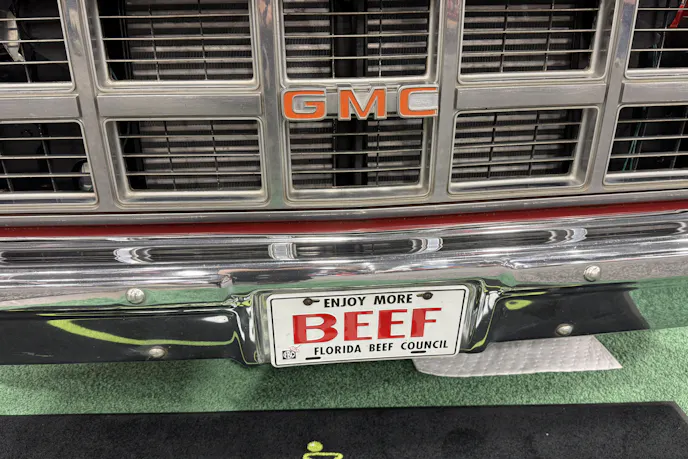
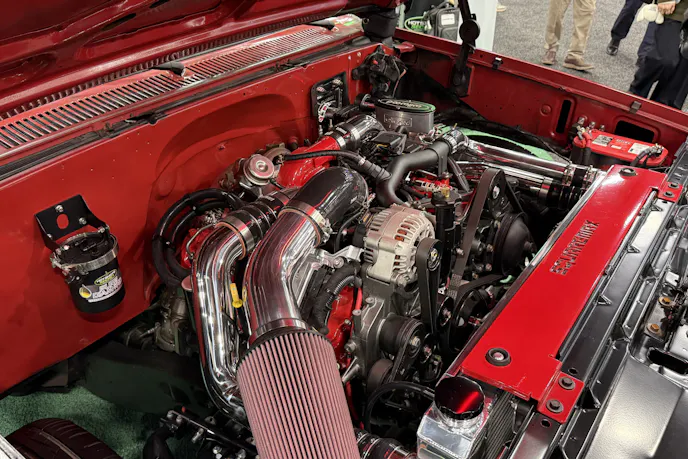
Most gas-to-diesel swaps run on a calendar measured in months. The 1982 GMC C3500 High Sierra dually that Hot Shot’s Secret rolled into its SEMA booth on opening day got five days. The truck belongs to Morgan Evans, who needed a rig that could tow across the country, and it arrived at her Florida garage on Monday, October 12, still breathing through its original gasoline big block. By Friday, October 16, it drove out under its own power with an LB7 6.6-liter Duramax under the hood and a ZF6 six-speed manual behind it.
The deadline is the headline, but the real story is in the parts list, and in how Evans and a small crew got a 44-year-old one-ton and a first-generation common-rail diesel to cooperate in a single work week.
Why An LB7
The mission was straightforward: build a truck that could tow coast to coast without stopping for fuel every couple hundred miles. A big-block gasser in a one-ton dually makes plenty of grunt, but it drinks deeply doing it, and a trailer only makes the habit worse.
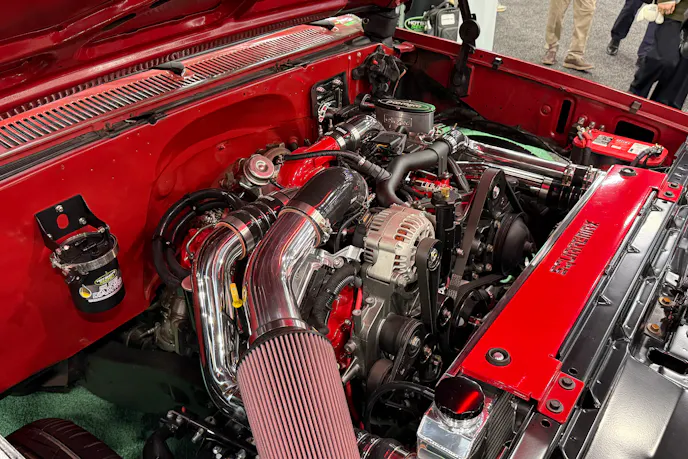
The LB7 is a smart answer for a swap like this. It’s the original Duramax, built for the 2001 through 2004 model years, with a cast-iron block, aluminum heads, Bosch high-pressure common-rail injection, and no factory EGR system. That last detail keeps the engine bay and the wiring simpler, which counts for a lot when the clock is running.
The ZF6 six-speed manual makes just as much sense. GM paired the two at the factory in its heavy-duty pickups, so the bellhousing, clutch, and engine combination is a known quantity. Picking a proven pairing let the crew spend its hours on integration rather than invention.
Out With The Big Block
Monday began with the obvious. The original big block and its transmission came out, leaving an empty frame that was designed two decades before the Duramax existed. Giving the diesel a proper home was the first real engineering problem of the week.
Precision Fabrication Plus supplied a powertrain mounting kit built for the swap, and a new transmission crossmember located the ZF6 correctly in the chassis. Getting this step right early pays off everywhere downstream. Engine position dictates driveshaft length and working angles, turbo and exhaust clearance, radiator placement, and how a larger, heavier diesel shares space with the steering shaft and firewall. Bolt-in mounts took most of the guesswork out of that equation and kept the tape measure from becoming the bottleneck.
Feeding The Duramax
A common-rail diesel has no interest in a fuel system built to feed a carburetor, so the old one went away entirely. A new fuel tank and lift pump now supply the engine, delivering the steady pressure and volume the high-pressure pump depends on. On a diesel, a starved CP3 is an expensive lesson, so this is not a place to economize.
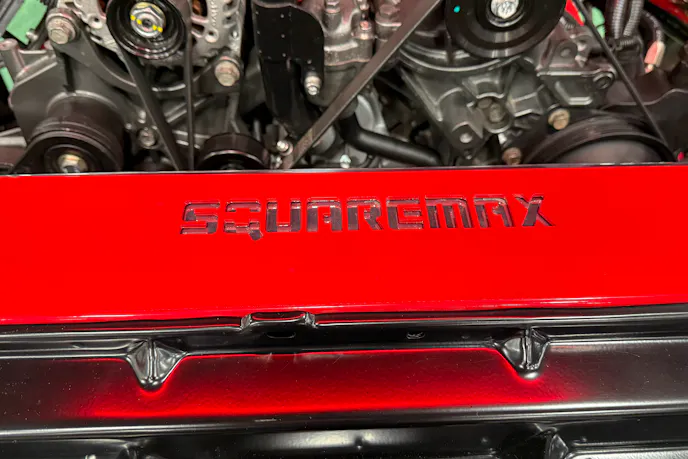
On the engine itself, S&S Diesel Motorsport provided a Duramax SuperSport CP3 and a set of SAC00 LB7 injectors. Injectors have always been the LB7’s soft spot, and because they live under the valve covers, replacing them is a job nobody wants to do twice. Installing fresh S&S units during the swap, while the engine was out in the open, tackles the platform’s best-known weakness before the truck ever hooks up a trailer.
Air, Exhaust, And Cooling
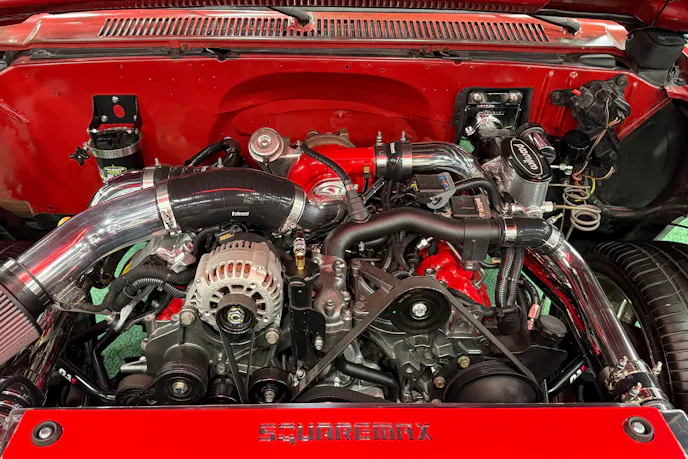
BD Diesel handled the hot side with exhaust manifolds, up-pipes, and a Screamer turbo. Fresh manifolds and up-pipes are worth the effort on an LB7, since the factory pieces are known to leak with age, and the Screamer gives the old GMC a modern charger to match its modern engine. Past the turbo, the crew fabricated a custom exhaust on site. That’s the kind of job that resists planning on paper, because the routing depends on exactly where the engine, transmission, and crossmember ended up in the frame.
Cooling got the same clean-sheet treatment. A diesel rejects a lot of heat, and towing turns that up further. The truck received a new core support with radiator, a complete Precision Fabrication Plus cooling system, and a new intercooler system to bring charge temperatures down. Up front, an AMD premium radiator support with dual headlamps ties it together and keeps the square body’s face looking like it should.
Driveline, Brakes, And Suspension
Behind the Duramax, the ZF6 gets a hydraulic clutch, which sidesteps the headache of adapting a mechanical linkage in a cab that never anticipated this transmission. Rather than wait on a new driveshaft, the crew repurposed an existing shaft and customized it to fit the new drivetrain, a practical call when every hour counted.
Brakes required more thought than most swaps get. A diesel doesn’t produce the manifold vacuum that a gas engine supplies to a conventional vacuum booster, so Precision Fabrication Plus provided a Hydroboost braking system that draws assist from power steering pressure instead. In a heavy dually built to haul a loaded trailer, that’s a safety upgrade as much as a compatibility fix.
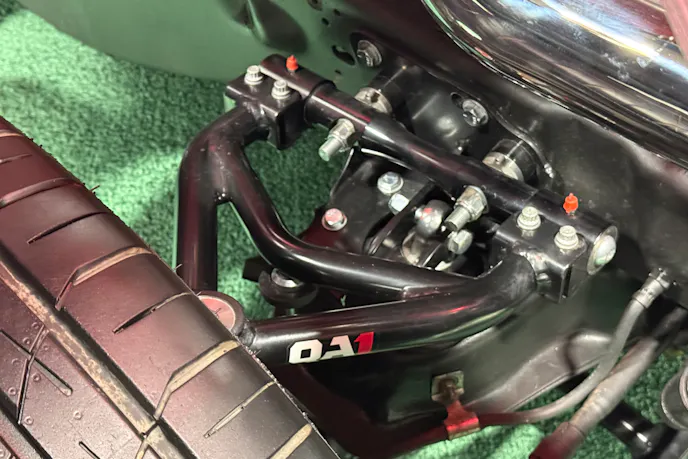
The extra weight of the diesel over the front axle also called for suspension changes. QA1 supplied a front coilover system and double-adjustable rear shocks, giving the truck tunable damping for both the empty ride home and the long haul under load.
Fluids And First Fire
With the hard parts in place, Hot Shot’s Secret filled the truck with its own lineup. Green Diamond PRO Engine Oil went into the Duramax, Blue Diamond G56 6-speed Manual Transmission Fluid went into the ZF6, and Blue Diamond Gear Oil went into the axles. Diesel Extreme and Everyday Diesel Treatment (EDT) fuel additives round out the package, giving the fresh injectors and pump clean, well-lubricated fuel from the first mile.
By Friday, every wire was terminated and every line was plumbed. The crew turned the key, the LB7 lit, and the old GMC drove out of the garage on schedule. Kyle Fischer, Hot Shot’s Secret Director of Field Marketing & Partnerships, said many people would have called the five-day timeline impossible, and that hearing the Duramax start for the first time was the moment everyone involved had been working toward.
You might also like
Billet Beauty: The Aluminum Cummins That Stole AMSOIL’s SEMA Spotlight
Fleece Performance's 4,000-hp-capable billet aluminum Cummins block took center stage in Amsoil's SEMA booth.