Allison Transmission’s story begins in 1915 with James A. Allison, who founded the Speedway Team Company in Indianapolis to support his Indianapolis 500 racing efforts. From the outset, Allison emphasized quality and accountability. A sign in his shop summed up the philosophy that would define the company for generations: “Whatever leaves this shop over my name must be of the finest work possible.”
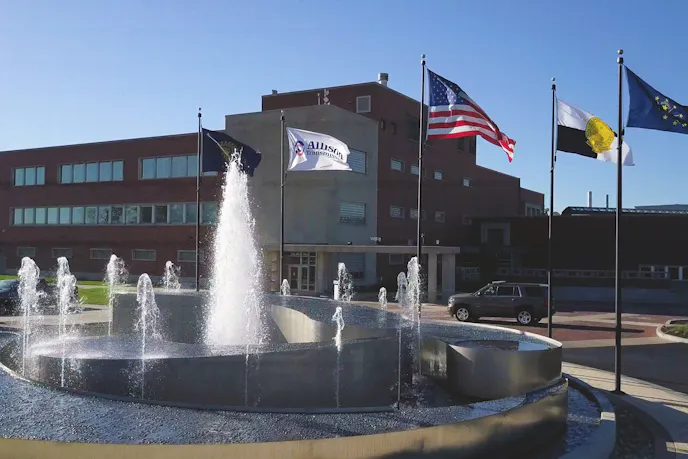
That commitment quickly extended beyond racing. When the United States entered World War I in 1917, Allison halted all motorsports activity and redirected his company to support the war effort. The Speedway Team Company produced aircraft engines, high-speed crawler tractors, tank components, superchargers, and reduction gearboxes. This early work established Allison as a precision engineering operation capable of supporting national-scale programs.
In 1920, the company was renamed Allison Engineering Company, reflecting its transition into a full-fledged industrial manufacturer. Allison earned recognition from the U.S. government for its work on Liberty aircraft engines, solidifying its reputation for reliability and workmanship. Following James Allison’s death, the company was sold in 1928 to General Motors, under the condition that its headquarters remain in Indianapolis—a requirement that still holds true today.
Under GM ownership, Allison expanded dramatically. As the Allison Division of General Motors, the company became a major contributor to U.S. military aviation. In 1937, its 12-cylinder V1710 aircraft engine passed 150-hour acceptance trials at Wright Field, becoming the first American engine to exceed 1,000 horsepower in that test. During World War II, Allison engines powered many frontline Allied aircraft, with production reaching thousands of engines per month.
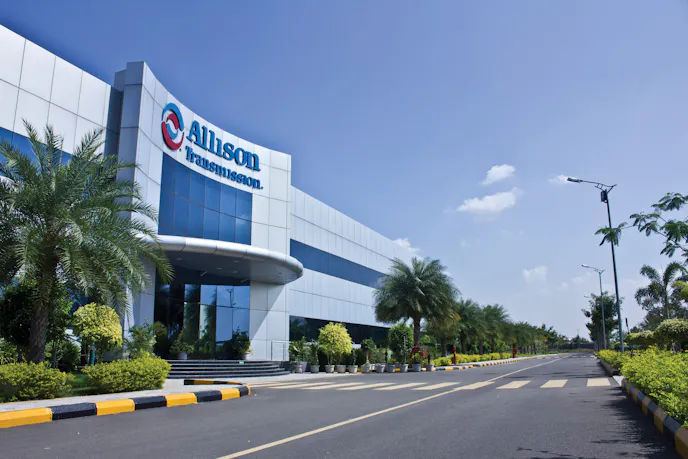
After the war, GM guided Allison into commercial applications. In 1947, Allison officially entered the commercial transmission market, supplying automatic transmissions to GM’s Truck and Coach Division. Allison-equipped buses would go on to transport millions of passengers across North America, establishing the company as a leader in automatic transmissions for heavy vehicles.
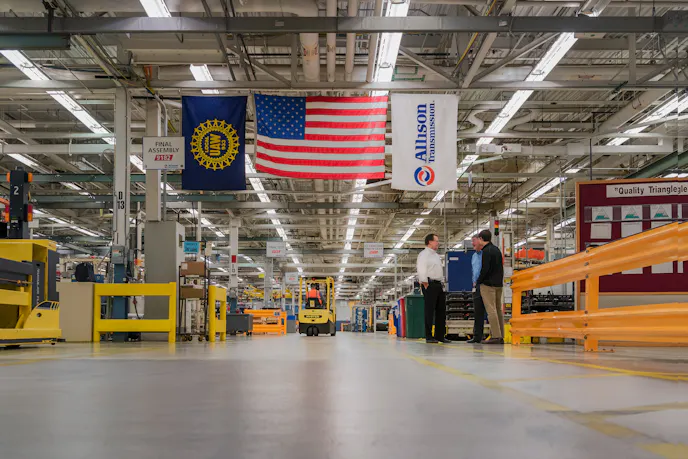
The decades that followed were marked by innovation. Allison developed early on-highway automatic transmissions, medium-duty truck automatics like the four-speed AT540, and fully automatic heavy-duty units for military, construction, and industrial use. In 1973, the merger of Allison and Detroit Diesel within GM further expanded Allison’s reach into heavy-duty and off-highway markets.
For nearly 80 years, Allison operated within General Motors before the company was divested by GM in 2007. Allison emerged as an independent manufacturer, later becoming a publicly traded company in 2012 (Allison Transmission Holdings Inc. under the symbol ALSN), while retaining its Indianapolis headquarters and focus on commercial-duty applications.
How This History Led To Modern Licensing Deals
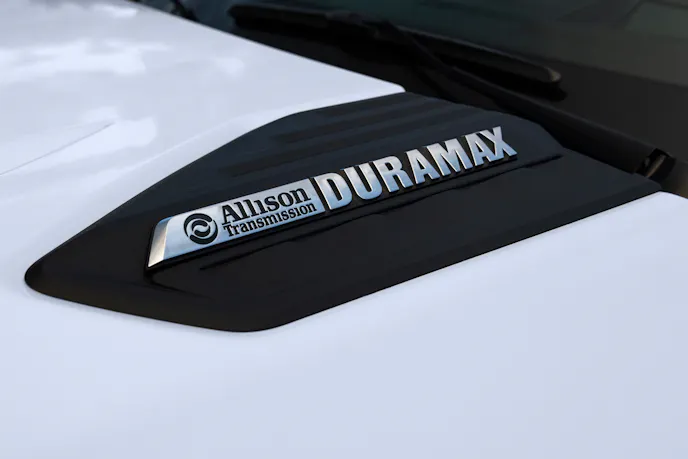
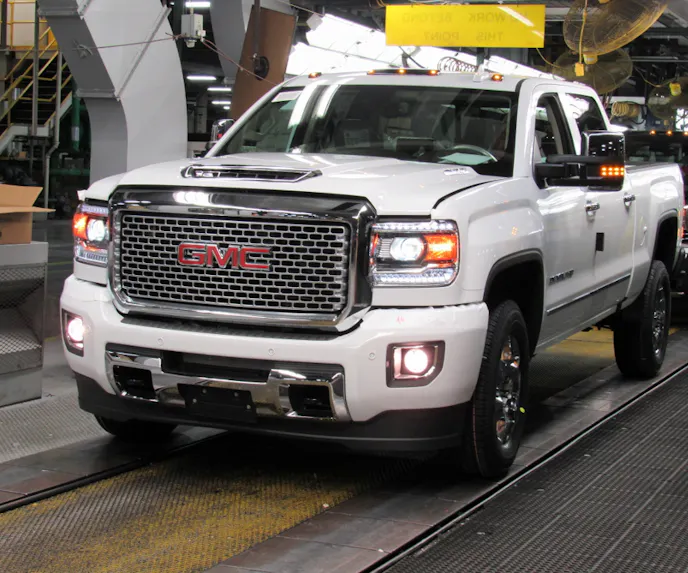
Allison-branded transmissions first appeared in GM’s Silverado and Sierra 2500HD and 3500HD pickups for the 2001 model year as true Allison-designed and Allison-built units, while Allison was still part of General Motors. After GM divested Allison in 2007, GM continued using genuine Allison 1000/2000 series transmissions under a trademark licensing agreement. In 2020, GM transitioned HD pickups to a GM-built 10-speed automatic while continuing to license the Allison name for branding purposes—a licensing arrangement that concludes for the 2026 model year.
Because Allison spent decades as a General Motors division, the Allison name became closely associated with GM trucks in the minds of buyers, even after the companies separated. That shared history made trademark licensing a natural next step. In later years, GM licensed the Allison name for use on certain heavy-duty pickup transmissions, allowing GM to leverage the brand’s reputation while continuing to engineer and build its own pickup-grade automatics.
Those licensing agreements were business arrangements, not technical partnerships. As Allison increasingly focused on commercial, vocational, and off-highway markets—and GM continued developing in-house pickup transmissions—the alignment that once made shared branding valuable naturally narrowed. The expiration of the latest license marks a significant shift, closing a chapter that began when Allison was still part of General Motors.
| Phase | Model Years | Transmission Used | Who Built It | Allison Name Usage | What This Era Means |
| Phase 1: GM-Owned Allison | 2001–2007 | Allison 1000 / 2000 series | Allison Transmission (GM division) | Not licensed (GM-owned) | True Allison-designed and Allison-built transmissions debuted in Silverado and Sierra 2500HD/3500HD pickups while Allison was still part of GM. |
| Phase 2: Independent Allison, Licensed Name | 2007–2019 | Allison 1000 / 2000 series | Allison Transmission (independent) | Licensed trademark | GM continued using genuine Allison hardware after selling the company, now under a trademark licensing agreement. |
| Phase 3: GM-Built 10-Speed, Licensed Allison Name | 2020–2025 | GM 10-speed automatic (10L1000) | General Motors | Licensed trademark | GM replaced the Allison hardware with its own 10-speed but retained the Allison name for branding continuity. This is the license that expires for 2026. |
You might also like
Understanding The Allison 1000 Transmission: Common Problems, Solutions, And Proven Upgrades
Learn the most common Allison 1000 transmission problems, proven upgrades, and reliability fixes for DuraMax diesel trucks from 2001–2019.