There are plenty of ways to modernize an old truck. You can hide a contemporary chassis beneath vintage sheetmetal, stuff the cabin with enough electronics to embarrass a new luxury pickup, or drop in an engine producing several times the power the original engineers ever contemplated. The difficult part isn’t adding modern hardware. It’s knowing when to stop.
At first glance, the basic recipe remains remarkably faithful to what made the Power Wagon such a formidable machine in the first place. There’s an upright cab, separate fenders, a tall and purposeful stance, four-wheel drive, and an inline-six under the hood. Look closer, however, and about 70 years of mechanical evolution begin to reveal themselves.
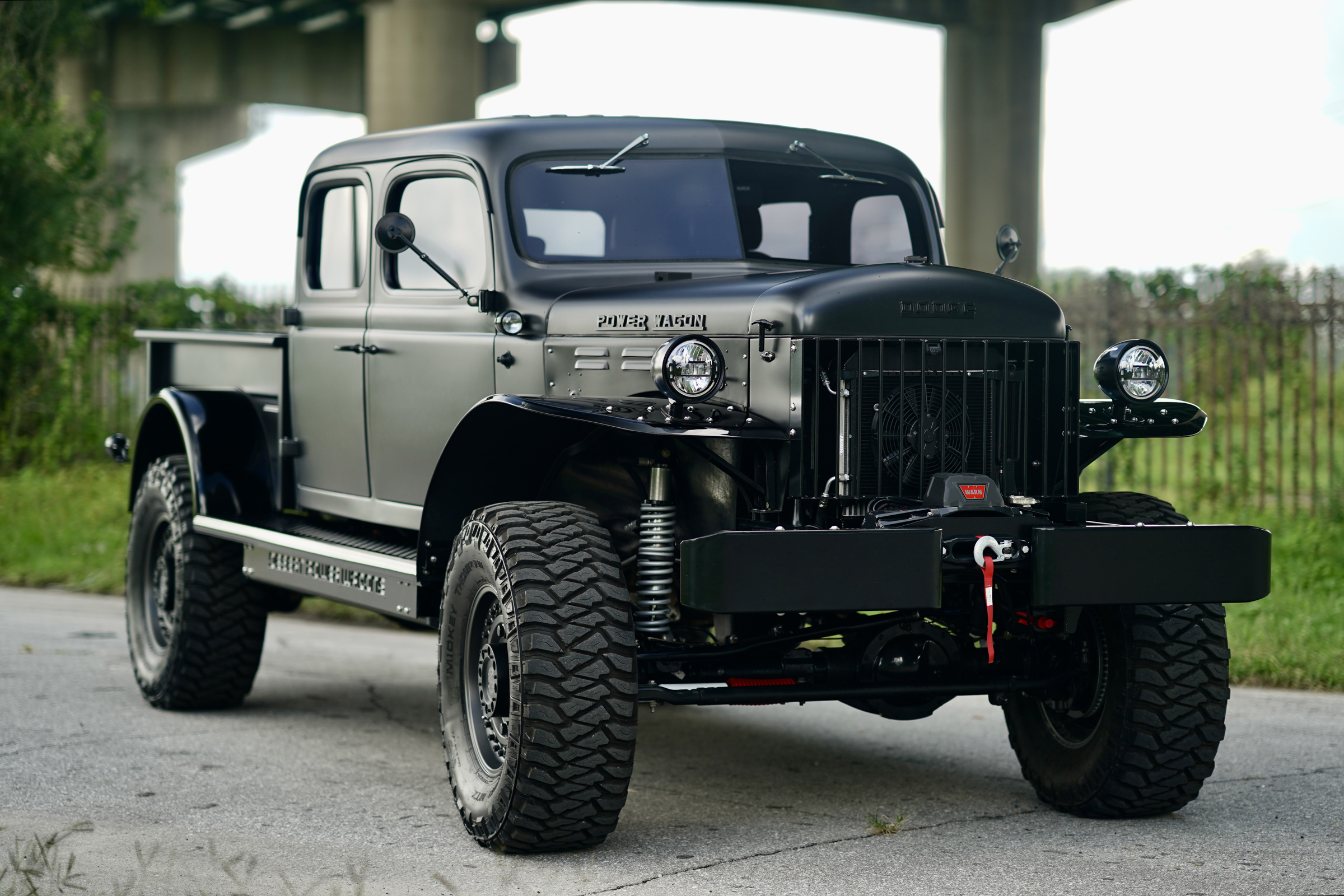
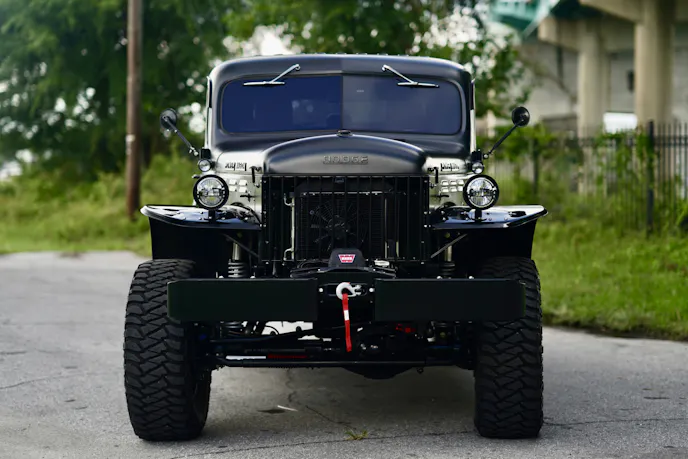
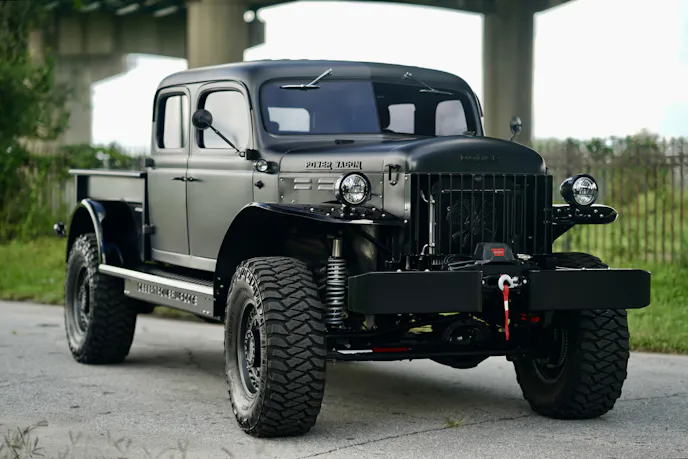
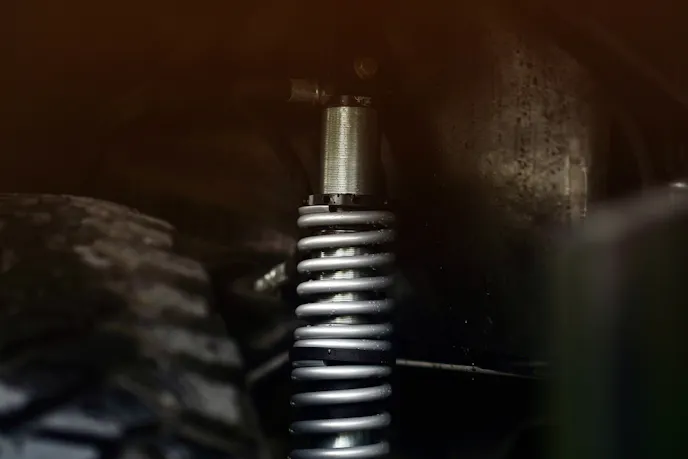
That inline-six is now a 6.7-liter Cummins turbo diesel. Behind it is a G56 six-speed manual transmission. FOX remote-reservoir coilovers have replaced the suspension technology of the early postwar years, 40-inch tires fill the wheel openings, and modern steering and brakes make controlling the whole thing considerably less adventurous.
Yet it still looks unmistakably like a Power Wagon.
From Flathead Six To Cummins Six
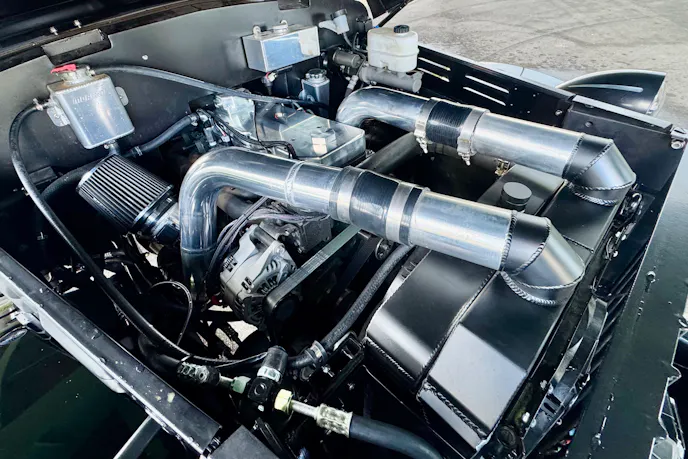
When Dodge was building Power Wagons in the early 1950s, the truck’s inline-six wasn’t there to impress anyone with a spec sheet. It was simple, durable, and expected to work. Desert Power Wagons retained the six-cylinder layout but jumped forward several generations by installing a 6.7-liter Cummins turbo-diesel inline-six.
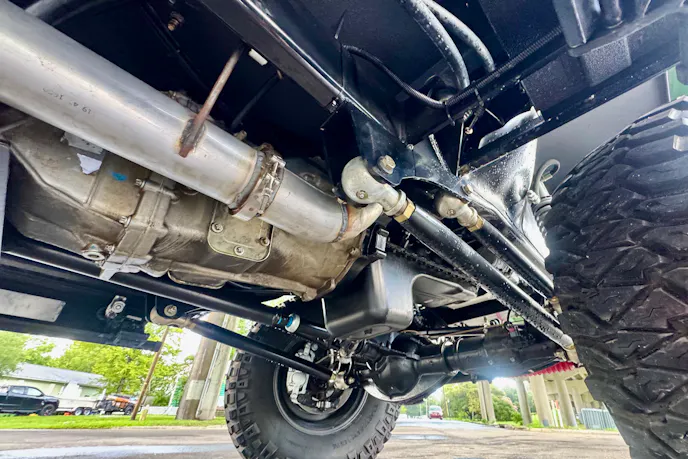
Rather than simply dropping the Cummins between the fenders and calling the conversion finished, the diesel installation is supported by updated fuel, cooling, intake, exhaust, electrical, and engine-management systems. A custom turbo-back exhaust handles spent gases, while custom front and rear driveshafts connect the modern powertrain with the truck’s four-wheel-drive hardware.
More importantly, Desert Power Wagons resisted one of the easiest temptations when modernizing a vintage vehicle: making everything automatic.
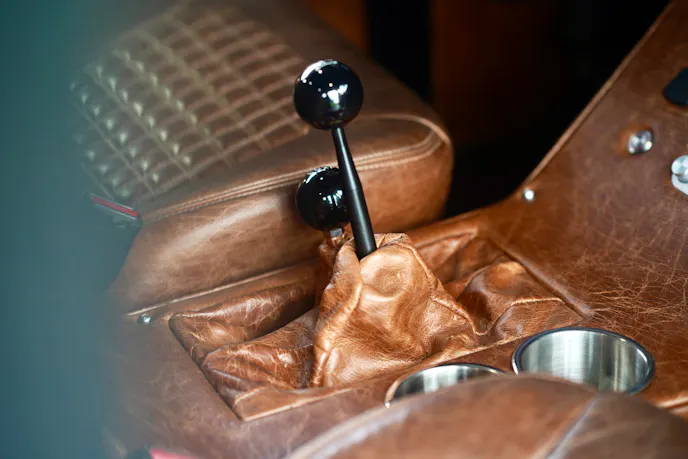
Bolted behind the Cummins is a G56 six-speed manual transmission. That means this 1953 Dodge still has a clutch pedal, and there is something deeply appropriate about rowing gears behind a big Cummins in a machine with this much mechanical presence. The G56 also gives the drivetrain an interesting mix of eras. It delivers the benefits of a modern six-speed gearbox without insulating the driver from the machinery doing the work.
The same thinking extends to the four-wheel-drive system. The transfer case is manually shifted, so engaging four-wheel drive remains a deliberate mechanical act rather than something accomplished by tapping an icon on a screen.
This combination of a 6.7-liter Cummins, six-speed manual gearbox, manual transfer case and custom driveshafts arguably defines the personality of the entire truck. There is modern diesel capability underneath your right foot, but the driver remains an active participant.
A Chassis Worthy Of The Drivetrain
Dropping a modern Cummins into a 1953 chassis without addressing everything around it would be a questionable exercise, particularly when the finished truck is expected to do more than idle across a show field.
Consequently, the Power Wagon was comprehensively rebuilt from the chassis upward.
The frame was stripped, sandblasted, refinished, and powder coated as part of the process. The original suspension arrangement also gave way to FOX remote-reservoir coilover shocks paired with Eibach coil springs.
That’s an enormous leap from the underpinnings conceived for a working truck in the 1940s and ’50s, but it’s also necessary when you look at what now resides beneath the fenders.
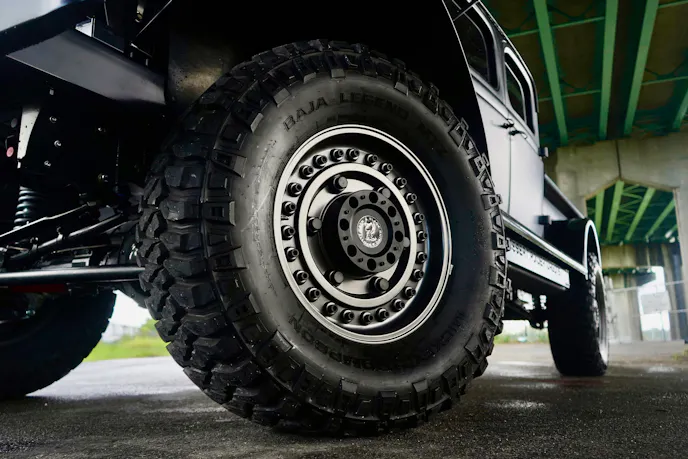
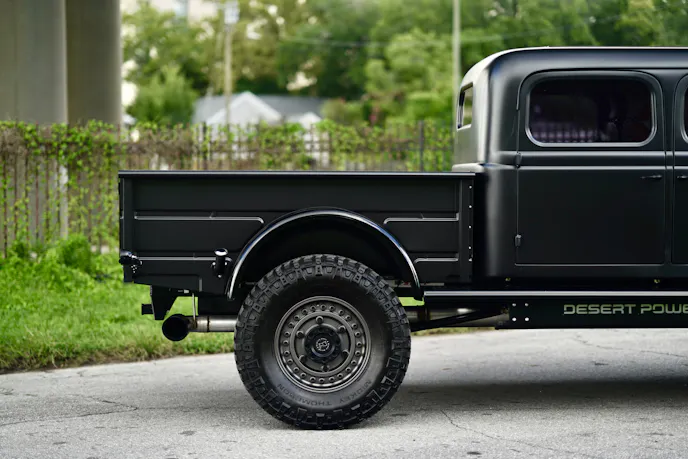
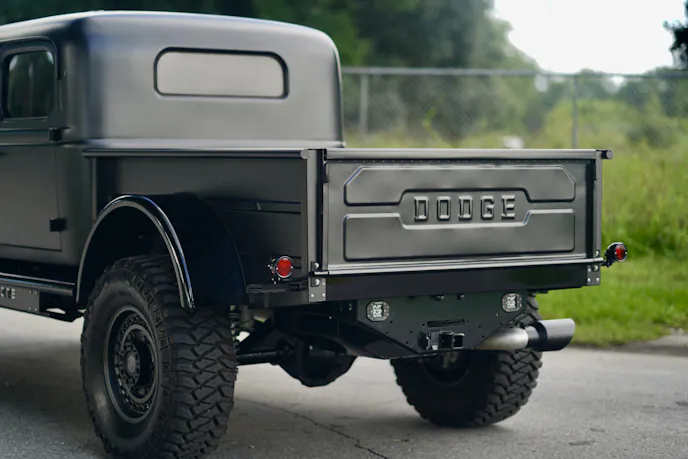
Twenty-inch Black Rhino Armory wheels carry massive 40×14.50R20LT tires. They’re big enough to radically change the truck’s presence without making the Power Wagon look confused about its purpose.
Keeping that combination pointed in the intended direction is a power-assisted steering system with revised steering components and modern dampers. Bringing it back down from speed is handled by upgraded braking hardware and stainless braided brake lines, while an E-Stopp electric parking brake adds another thoroughly modern component to the package.
And when traction and 40-inch tires aren’t enough, there’s a Warn VR EVO 12-S winch mounted up front with a 12,000-pound rating.
The Shape That Started It All
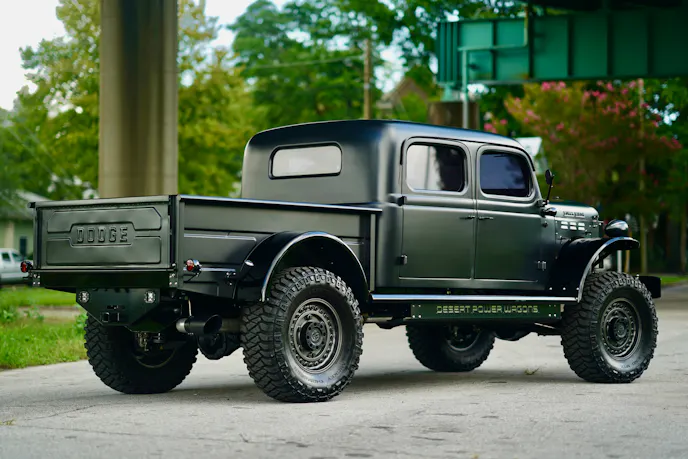
It would have been easy for all that mechanical work to overshadow the 1953 body, but the sheetmetal remains the visual anchor.
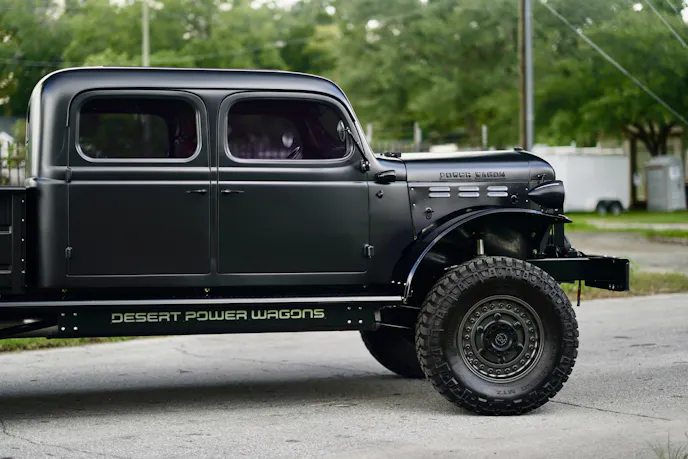
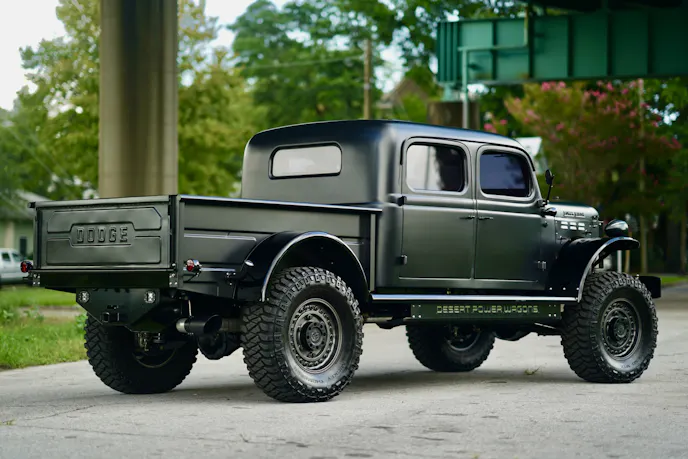
The classic Power Wagon has never needed much decoration. Its upright grille, broad separate front fenders, narrow cab, exposed running boards, and split windshield communicate its intentions better than any modern graphics package could.
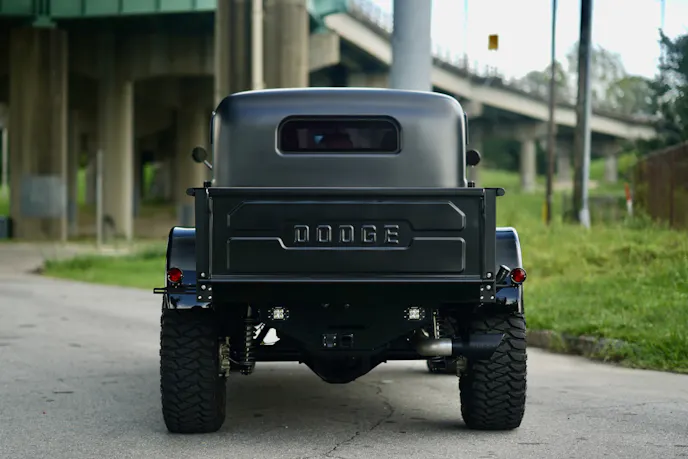
Tisdale Coachworks extensively rebuilt and refined the vintage body architecture, while Desert Power Wagons chose BMW C64 Frozen Deep Grey for the exterior. Its satin-matte metallic appearance works surprisingly well against the industrial shape.
The result avoids one of the common pitfalls of heavily modified classics. It doesn’t look like a new truck dressed in old sheetmetal. Instead, it looks as though someone quietly continued developing the original Power Wagon for another seven decades.
Even the AMP Research PowerStep running boards play into that philosophy. With 40-inch tires underneath, some assistance climbing aboard is certainly welcome. But because the steps retract, they don’t clutter the vintage profile once everyone is inside.
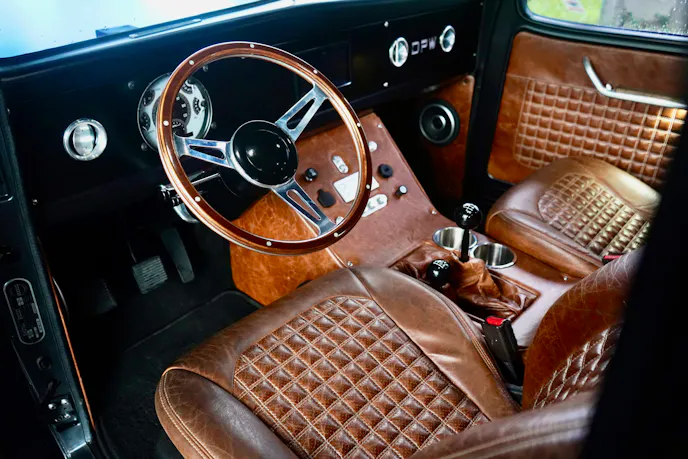
1953 On The Outside, Definitely Not Inside
Open the door and the illusion of period correctness disappears rather quickly.
Buffalo Tan leather dominates the cabin, complemented by custom upholstery, finished interior panels, and extensive Dynamat sound insulation. It’s a considerable departure from the utilitarian environment that greeted a Power Wagon driver in 1953, but this isn’t intended to be a museum restoration. It’s a truck built to be driven.
Dakota Digital VHX instrumentation provides modern information while maintaining an analog-looking presentation. Vintage Air’s Gen-V climate-control system takes care of heating and air conditioning, and an American Autowire Highway 22 Plus harness forms the backbone of the updated electrical architecture.
Power windows, a modern tilt steering column, upgraded interior lighting, contemporary switches, USB charging, and modern power-lock systems further erase many of the compromises normally associated with driving something built during the Truman administration.
A Kenwood digital multimedia receiver feeds a JL Audio system incorporating C2-series speakers, dual 8-inch subwoofers, and an RD900/5 five-channel amplifier. There’s also a 360-degree camera system, a particularly sensible addition when you’re trying to see around the towering fenders of a 1953 truck sitting on 40-inch tires. Remote start, upgraded windshield wipers and washers, and LED interior and exterior lighting complete the modernization.
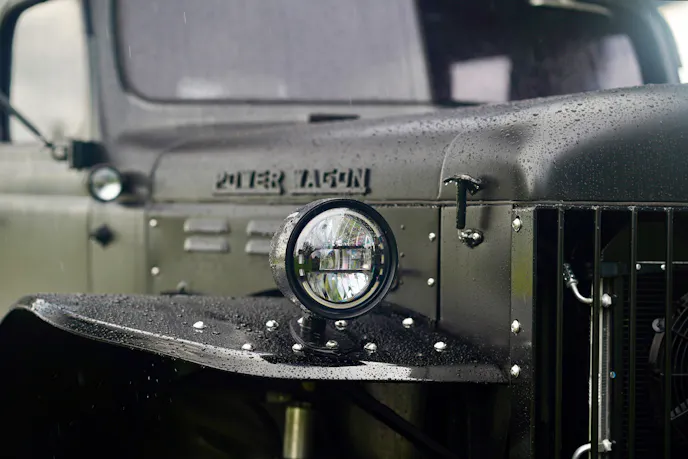
Restoration Isn’t Really The Right Word
Restoration normally implies returning something to a previous state. Desert Power Wagons has done almost the opposite. The company retained the visual and mechanical themes that defined the Power Wagon while asking what those ideas might look like after another 70-plus years of development.
The original inline-six has become a turbocharged Cummins inline-six. The driver still operates a clutch and shifts the transmission, except there are now six forward gears to work with. Four-wheel drive remains manually selected. Driveshafts still carry power toward both ends of the truck. The mechanical relationship between driver and machine hasn’t disappeared; the hardware performing the work has simply become dramatically more capable.
And the philosophy carries throughout the truck. The suspension uses FOX remote-reservoir coilovers and Eibach springs, but the Power Wagon still stands tall and purposeful. Modern brakes and power steering make it easier to control without trying to erase the sensation of driving a large mechanical object. The cabin has air conditioning, digital instrumentation, cameras, serious audio equipment, and power accessories, yet one glance through the split windshield tells you exactly what you’re sitting in.
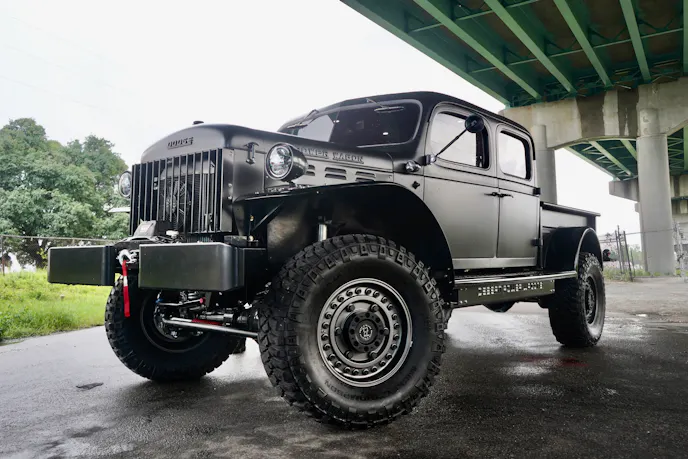
A Power Wagon Meant To Work
Perhaps the greatest compliment that can be paid to a build of this caliber is that it still looks usable. Some meticulously constructed vintage trucks eventually become prisoners of their own craftsmanship. The paint becomes too perfect, the undercarriage too polished, and the investment too substantial to risk dirt, rocks, rain, or mileage.
Desert Power Wagons’ philosophy for the truck is considerably simpler: “Drive it. Travel in it. Get it dirty.” And perhaps most importantly: “Use the winch.”
Those few words explain the build better than another page of specifications could.
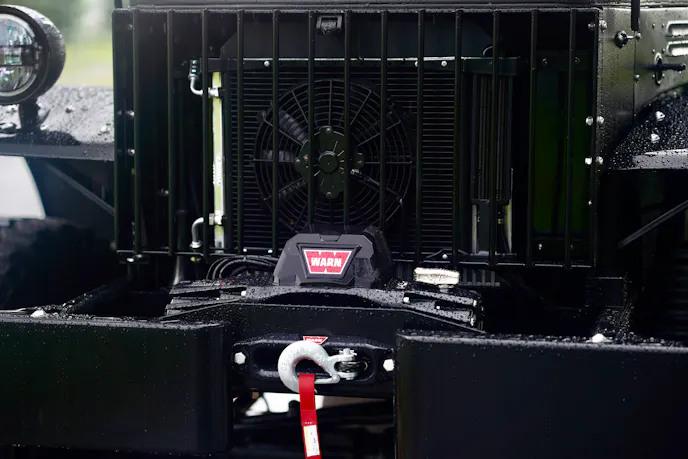
There’s a 12,000-pound WARN winch because someone might need it. There are 40-inch tires because the truck should be capable of leaving pavement. There is modern climate control because traveling in an old truck is considerably more enjoyable when the occupants aren’t being slow-roasted. And there is a Cummins connected to a G56 manual because operating the machine should remain part of the experience.
That’s what separates this Power Wagon from a simple restomod. It’s not really trying to turn a 1953 Dodge into a modern truck. Nor is it pretending the past was mechanically perfect.
Instead, Desert Power Wagons has taken the fundamental pieces that made the Power Wagon special — an inline-six, four-wheel drive, honest styling, heavy-duty construction, and an expectation that the truck should actually accomplish something — and rebuilt those ideas using modern hardware.
You might also like
This 1977 F-250 Is A 7.3L Power Stroke Franken-Ford With Super Duty DNA
This 1977 Ford F-250 is a combination of several trucks and includes a 7.3-liter Power Stroke V8, custom cab, and 2000 Super Duty dash.