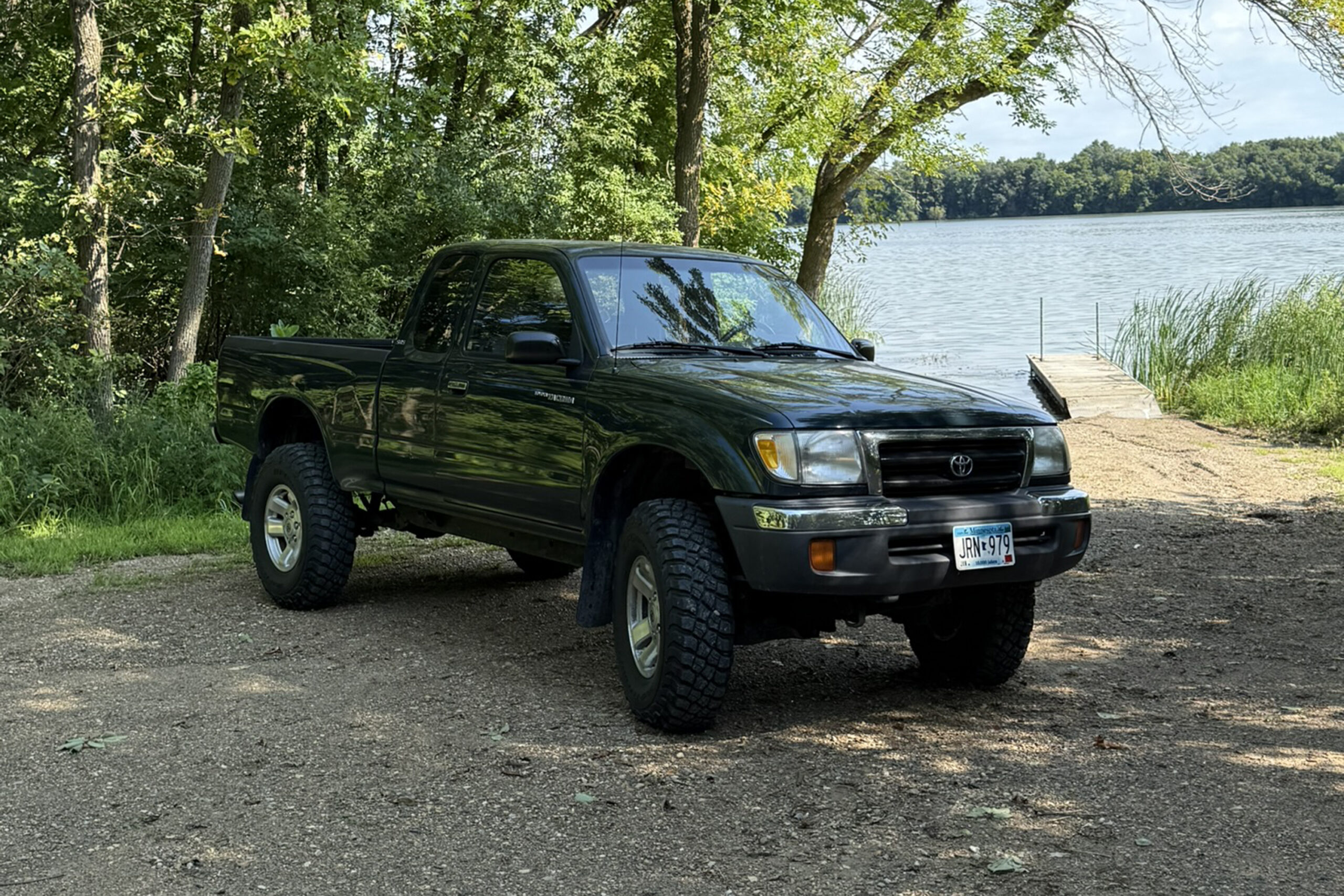
Toyota has long been celebrated for building small pickups that last forever, but even the most loyal Tacoma owners will admit that the early trucks—especially the first-gen models—were never known for prodigious torque. Reliable? Absolutely. Efficient? Reasonably. But when it came to low-rpm grunt or stump-pulling diesel character, the Tacoma was always left wanting. Until now.
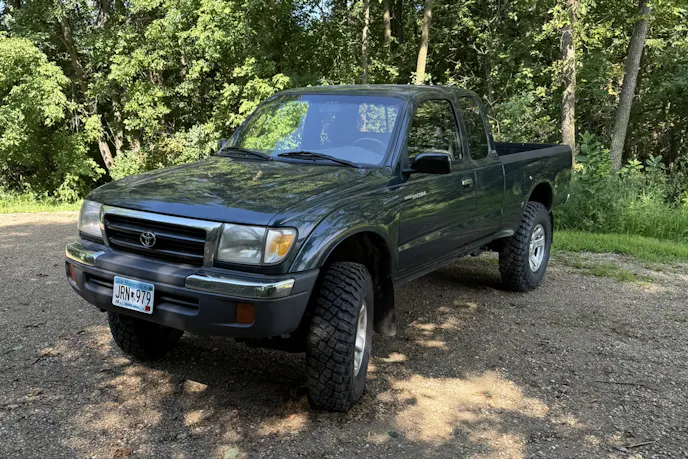
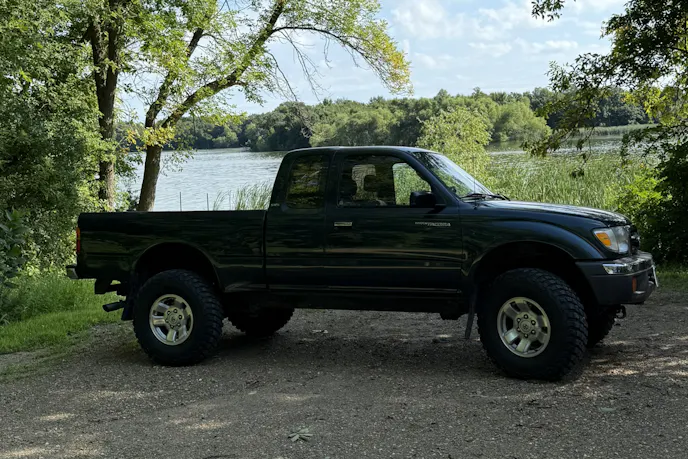
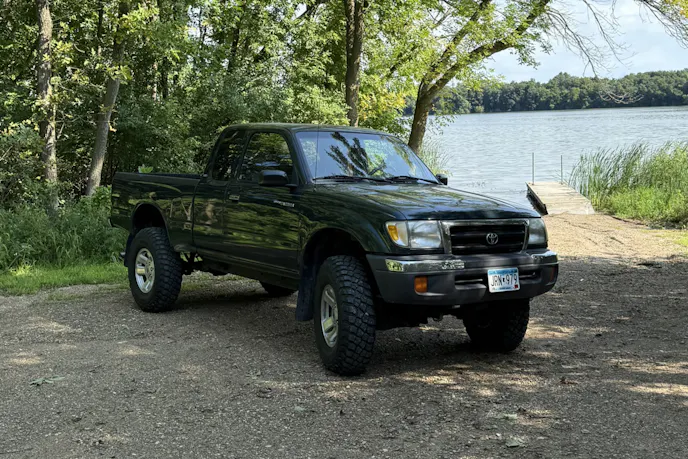
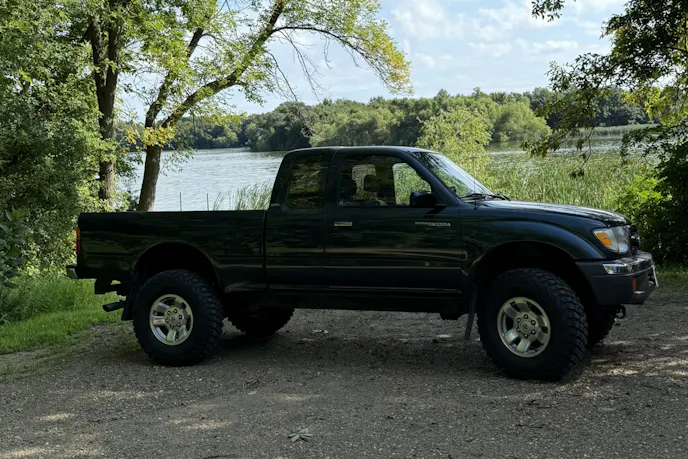
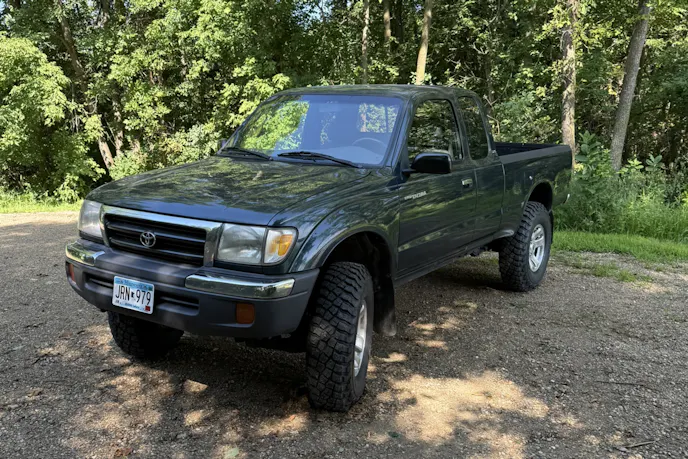
Diesel-swapped Tacomas have taken many forms over the years—Cummins R2.8s, OM617s, and even the odd small-block diesel from overseas markets. But one of the smartest (and increasingly popular) conversions pairs Toyota’s bombproof drivetrain with Volkswagen’s legendary 1.9L TDI. This extended-cab 1998 Toyota Tacoma, repowered with a 2006 BRM-code TDI courtesy of Diesel Conversion Specialists (DCS), might be the cleanest example of how well the diesel-swapped Tacoma recipe works.
Why The Volkswagen TDI? The Little Diesel That Could
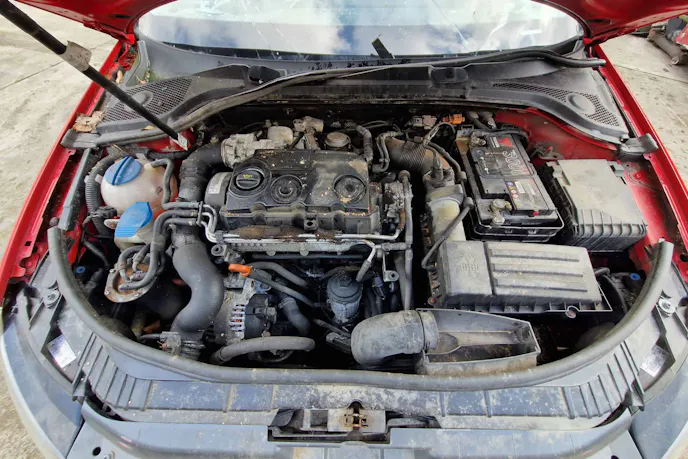
Volkswagen’s turbodiesel inline-four has powered everything from Golfs to Passats to Skodas across global markets. While American buyers mostly saw them in compact sedans and wagons, the TDI earned a cult following because of its unusual blend of torque, simplicity, efficiency, and durability.
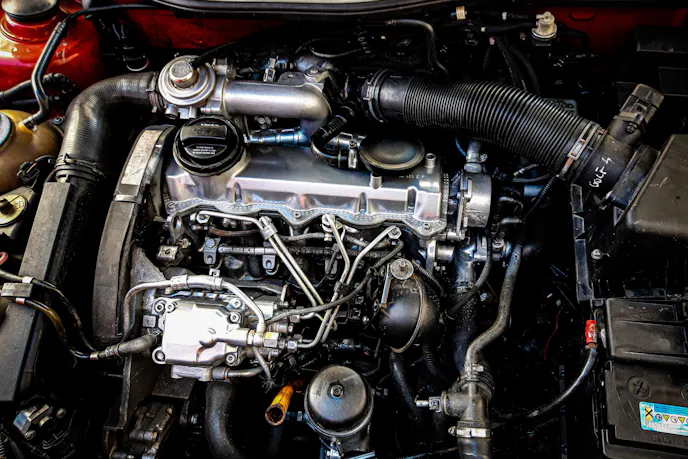
The BRM variant—found primarily in North American 2005.5–2006 Jetta TDIs—is a 1.9L Pumpe-Düse (PD) engine that delivers around 100 hp and 177 lb-ft of torque in stock form. But those numbers barely scratch the surface of its real capability. With light tuning and a freer-breathing turbo, the engine can comfortably produce over 150 horsepower and more than 250 lb-ft of torque without sacrificing longevity.
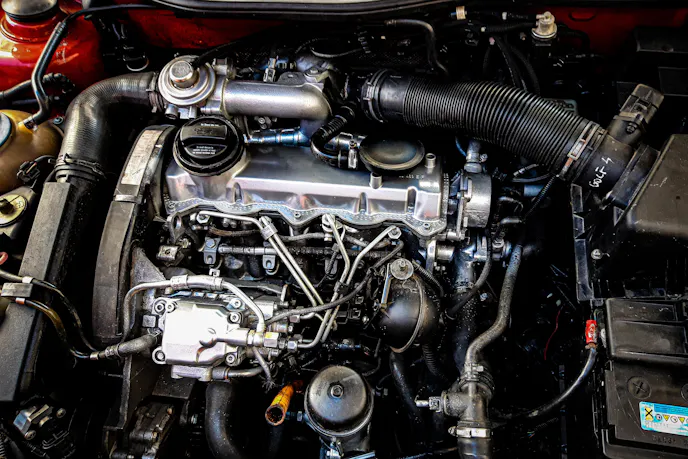
Unlike many modern diesels, the BRM and its earlier ALH/AHU predecessors remain compact, lightweight (under 300 pounds dressed), and mechanically straightforward. They also feature an iron block with an aluminum head, compact exterior dimensions ideal for tight engine bays, excellent aftermarket ECU support, huge global parts availability, and a proven lifespan well in excess of 300,000 miles.
In short: the TDI delivers everything a small truck wants—torque, reliability, fuel economy—without overpowering the platform or requiring major chassis modifications. It’s the type of diesel that Toyota should have offered from the factory.
Why A TDI Diesel-Swapped Tacoma Works So Well
Simple, lightweight (weighing around 3,100–3,300 pounds), and incredibly durable, the first-generation Tacoma is a loyal companion. However, it isn’t known for its torque. Even Toyota’s legendary 5VZ-FE 3.4L V6 never had much pull down low.
Drop a diesel in that chassis, though, and the truck transforms. A TDI-swapped Tacoma delivers an ideal power-to-weight balance, with the TDI engine making peak torque around 1,900 rpm—exactly where a small pickup benefits most. The result is massively improved drivability, making hill starts, slow-speed crawling, and everyday commuting feel far more effortless. Fuel economy also receives a noticeable boost. This particular build achieves approximately 25 mpg in mixed highway driving, and the owner admits it would likely be higher if he wasn’t constantly enjoying the extra torque. The swap integrates almost like a factory setup: the engine fits well, weighs roughly the same as the Tacoma’s original four-cylinder, and doesn’t disrupt chassis dynamics or suspension geometry. Additionally, running costs remain low due to the affordability, widespread availability, and ease of sourcing TDI parts. This combination gives the Tacoma the low-end grunt it has always deserved without sacrificing the personality that made these trucks icons in the first place.
The Heart Of The Build: A 2006 BRM-Code 1.9L TDI
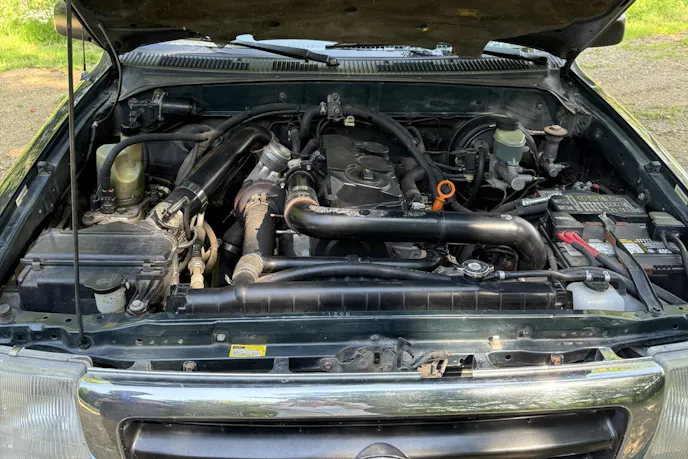
The Tacoma’s new heartbeat is a BRM 1.9L TDI, originally mounted transversely in a front-wheel-drive Jetta. Converting it to a longitudinal, rear-drive layout introduces some engineering puzzles, but nothing insurmountable—especially when working with Diesel Conversion Specialists’ swap components.
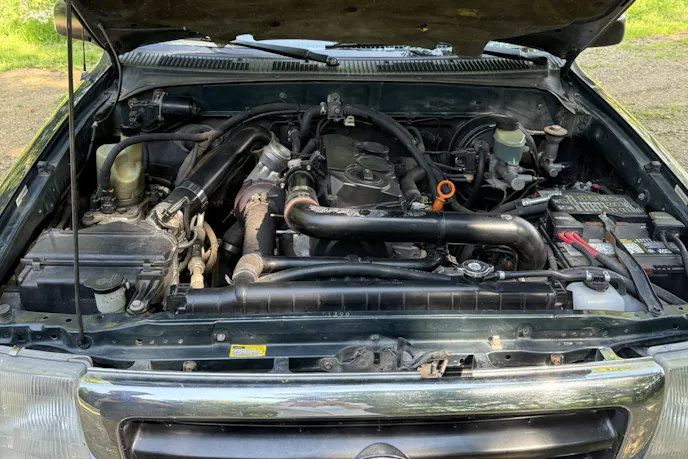
Volkswagen designed the BRM as a compact, efficient commuter engine, but it immediately feels at home in a light pickup. Its PD140 turbo upgrade gives it quicker spool, broader torque delivery, and strong midrange power without pushing the engine outside its comfort zone. The turbo feeds boost through a Mishimoto J-series intercooler with 2.5-inch piping, cleverly routed despite the engine bay’s tight confines.
Adapter Plate, Drivetrain, And Clutch
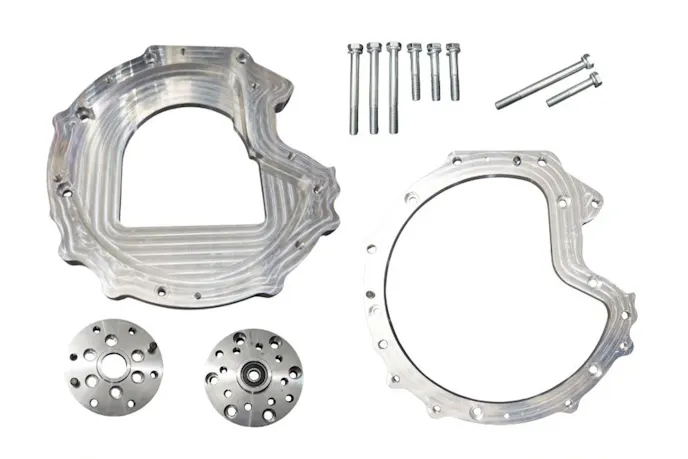
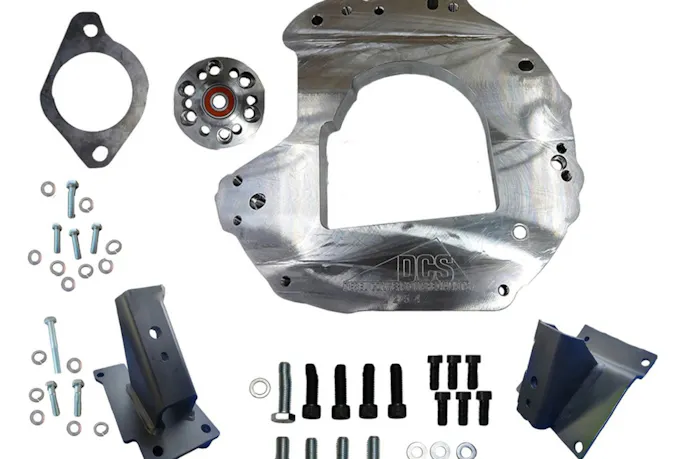
Mating the TDI to the Tacoma’s R150F manual transmission is made possible with the DCS TDI adapter plate (SKU 2369) and a crankshaft spacer. This allows the truck to retain its factory Toyota starter, simplifying both installation and long-term serviceability.A Centerforce 10-inch clutch rated at 387 ft-lbs of torque ensures the R150F can comfortably handle the diesel’s output, even with future tuning headroom.
The R150F itself is arguably one of the best manual transmissions Toyota ever built. Found behind 3.4L V6 Tacomas, 4Runners, and even some Hilux models, it’s known for toughness, great gearing, and long life. Bolting a TDI to it is a recipe for earlier gear engagement, smoother low-speed control, and fantastic highway manners.
Cooling And Intake Systems
The BRM originally lived in a sideways configuration, so placing it lengthwise required creativity in routing both the intake and exhaust systems. Fortunately, the first-gen Tacoma’s factory bumper vents and airbox prove unexpectedly helpful. The factory Tacoma airbox is retained, which is a win for OEM-level reliability, packaging, and easy serviceability. A 3-inch body lift provides just enough room to clear the front differential and close the hood, although the builder notes a 2-inch lift might also work. The Mishimoto intercooler is mounted cleanly, benefiting from excellent airflow through the bumper vents. Cooling is handled by a Derale 17-inch electric fan with temperature control, paired with the stock Tacoma radiator. This results in a simple and effective setup that operates comfortably within diesel operating temperatures.
Power Steering: When The Donor Lacks One
Unlike some ALH or AHU TDIs, the BRM doesn’t include a factory power steering pump. To solve that, the builder sourced a Volvo electric-over-hydraulic power steering pump, commonly found in 2004–2013 S40 and V50 models. These Volvo pumps offer excellent reliability, a fully self-contained hydraulic system with independent pressure, flexible mounting options, and independent operation separate from engine RPM. The result is smooth, consistent steering effort—regardless of engine speed or load.
Driving Impressions: Torque, Economy, And Plenty Of Grins
On the road, the TDI-swapped Tacoma is the kind of truck that makes a driver rethink what a small pickup can be. The builder recently put it through a three-hour highway road trip, cruising between 55 and 75 mph with a handful of stops along the way. The result? Twenty-five mpg, despite what might diplomatically be described as an “enthusiastic” driving style.
As the builder jokes, he starts off driving gently, determined to test fuel economy—“like Mr. Owl in the old Tootsie Pop commercial, trying to count the licks to the center.” But before long, the throttle is pinned, torque is flowing, and the grin takes over. “The world may never know,” indeed.
It’s that blend of playful torque and diesel clatter that transforms the Tacoma from a competent small truck into something charming, usable, and uniquely fun. It feels like the spirit of an old 22RE married to the torque of a 3.0L turbodiesel Hilux from overseas.
Where These Engines Come From: A Quick TDI History Lesson
The Volkswagen TDI family was introduced in the early 1990s and quickly became Europe’s go-to small diesel engine for passenger cars. North America primarily received:
- AHU (1996–1999) – Early rotary-pump 1.9L, known for mechanical simplicity.
- ALH (1999–2003) – Beloved by tuners, extremely durable, easy to swap.
- BEW (2004–2005) – First PD-style 1.9L in the U.S., improved refinement.
- BRM (2005.5–2006) – A more powerful PD engine with transverse orientation.
Originally found in Jettas, Golfs, Passats, Beetles, and some Audi A3s, these engines produced modest power but outstanding torque and longevity. Their compactness and simplicity made them ideal candidates for swaps into Jeeps, Samurais, buggies, boats, and now Tacomas.
Because millions of units were sold worldwide, sourcing parts is inexpensive and straightforward. Everything from timing belts to injectors is readily available at local auto parts stores or online.
Putting It All Together: Why This Diesel Swap Just Makes Sense
When you analyze the Tacoma–TDI combination, it checks all the boxes that make for a truly satisfying engine swap. The TDI’s weight and size are naturally compatible with the Tacoma engine bay, fitting easily without overwhelming the chassis or requiring heavy custom fabrication. Its torque delivery is equally well suited, providing immediate, usable grunt instead of relying on high-rev power like Toyota’s four- and six-cylinder options. The drivetrain feels equally harmonious, with the R150F gearbox handling diesel torque effortlessly and offering a gear spread that perfectly matches the powerband.
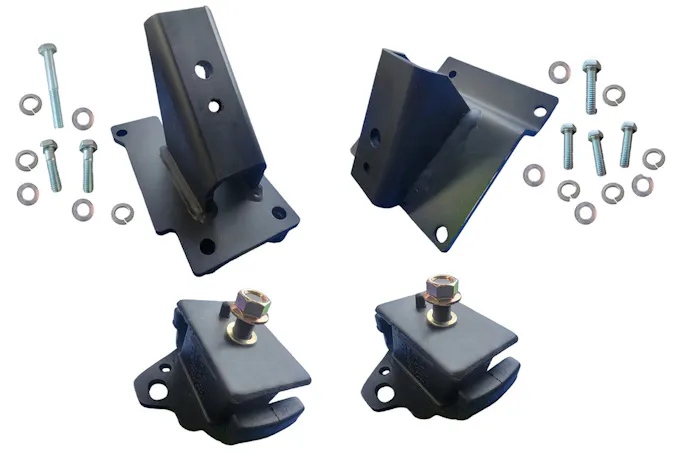
Strong aftermarket support further strengthens the appeal. Diesel Conversion Specialists provides proven mounts, adapters, and engineered solutions so builders don’t have to reinvent the wheel. The fuel economy is another standout, with 25 mpg in a 4×4 Tacoma being genuinely impressive. Gentle driving could potentially push it toward 30 mpg. The result is a truck with a unique character. It feels like a factory experiment that Toyota should have built: light, torquey, efficient, and undeniably fun.
The Perfect Union Of Old-School Toyota And European Diesel Ingenuity
This 1998 Tacoma TDI conversion is a case study in smart swapping. Instead of chasing big horsepower or building a showpiece, the builder opted for components that complement each other, preserve Toyota’s legendary reliability, and enhance the day-to-day driving experience.
The result is a diesel-swapped Tacoma that feels modernized yet familiar, more capable yet not over-built, and more efficient without sacrificing personality. It’s a diesel-powered adventure truck that’s ready for road trips, trail days, or long commutes. Best of all, it averages mid-20s mpg and makes its driver smile like a kid.
Toyota may have never offered a small-displacement turbodiesel Tacoma in the U.S., but thanks to the magic of Diesel Conversion Specialists and the unstoppable Volkswagen TDI, enthusiasts can finally build the truck they always knew should exist.

You might also like
Leaks Be Gone: Ford 6.7-liter Power Stroke Pusher HD Upper Coolant Tube Installation
Stop messy leaks instantly. The Pusher HD Upper Coolant Tube installation replaces weak factory plastics with heavy duty metal.