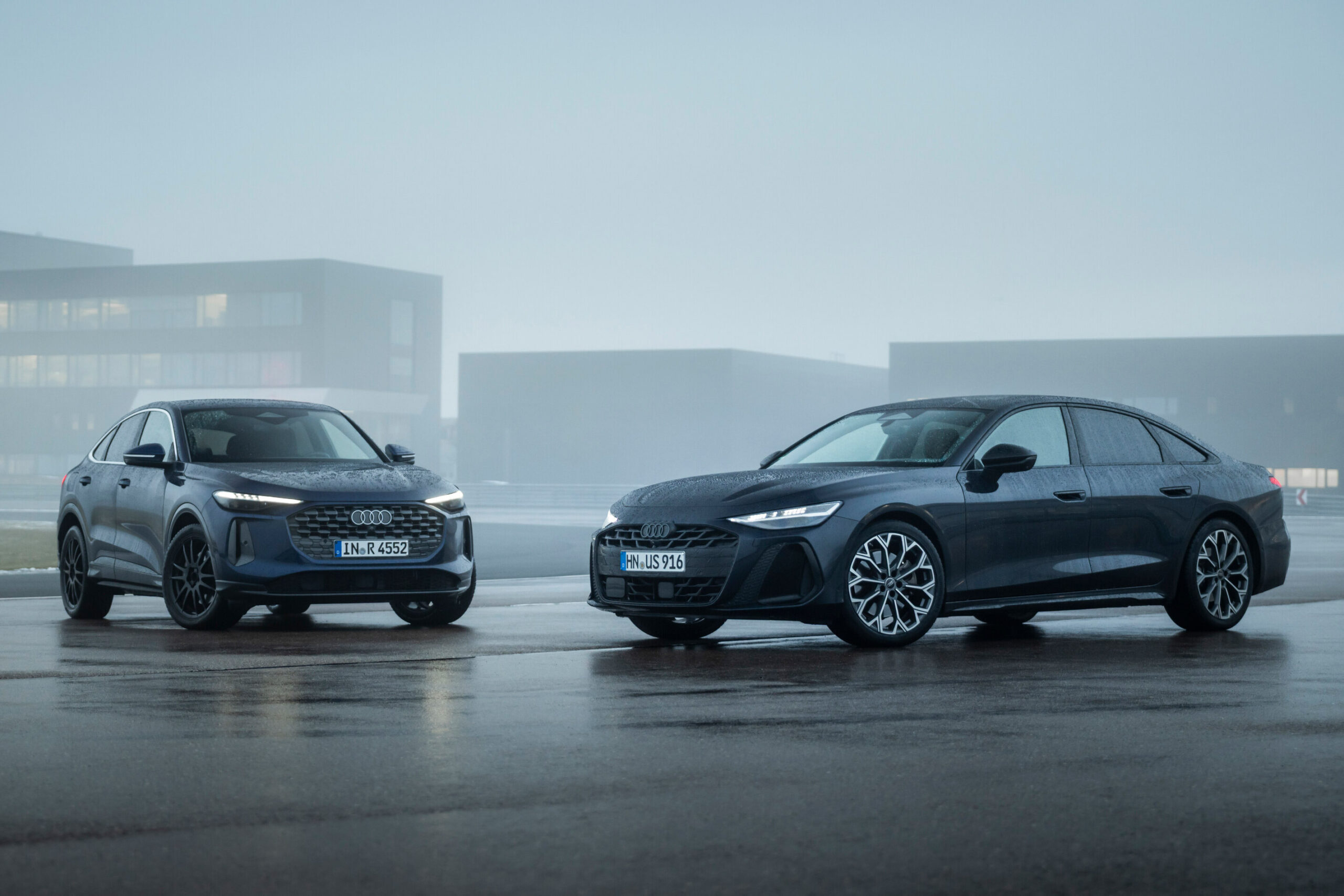
Even though diesel engines are becoming less prevalent in the U.S. market, that doesn’t mean European innovation has ceased. Audi has just unveiled its updated 3.0-liter V6 TDI for the Audi Q5 and Audi A6, engine code EA897evo4. While this Audi V6 TDI won’t be coming to the United States, it’s still worth a closer look. For diesel enthusiasts, this engine serves as a reminder of what modern clean-diesel engineering can still accomplish.
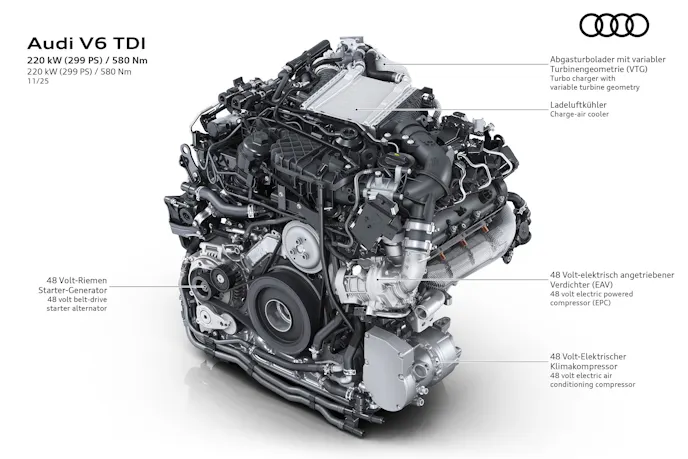
Let’s start with the numbers. The new Audi V6 TDI produces 220 kW (299 PS)—that’s about 295 horsepower—and 580 Nm, which translates to 428 lb-ft of torque. Those are stout figures for the Audi Q5 and A6 in European markets, and precisely the kind of output American buyers used to love in diesel-powered SUVs and sedans. Even if we can’t buy it here, it’s interesting to see the direction Audi is taking.
Electrification Enhances The Diesel Experience
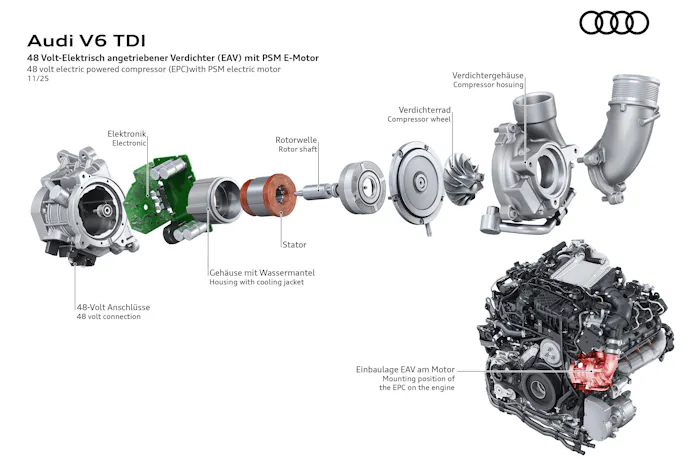
The most significant upgrade in the EA897evo4 is Audi’s 48-volt MHEV plus mild-hybrid system. You’ve likely seen mild hybrids paired with gas engines, but this is a more advanced setup. It includes a belt alternator starter, a lithium-iron-phosphate battery, and an electrically powered compressor (EPC)—a major technological leap for diesel responsiveness.
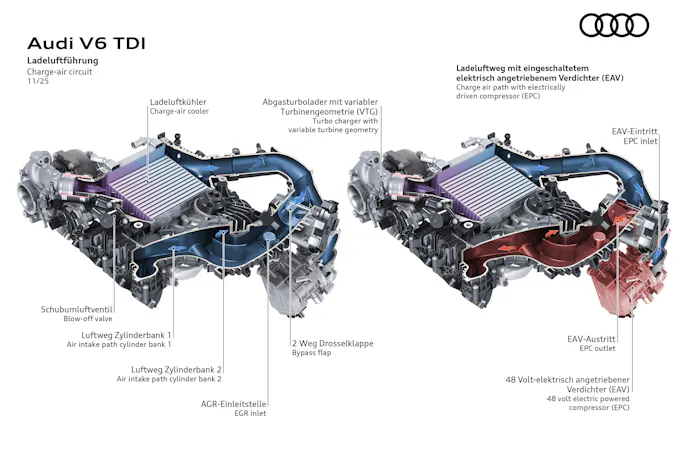
The system can add up to 18 kW (24 hp) and 230 Nm (170 lb-ft) of electric torque at low speeds. The EPC, meanwhile, is the real star. It can spin up to 90,000 rpm in just 250 milliseconds, effectively eliminating turbo lag. Audi claims the vehicle covers an entire extra car length in the first 2.5 seconds compared to the previous engine generation—strong proof of what electrification can do when combined with diesel torque.
This two-stage charging setup (traditional turbo plus EPC) gives the V6 a smooth, EV-like surge of power, especially in the mid-range. Even though U.S. drivers won’t experience it firsthand, the technology hints at what future hybrid-diesel systems could look like if emissions regulations shift.
Cleaner Fuel Compatibility: HVO100
Another notable point: the new V6 TDI is approved for HVO100 (hydrotreated vegetable oil). This renewable diesel alternative can reduce CO₂ emissions by 70–95% compared to petroleum diesel. For American readers familiar with renewable diesel in California and other West Coast markets, this will feel very familiar—proof that Europe is leaning hard into cleaner combustion solutions.
Diesel Is Still Advancing
The EA897evo4 isn’t destined for our shores, but it demonstrates that diesel engineering hasn’t stagnated. Electric turbos, hybrid torque fill, renewable fuel compatibility—these are technologies we could see migrate into future U.S.-spec powertrains, even if they’re gas or hydrogen-based.
For now, Audi’s new V6 TDI stands as a great example of what a modern diesel can still be: powerful, efficient, and highly advanced.
You might also like
Leaks Be Gone: Ford 6.7-liter Power Stroke Pusher HD Upper Coolant Tube Installation
Stop messy leaks instantly. The Pusher HD Upper Coolant Tube installation replaces weak factory plastics with heavy duty metal.