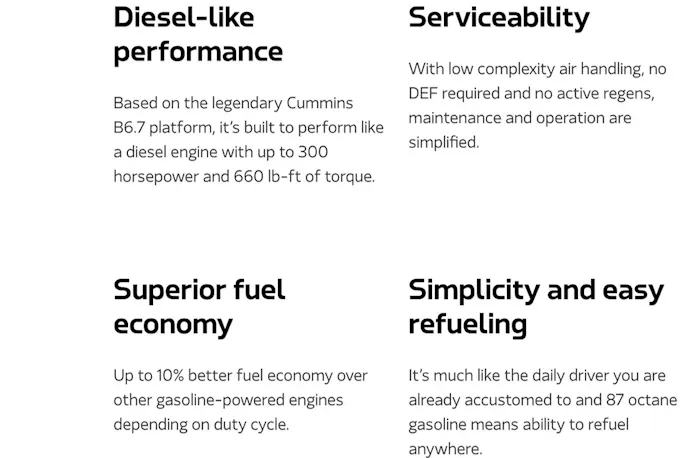
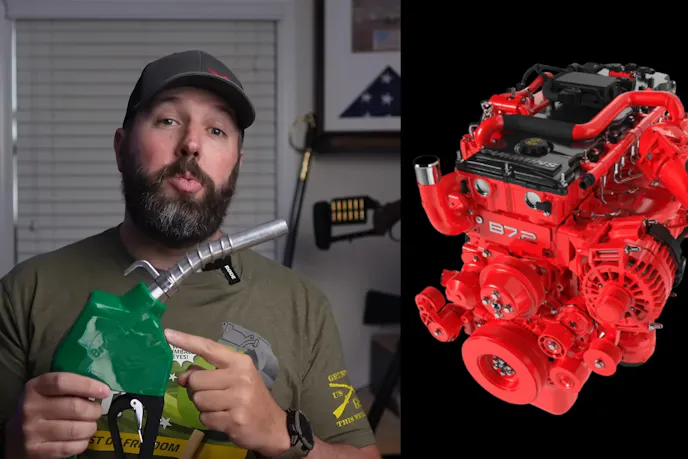
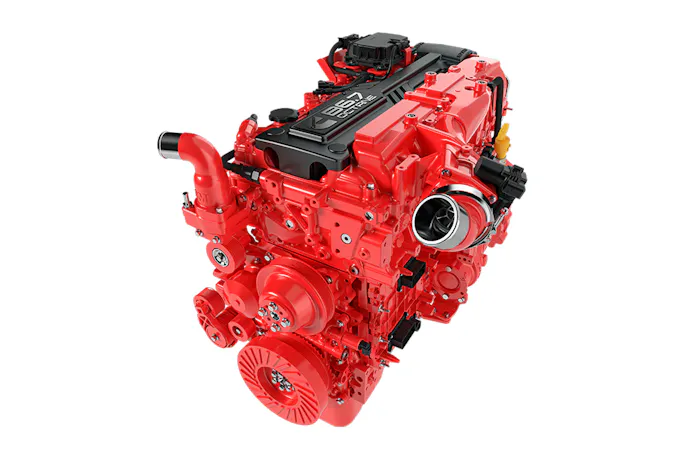
The B6.7 Octane arrives as Cummins’ first-ever gasoline engine, surprising diesel enthusiasts who associate the manufacturer strictly with compression ignition. Stripping away heavy emissions equipment, Cummins packaged this factory-deleted 6.7-liter powerplant to burn 87-octane pump gas rather than standard diesel fuel. The manufacturer designed the gasoline inline-six without an exhaust gas recirculation system, particulate filter, or exhaust fluid tank, creating a simple alternative for medium-duty fleet operators across the nation.

B6.7 Octane Architecture And Internal Engineering
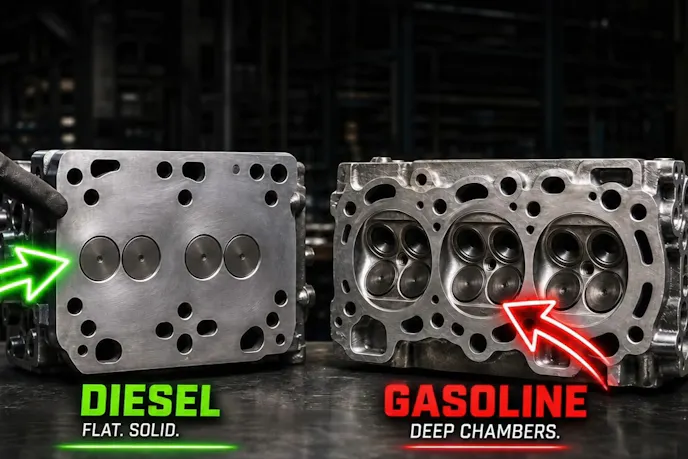
Borrowing foundational architecture from the long-running B-series platform, Cummins gave the block a familiar 107 mm bore and 124 mm stroke. The engine spins up to 3,200 rpm under boost from a turbocharger. Equipping the assembly with an optional Jake brake and a gear-driven air compressor, engineers integrated heavy-duty commercial hardware directly into the design. Unlike standard pushrod diesel blocks, this gasoline variant utilizes dual overhead camshafts and redesigned cylinder heads with internal combustion chambers.
Meeting Tough Emissions Rules Without Exhaust Filters
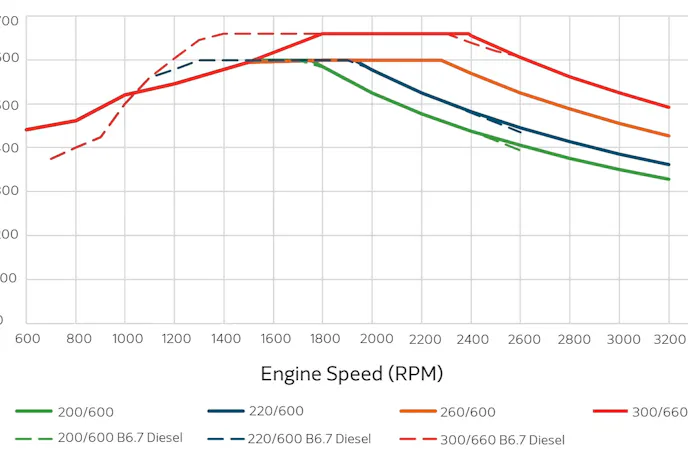
As the upcoming ’27 Environmental Protection Agency (EPA) standards approach, Cummins avoided troublesome aftertreatment plumbing by switching fuels for stop-and-go commercial routes. A standard three-way catalytic converter cleans exhaust gases thoroughly on gasoline platforms. Jamin Seat notes, “It’s a gas engine that does a diesel job without the emissions BS.” Power outputs span four ratings from 200 to 300 horsepower, with 660 lb-ft of torque at 1,800 rpm, for school buses, delivery vans, and garbage trucks.
Consumer Pickup Realities And The Larger B7.2
Diesel Truck owners hoping to spot this engine in consumer Ram pickups will be disappointed due to packaging constraints. Weighing approximately 1,300 pounds, the heavy engine produces far less peak horsepower than modern pickup diesels. Seat comments, “The Octane is built for a school bus route, not towing a 30-foot camper through Colorado.” Meanwhile, Cummins introduced the B7.2 diesel on their fuel-agnostic Helm architecture, extending the stroke to 133 mm. Seat also adds, “So to maintain that torque and power at the lower cylinder pressure, you need to make the engine bigger.”
Evaluating The Factory-Deleted Commercial Future
Adopting gasoline combustion gives fleet operators a practical path around delicate exhaust sensors and expensive maintenance cycles on short urban routes. Dropping unneeded exhaust hardware while retaining commercial block strength, Cummins delivers a dedicated workhorse for demanding delivery schedules. The B6.7 Octane demonstrates how commercial engine builders meet strict regulatory demands through alternative mechanical engineering. Fleet managers watching these market transitions gain a durable, emissions-compliant work tool built for grueling daily service.
You might also like
D&J Precision Machine Expands Beyond Cummins With New LML Duramax Long Blocks
D&J Precision Machine expands into Duramax engines with new Precision Plus and Essentials LML long blocks for 2011-2016 GM trucks.