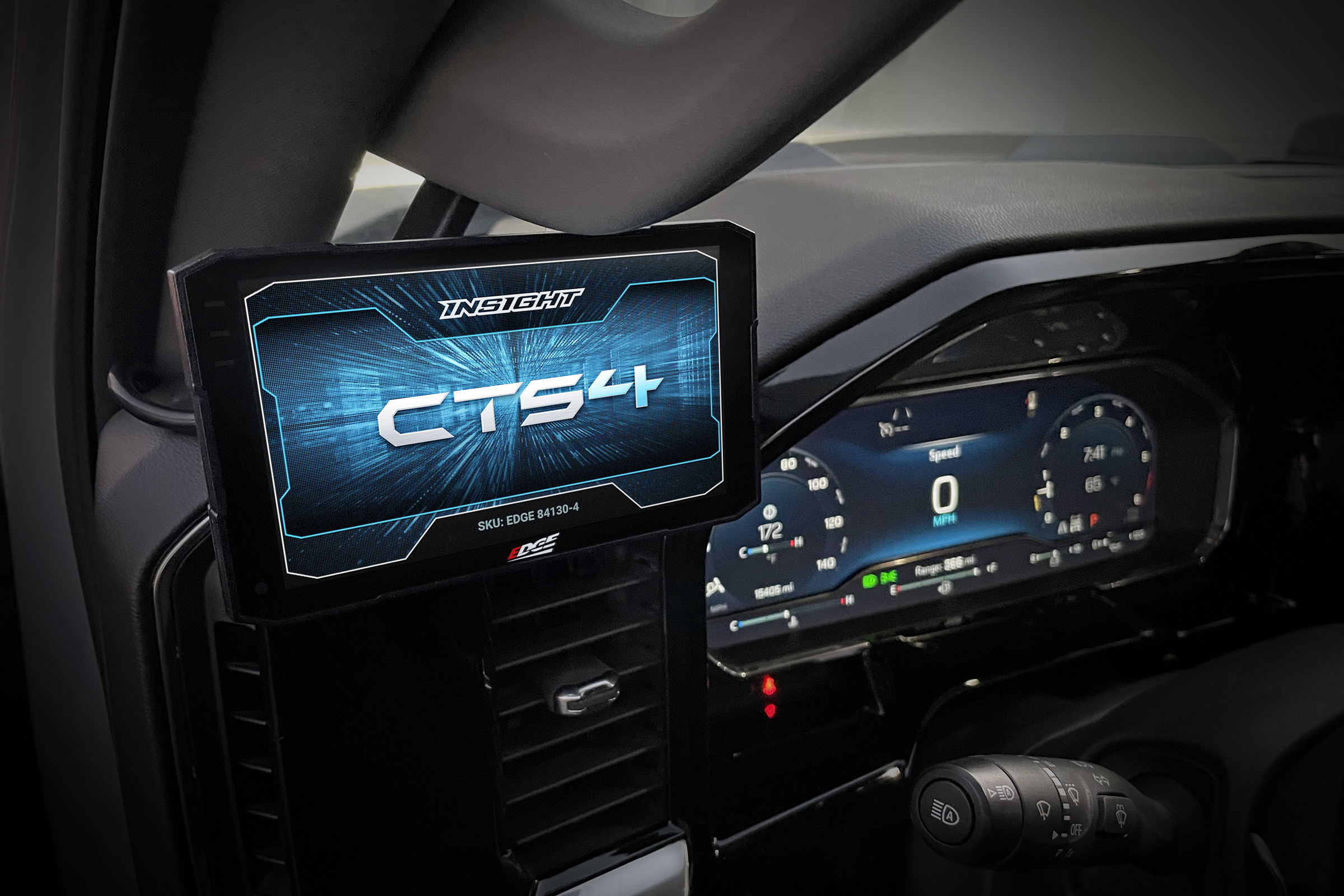
Walk through the parking lot at any diesel event and count the windshields with an Edge screen stuck to them. For close to fifteen years, the CTS has been the default answer to a question every diesel pickup owner eventually asks: what is my truck actually doing right now? The factory cluster will tell you coolant temperature in vague terms and maybe a boost gauge if you are lucky. It will not tell you exhaust gas temperature while you climb a grade with 14,000 pounds on the hitch, and it will not tell you how hot the transmission fluid is getting in stop-and-go traffic with a camper on the back.
Edge Products has just pulled the wrapper off its CTS4. It is the fourth generation of the platform, and the first all-new hardware since the CTS3 arrived in 2020. Edge calls it “the next generation of truck intelligence,” and in this case the hardware changes are substantial enough that the phrase is earned.
Four Generations On The Windshield
Edge was founded in Ogden, Utah, in 1999 and made its name the way most diesel electronics companies of that era did, with plug-in modules and in-cab programmers for the Cummins, Duramax and Power Stroke trucks that were rewriting what a pickup could tow. The company joined the Holley family in 2015 when Holley bought the MSD Group, which also included Superchips.
CTS: The Color Touchscreen Arrives
The original CTS (the letters stand for Color Touch Screen) was on dealer shelves by early 2011, sold alongside the cheaper CS, which used a smaller non-touch color screen. The CTS packed a 4.3-inch touchscreen, could show up to eight parameters at once, and already had several features that still define the family. A light sensor dimmed the display at night. A video input let you run a backup camera through the monitor. It read and cleared trouble codes, ran 0 to 60 and quarter-mile tests with a little Christmas-tree countdown, and on the then-new emissions trucks it could show diesel particulate filter status. Most importantly, it plugged into the Edge Accessory System, so you could add an EGT probe and other sensors the factory never gave you. The Evolution CTS added preloaded tuning, while the Insight CTS was the monitor-only version.
CTS2: Bigger, Slimmer, More Customizable
In May 2015 Edge launched the CTS2. Then-president Dave Martinez said it grew out of customer and dealer feedback, and you could tell. The screen grew to 5 inches with higher resolution and much less glare. The case got slimmer, and a single HDMI-style plug now carried both power and the EAS accessory chain. Owners could load their own background images, mix custom colors for gauge arcs and needles, and swipe between five custom gauge screens. For years the CTS2 was close to the industry standard for OBD-II monitoring. Its weak spot was speed. Edge itself admitted it took around 15 seconds to power up.
CTS3: The Smartphone Era
The CTS3 arrived in May 2020 and fixed the speed complaint first. It kept the 5-inch size but moved to a 720p capacitive touchscreen, the kind of glass that responds to a swipe like your phone instead of needing a firm press. Wi-Fi meant software updates and vehicle support could be downloaded without a laptop. The Insight CTS3 offered more than 100 selectable parameters and up to 10 on a single screen. One casualty was the dedicated video input. Backup cameras had to go through an adapter on the micro-USB port, which installers did not love.
What Actually Changed Under The CTS4’s Glass
The short version is that the CTS4 is a new computer in a slightly bigger frame. Edge’s pitch is less about adding features and more about making every interaction quicker, and the numbers behind that pitch are worth walking through one at a time.
Processor And Memory
Edge says the CTS4 has 3.4 times the processing power of the CTS3. That figure is simply 1.7 GHz times two cores compared with 1 GHz times one core, which is a back-of-the-envelope number rather than a benchmark. It does not account for architecture, and it assumes the software uses both cores. Still, moving from a single-core chip to a modern dual-core 64-bit part is a genuine generational jump.
Memory is the bigger story. Quadrupling capacity from 512 MB to 2 GB and moving from LPDDR3 at 800 MHz to LPDDR4 at 3,400 MHz (Edge rounds that to 4.3 times faster) means the device can hold far more of its interface, vehicle definitions and logging buffers in memory at once. That is where the snappier menus, faster gauge swaps and quicker programming come from.
Display And Refresh Rate
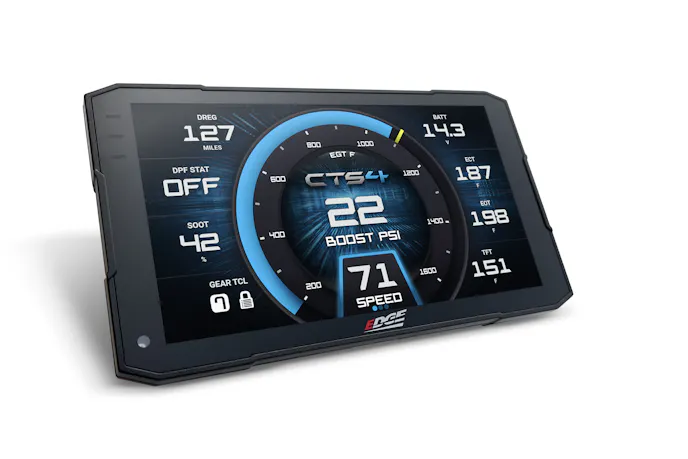
The screen grows from 5.0 to 5.5 inches diagonally. Because area scales with the square of the diagonal, that is (5.5 / 5.0) squared, or 1.21, which is exactly where the 21 percent more viewing area claim comes from. Resolution stays at 1280 x 720, so pixel density actually drops slightly, from roughly 294 to 267 pixels per inch. At arm’s length on a dash, you will not notice. You will notice that every gauge is physically bigger.
The refresh change matters more than the size. The CTS3 redrew live data at somewhere between 10 and 30 frames per second depending on what it was doing. The CTS4 holds 60. Edge’s “up to six times smoother” claim is the worst case, 10 fps against 60. Against the CTS3’s best case it is twice as smooth. Either way, needles and bar graphs now sweep rather than step, and when you are watching EGT climb on a long pull, smooth motion makes the rate of change much easier to read at a glance.
Startup And Responsiveness
Edge quotes a cold boot under 12 seconds against more than 40 for the CTS3, roughly 3 seconds to the monitor screen against 10-plus, and under 7 seconds from wake to an active monitor. Changing which parameter a gauge displays drops from about 20 seconds to about 10, which is the 50 percent figure in the brochures. The 70 percent figures are all “less time” comparisons. Ten seconds to three is 70 percent less time, which in plain terms means more than three times as quick.
Connectivity And Controls
The old Mini-USB port is gone, replaced by two USB-C ports. The RCA camera input is back as a direct connection, with no converter, which quietly undoes the CTS3’s most annoying install compromise. Wi-Fi updates carry over.
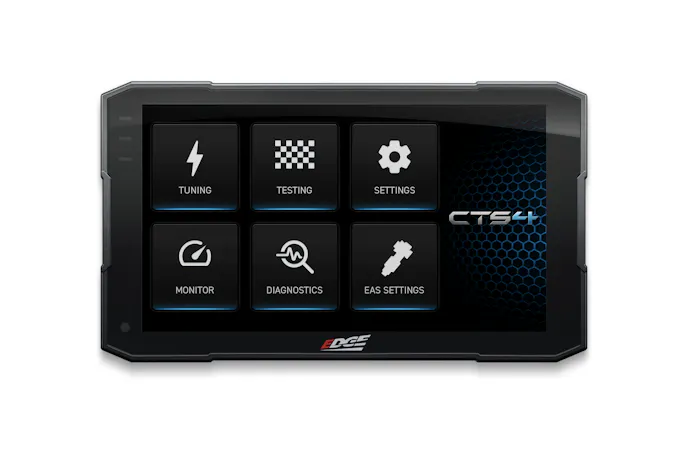
The most practical new hardware is a set of user-defined quick-action buttons on the back of the unit. Each can be set to start or stop a datalog, swipe gauge screens left or right, toggle peak recall, read and clear codes, jump to the records page, or, on supported tuning applications, change power level. Reaching back and pressing a physical button is a lot safer than tapping through menus while towing.
New Software Features
Maintenance Minder, a favorite on older Edge units, returns. It tracks oil, filters, fluids, tires and custom items by mileage interval, posts an on-screen banner and lights a yellow LED when something is due, and resets with a single “Service Performed” tap. Peak Value Recall automatically records the highest values seen during a drive, such as max boost, EGT and speed, so you can check what the truck saw on that last grade without digging through a datalog. A guided tutorial runs on first power-up and walks through the swipe gestures and gauge editing.
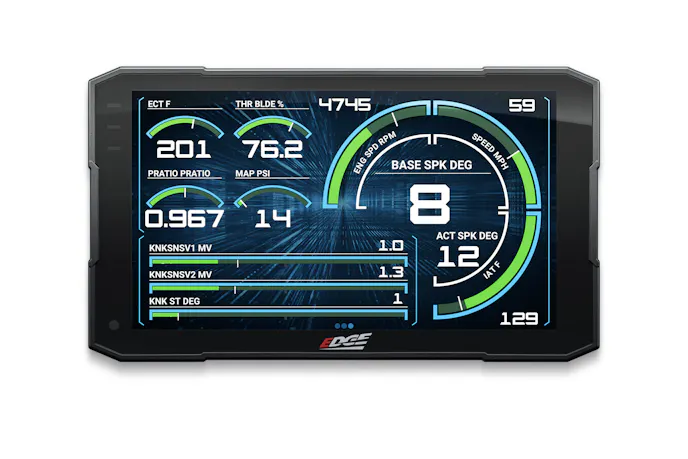
Gauge customization goes further than before, with 31 built-in layouts, analog, digital and bar-graph styles, custom colors for labels, ticks and bars, light and dark themes, and your own background image, across up to five gauge screens. Data logging runs up to 30 minutes per log, files open in Edge’s DataViewer2 PC software, and the unit can stream live data to a connected PC. Performance tests now record elapsed time and trap speed for 0 to 60, eighth-mile and quarter-mile runs, and you can download the timeslips.
Where A CTS4 Earns Its Spot On A Diesel Dash
Most CTS owners never touch the tuning side at all. They buy it to see what the cluster hides, and in the diesel world that list is long.
Towing And Hauling
This is the core use case. Pulling a fifth-wheel up a long grade, the numbers that matter are exhaust gas temperature, boost, transmission fluid temperature and coolant temperature, and they matter most as trends. Watching EGT creep toward the limit you set tells you when to drop a gear or back out of the throttle long before anything gets damaged. The CTS4’s custom alert thresholds can trigger an on-screen message and an LED, so you do not have to stare at the screen. The 60 fps refresh makes those trends easier to read, and Peak Value Recall answers the question everyone asks at the top of the hill: how hot did it actually get? Note that a true pre-turbo EGT reading on most trucks requires the EAS probe, which we cover below.
Older Trucks And The People Who Keep Them Alive
A 7.3-liter, an early Cummins, or an LB7 Duramax often has little in the way of factory maintenance reminders. Maintenance Minder turns the CTS4 into a service log that nags you at the right mileage. Monitoring is also a diagnostic tool on certain platforms. 6.0-liter Power Stroke owners, for example, have long watched the spread between engine oil and coolant temperature as an early warning of a clogging oil cooler, and a dedicated gauge screen makes that a glance instead of a scan-tool session, on trucks that report those parameters.
Modern Emissions-Equipped Trucks
On DPF-equipped diesels, the CTS4 adds tools that used to require a scan tool or a dealer visit. Where the platform supports it, it can show regen status, trigger a manual or mobile DPF regeneration, and display injector balance rates, which are a useful early look at injector health on platforms like the Duramax. It also runs an OBD readiness check, which tells you whether your monitors are set before you roll into an emissions inspection after clearing a code.
Modified And Tuned Trucks
For trucks with aftermarket turbos, injectors or other hardware, the CTS4 can act as the interface for custom tuning through Edge’s PowerCal platform, so the tuner’s files and the gauges that show you how the truck is responding live on one device. Owners who want more power without a custom tuner can get preloaded tuning on the Evolution or on-the-fly power control through the Juice package.
One clear line for everyone. Edge’s CTS4 tuning products do not allow removal or disabling of EGR or DPF equipment. The Evolution and Insight+ carry a not legal for sale or use in California warning, with CARB testing listed as pending, and other states follow EPA guidance. The monitor-only Insight does not change the calibration at all, which makes it the straightforward choice for anyone with a newer emissions truck who simply wants to see more.
The CTS4 Lineup, Model By Model
Every CTS4 is the same hardware with the same monitoring suite, diagnostics and code read and clear. What changes is how much the device is allowed to touch the engine calibration.
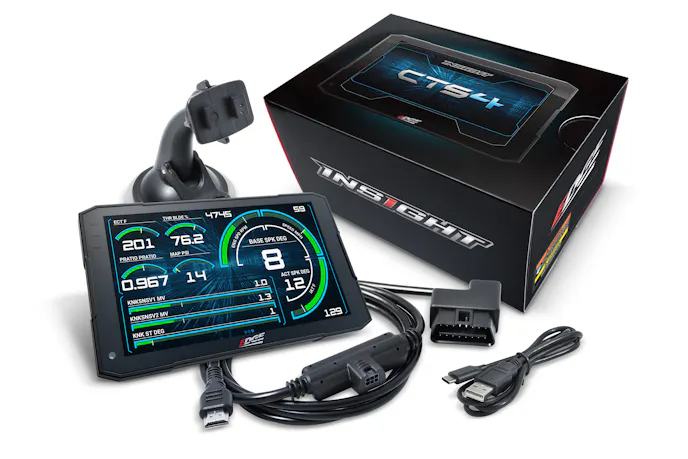
Edge Insight CTS4
The Insight is the monitor, full stop. It fits essentially any 1996-and-newer OBD-II vehicle and leaves the factory calibration alone, which makes it the right tool for owners of late-model emissions trucks, fleet and work trucks, and RVers who want information without changing anything. It is not a dead end, though. Edge says an Insight can be upgraded over the internet to Insight+ custom tuning or Evolution preloaded tuning on supported applications, so you can buy the screen now and decide about power later.
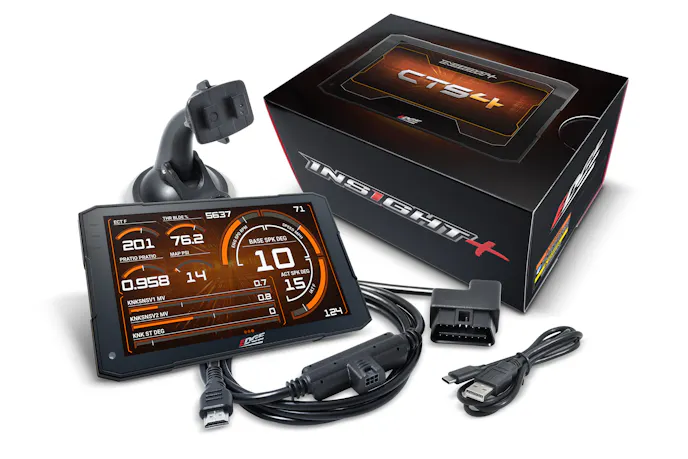
Edge Insight+ CTS4
The Insight+ is new to the family. It is an Insight with Edge’s PowerCal custom-tuning capability built in and a VIN-specific custom tune license included. The tunes themselves are not in the box. You buy them from one of Edge’s custom tuning partners, who build a calibration for your truck and its modifications, and the CTS4 loads and flashes it. Multiple tunes can live on the device at once, so switching between a towing file and a lighter daily file does not require a laptop. Dealer listings show diesel coverage for 1994 to 2019 Power Stroke (7.3L, 6.0L, 6.4L and 6.7L), 2003 to 2012 Cummins and 2001 to 2016 Duramax.
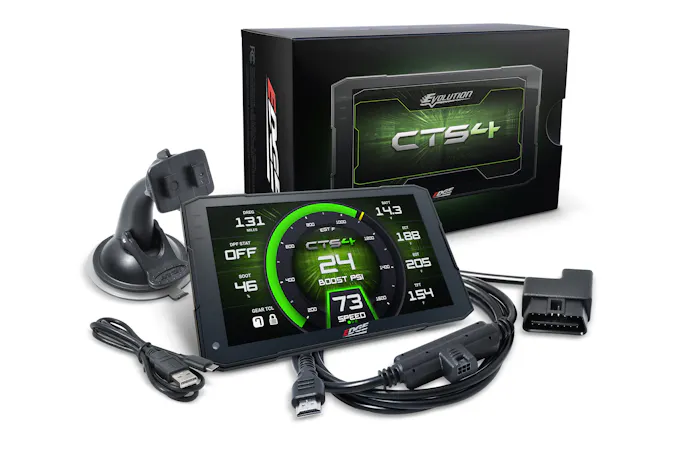
Edge Evolution CTS4
The Evolution is the all-in-one. It comes with Edge’s preloaded tuning, which on diesel applications means economy, towing and extreme calibrations, and Edge quotes gains of up to 175 horsepower and 470 lb-ft on select diesel applications. Owners can also adjust tire size, axle ratio, shift RPM and throttle sensitivity where the truck supports it, which covers the common case of correcting the speedometer after a tire swap. A custom tune VIN license is preloaded, so the Evolution can graduate to a custom file later. The universal diesel unit covers Ford, GM and Ram diesels in a single box, but specific tune availability and gains vary a lot by model year, so treat 175 and 470 as a ceiling, not a promise for your truck.
Edge Juice With Attitude CTS4
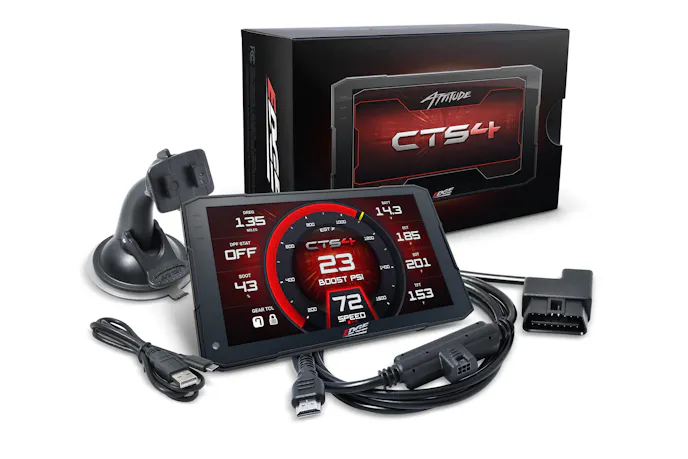
The Juice with Attitude is the oldest name in the lineup and the most different under the skin. Instead of reflashing the engine computer, it pairs the CTS4 with Edge’s Juice inline power module, which sits between the factory electronics and the engine and modifies fueling on the fly. That is why you can change power levels from the screen, or from a rear quick-action button, while driving, with no reflash. The trade-off is that the Juice is application-specific hardware, which is why it costs nearly twice as much as the Evolution. Edge lists the price at $1,449.95 for most applications.
The current CTS4 Juice listings cover Ram’s Cummins trucks from 2003 through 2018, and every kit includes an EGT probe. Five power levels are standard, and a sixth “Hot Unlock” level can be added through an internet update.
The Juice package also carries the safety logic that made the original famous. Backdowns pull power when a limit you set, such as maximum EGT, is reached. Cold Engine Defuel holds back added fuel until the engine is warm. There are adjustable boost setpoints, an EGT-based or time-based turbo timer, and tire size correction from 1 to 50 inches.
The Expandable Accessory System
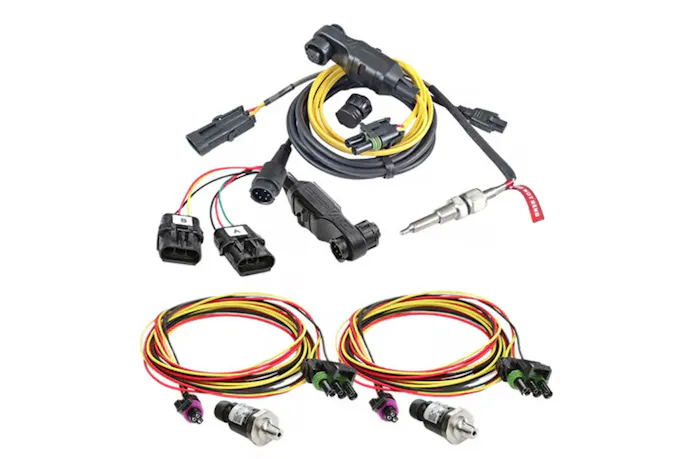
The CTS4 can only display what the truck’s computers report over the OBD-II port, and some of the most important diesel numbers either are not reported or are not reported where you want them. The Expandable Accessory System, or EAS, fills that gap by adding physical sensors that feed straight into the monitor. It has been part of the family since the original CTS, and it is a big reason long-time Edge owners stay loyal.
The system starts with the EAS Starter Kit cable, one per device, which links the accessory chain to the monitor. From there, accessories connect in a daisy chain, each module plugging into the next, so a single CTS4 can run several sensors without a rat’s nest of separate harnesses. Everything is recognized and configured on the device itself, with no laptop required.
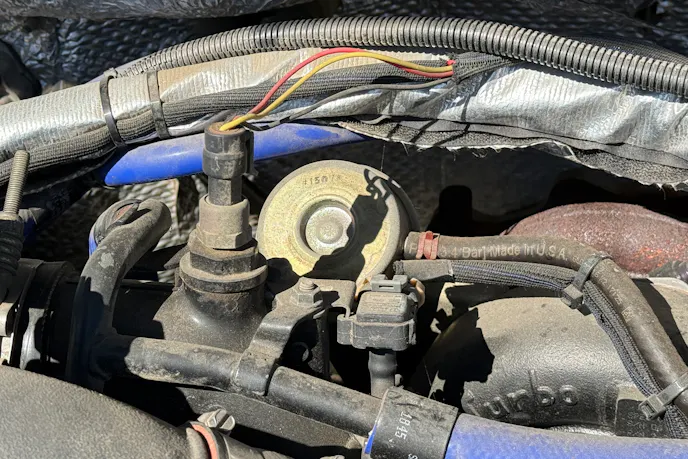
The accessory most diesel owners buy first is an EGT probe. Edge’s expandable probe uses a 1/8-inch NPT fitting and a 15-inch lead, so a damaged probe can be replaced without replacing the cable. Ideally it goes in the exhaust manifold ahead of the turbo, which reads the true temperature the engine is seeing rather than the cooler post-turbo number. Because the system is expandable, you can run more than one probe and compare locations, for example pre- and post-turbo on a compound setup.
The Universal Sensor Input reads any 0 to 5 volt signal and accepts two sensors per module, so you can add pressure and temperature senders, ambient air temperature, or a third-party device such as a wideband controller and display it as a custom gauge. Edge’s pressure sensors cover the jobs diesel owners actually care about: boost, lift-pump fuel pressure, air bag pressure on a tow rig, and pre- and post-intercooler pressure for anyone chasing a boost leak or checking intercooler restriction.
Edge is also packaging EAS accessories into kits aimed at common builds, including a Daily Driver and Tow Kit, a Street Diesel Kit, a Competition Kit, and a SOTF kit for Juice applications.
Putting It To The Test
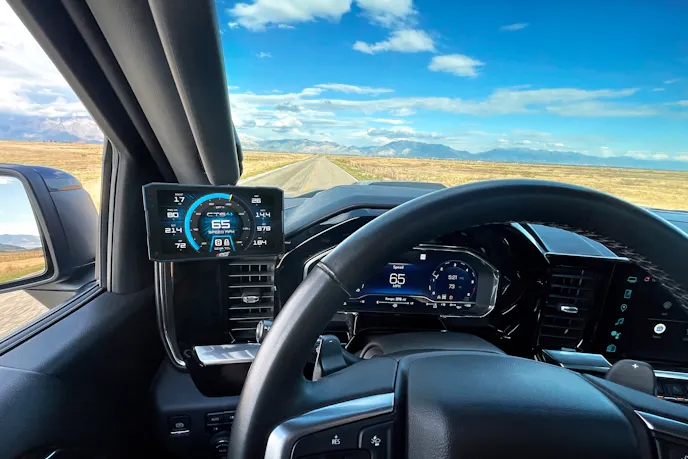
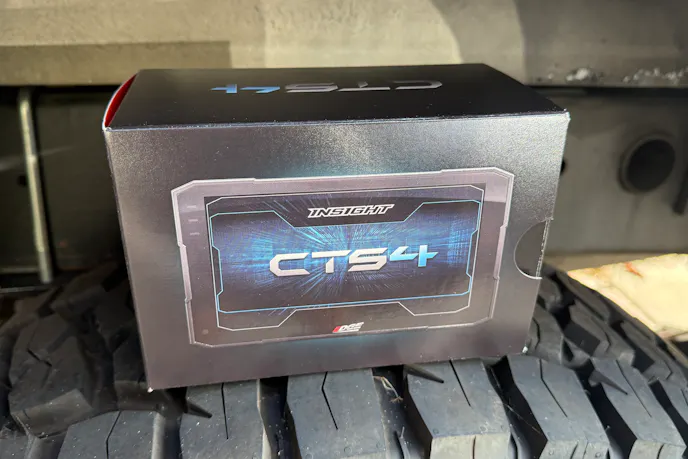
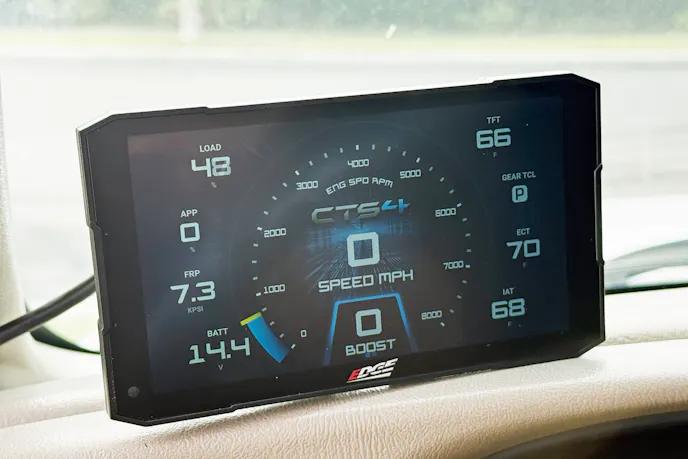
Spec sheets are one thing. We wanted to know whether the CTS4 feels as different as the numbers say, so we put an Insight CTS4 on our 2002 Chevy Silverado 2500HD, which has spent years being monitored by the Insight CTS3 (and the CTS2 before that.)
Right from the jump the increase in speed was noticeable. The unit boots up and the gauges load much quicker under all conditions than the previous model. The screen is responsive and quick to move through its different settings and functions. The increase in refresh rate is difficult to quantify, however, we did notice that gauge movements are crisp and fluid. We do wish that there was a bit more brightness to the screen as full sun tended to wash it out. However, it never became unreadable.
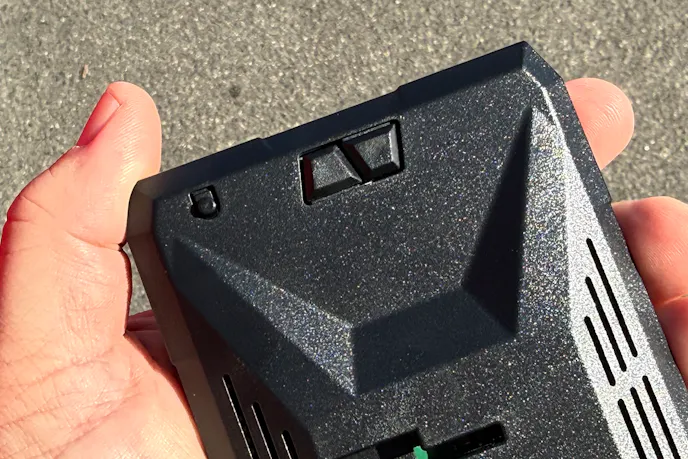
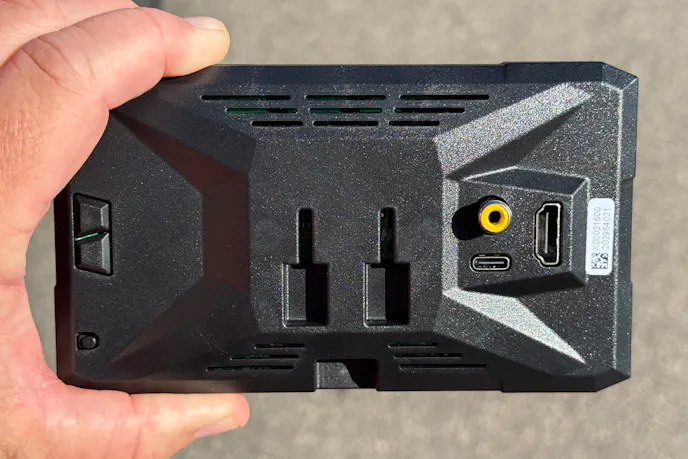
The initial setup is the most intimidating part of using the Insight CTS4. While you can just plug the unit in and run it as-is, to really get the most out of it you’ll want to select the monitors that matter most to your situation. Additionally, there are tons of color, background, and layout configurations to choose from.
Our test truck already had a suite of EAS accessory sensors installed, which required a fresh setup with the new CTS4. Thankfully, all of the wiring is compatible so there’s no modification or additional parts to purchase to support the EAS accessories you already own.
The Bottom Line
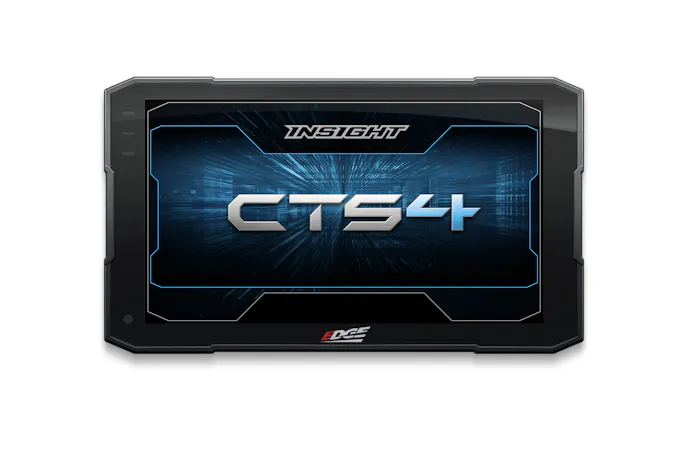
The CTS3 was the generation that made the CTS feel modern. The CTS4 is the one that makes it feel fast. A dual-core processor, four times the memory, a 60 fps display and real buttons you can reach without looking are not flashy upgrades, but they are the ones you notice every single time you climb into the cab. And bringing back Maintenance Minder and a native camera input shows Edge was listening to the people who actually live with these things.
Who should care? If you tow heavy, the Insight with an EGT probe is still one of the most useful things you can bolt into a diesel pickup, and the CTS4 is simply a better version of it. If your truck is modified, the new Insight+ fills a gap the lineup has had for years. If you own a 5.9-liter or 6.7-liter Cummins and want adjustable power at the press of a button, the Juice with Attitude remains in a class of its own. And if you already run a CTS3 that does everything you need, nothing here forces an upgrade, but the first time you watch the two boot side by side, you may find yourself shopping anyway.
You might also like
Torque Comes to Town: Diesel Army Is Rolling Into SEMA 2026
The diesel builds are arriving at SEMA 2026. Diesel Army takes you behind the scenes on setup day before the doors open in Las Vegas.