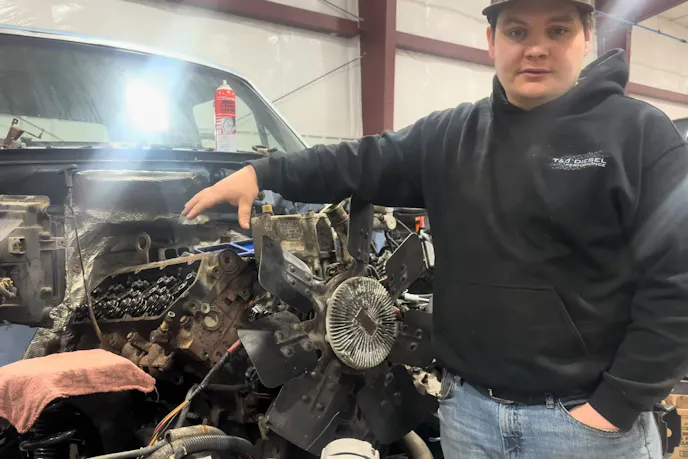
Upgrading to ARP head studs for Power Strokes usually implies a massive teardown, but Cody Bulifant at Left Lane Diesels proved otherwise. He tackled a 326,000-mile engine without ever breaking the factory seal. The goal was simple: keep the seasoned head gasket intact while adding the clamping force needed for future horsepower, all by swapping the fasteners one at a time.
Preserving The Seasoned Gasket
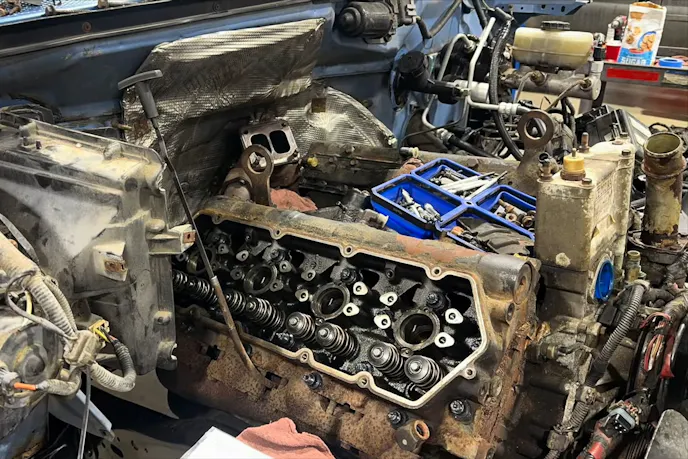
With a healthy, high-mileage engine, he decided to trust the existing seal rather than open a can of worms. “This particular truck back behind us has 326,000 miles on it. It does not have a head gasket problem and we are going to be reusing the seasoned head gasket that is on this engine,” he explained. The process started with organizing the hardware, specifically separating the shorter studs destined for the intake manifold side from the longer ones used elsewhere.
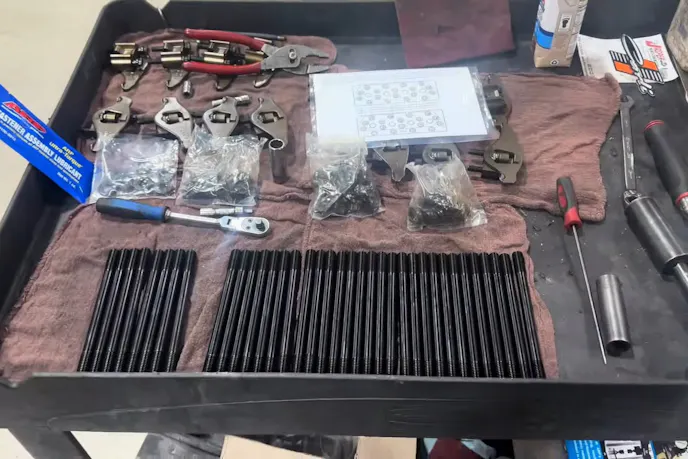
Installing ARP Head Studs For Power Strokes
Cleanliness is non-negotiable here. After removing a single factory bolt, Cody flushed the hole with brake cleaner and compressed air to remove any fluid that could hydro-lock the stud. He threaded the new stud in by hand, then backed it off 90 degrees to prevent bottoming out. Once he lubricated the washer and nut, he applied the first round of pressure. “Like I said, our first torque is going to be to 100 lb-ft, that’s pretty close to the factory spec for the bolt and that’s why we’re doing that so we don’t disturb the gasket on the first torque sequence,” he noted. He repeated this precise process for every single bolt location before moving on to the final tightening sequence for these ARP head studs for Power Strokes.
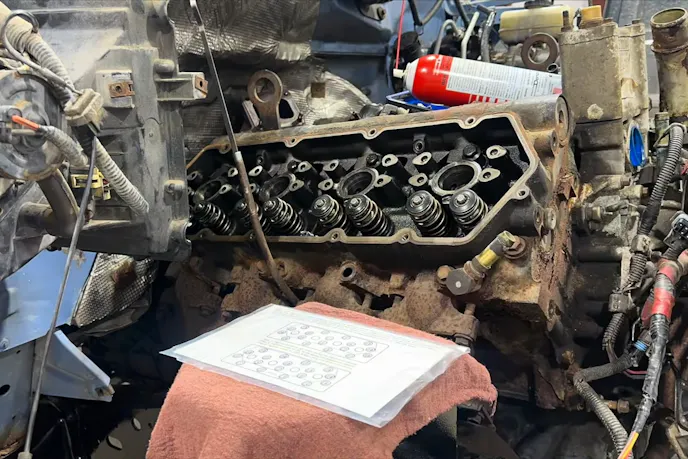
The Final Torque Sequence
With every bolt swapped individually to maintain constant pressure, the real clamping force began. Cody stepped the torque up to 115 lb-ft before finishing with a final pass at 125 lb-ft, utilizing a specific spiral sequence to spread the load evenly. The job required some minor modifications, including removing a barb fitting for clearance and cutting the airbox to access the rear cylinder studs. “That’s the process and that’s the method that I have used with success,” Cody stated after wrapping up the passenger side.
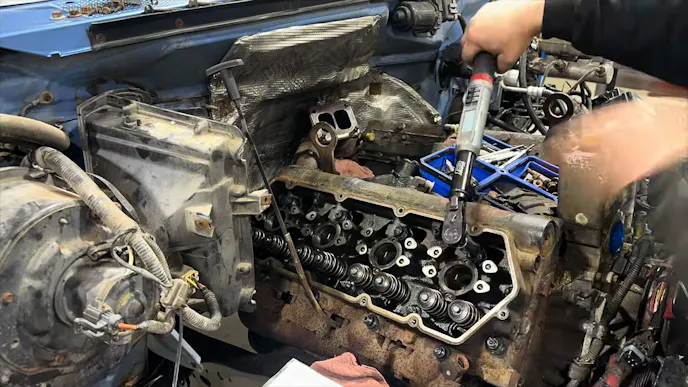
A Stronger Foundation For Boost
This tedious but effective method reinforces the 7.3-liter block without the massive labor of a cylinder head removal. By carefully managing the torque sequence, the engine is now ready to handle the stress of bigger injectors and more boost. It proves that with patience and the right technique, DIY builders can upgrade these legendary engines to handle modern power levels while keeping the bottom end sealed tight.
You might also like
Why Ford Might Skip The 8.0-Liter Power Stroke Diesel For A Hybrid
Ford's 2027 Super Duty order guide puts 8.0-Liter Power Stroke Diesel rumors to rest. A 7.3L gas hybrid makes far more sense for 2028.