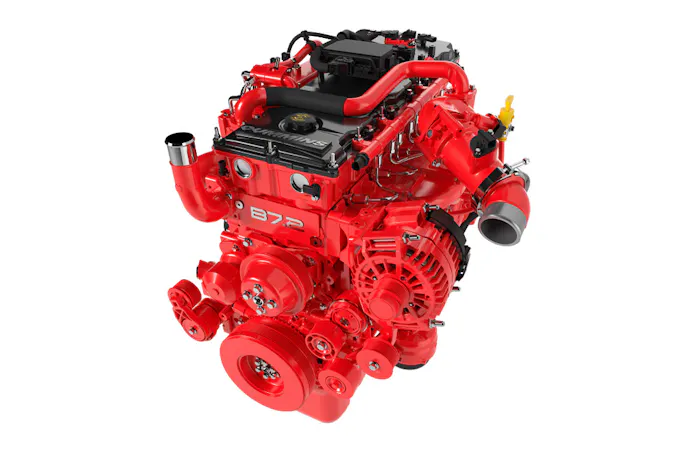
When Cummins unveiled a new 7.2-liter (B7.2) diesel on March 5, 2025, at Work Truck Week, it immediately set the diesel world buzzing. A larger-displacement inline-six built on the stout B-series platform, rated for up to 340 horsepower and a massive 1,000 lb-ft of torque, naturally caught the attention of Ram owners.
The big question followed almost instantly: Is this 7.2-liter engine going to replace the 6.7-liter Cummins in Ram Heavy Duty pickups? The answer is: maybe. Of course, the B7.2 itself is probably not headed straight into a pickup, but it reveals far more than many people realize about where Cummins—and Ram—are going next.
Why The Cummins B7.2 Probably Isn’t A Pickup Engine
Cummins has positioned the B7.2 squarely in the medium-duty and vocational space. It’s designed for box trucks, buses, RVs, and commercial chassis, and its feature set reflects that mission. EPA 2027 certification at launch, automatic stop-start capability, extended oil drain intervals, and optional Jacobs compression braking all make perfect sense for fleets focused on uptime and total cost of ownership.
There are also physical realities working against a direct pickup application. The B7.2 weighs roughly 1,350 pounds dry and more than 1,600 pounds with aftertreatment installed. That extra mass, combined with a larger emissions system and a belt-driven high-output 48-volt alternator, would require significant changes to cooling, packaging, and chassis design in a consumer pickup.
Why So Many Believe A New Cummins For Ram Is Coming
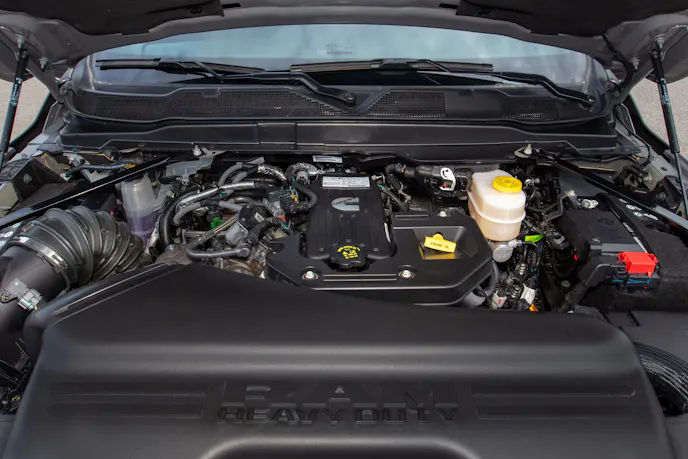
Even if the B7.2 isn’t the direct replacement, there are strong reasons enthusiasts believe a new Cummins engine for Ram is inevitable. The current 6.7-liter has been in service for years, and history shows that major emissions shifts almost always force deeper redesigns. EPA 2027 represents one of those moments. Continuing to evolve an older architecture becomes increasingly difficult without sacrificing refinement, durability, or performance.
There’s also competitive pressure. Heavy-duty truck buyers obsess over torque numbers, towing confidence, and long-term reliability. As emissions regulations tighten, diesels are evolving rather than disappearing. Other manufacturers are investing heavily in smarter diesel technology, and Ram can’t afford to stand still.
Why A 7.2-Liter Displacement Makes Sense
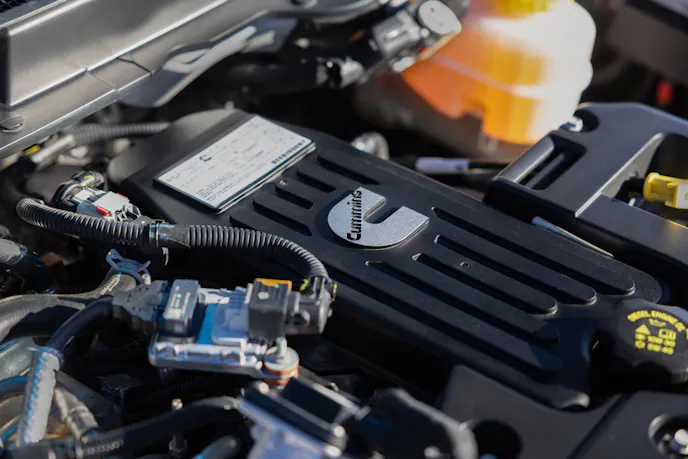
From an engineering standpoint, the move toward a 7.0–7.2-liter inline-six makes a lot of sense in the EPA 2027 era. A slightly larger displacement allows Cummins to produce the same—or greater—torque at lower cylinder pressures, less aggressive fueling, and lower combustion temperatures. That’s exactly what emissions regulators want, and it also helps preserve the durability diesel owners expect.
Rather than pushing a 6.7-liter harder and harder, a larger engine can deliver big torque numbers more smoothly and with less stress. The B7.2 strongly suggests this is the direction Cummins sees as the most sustainable long-term path.
Electrification Is The Quiet Clue
One of the most telling aspects of the B7.2 is its 48-volt architecture. Cummins didn’t add that by accident. Ram already uses 48-volt systems extensively across its gasoline lineup, and mild electrification has become a powerful tool for improving drivability, emissions control, and efficiency.
A future Ram Cummins could quietly use electrification to smooth stop-start operation, improve turbo response, assist emissions warm-up, and reduce parasitic losses—all without changing the fundamental diesel character buyers love. In that context, a 7.2-liter inline-six paired with mild hybrid support starts to look very plausible.
The Most Likely Outcome
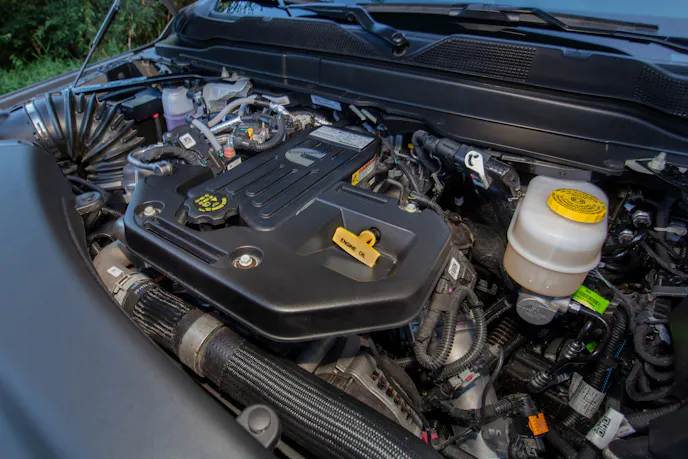
The most realistic scenario isn’t a B7.2 dropped directly into a Ram 2500 or 3500. Instead, expect a pickup-specific Cummins derivative inspired by it. That engine variant would likely be lighter, quieter, and calibrated for consumer duty cycles, while borrowing the B7.2’s displacement philosophy, torque strategy, and future-ready architecture.
This Is A Blueprint
The Cummins B7.2 probably isn’t literally the next Ram diesel. But its timing, technology, and displacement strongly suggest it’s the blueprint. As EPA 2027 approaches and competitive pressure increases, all signs point to a new-generation Cummins for Ram. If the badge on the fender eventually changes from 6.7 to something closer to 7.2, it won’t come as a shock to anyone paying attention.
As for the timing? Ram just announced a 6.7-liter Cummins 2027 Power Wagon, so we know the 6.7-liter will live on into model-year 2027. Considering Ram has made major changes within the same model year before, we may see a higher-displacement 2027.5 Ram Heavy Duty. If not, it’s reasonable to expect movement for model-year 2028.
You might also like
How One Bad Injector Nozzle Can Damage A Diesel Engine. And How Dynomite Diesel Aims To Prevent It.
Dynomite Diesel owner Lenny Read explains why injector nozzle flow, manufacturing, and quality control matter for diesel performance.