Every 6.7-liter Cummins in a 2007.5 through 2024 Ram 2500 or 3500 breathes through the same bottleneck. Bolted between the intake manifold and the cylinder head sits the factory intake heater grid, an electric element that warms incoming air for cold starts. It does that job, but it does it from the middle of the airstream, all the time, whether the morning is subzero or the truck is towing up a grade in August.
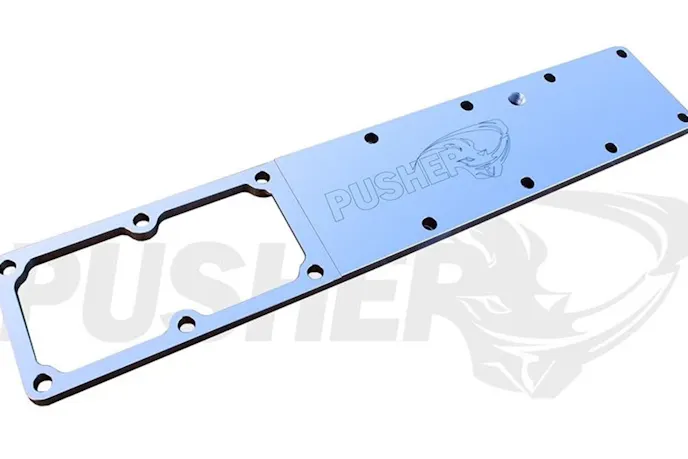
Pusher Intakes has built its reputation on opening up the Cummins air path, and its Heater Grid Replacement (part number PDC0718HGD) goes after the grid directly. The $199.99 part trades the factory assembly for a single CNC-machined plenum cover. The idea is simple. Getting it right, and getting it installed, takes a little more explanation.
A Grid In The Way
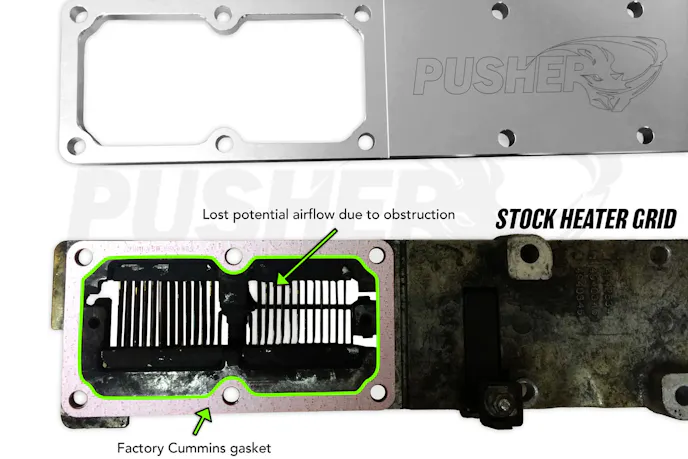
Pull the factory grid and the problem is easy to see. “All this black area is available area for air to come through the plate, but the grid blocks a good portion of that,” a Pusher technician explains in the company’s installation video. The element also hangs below the plate, forcing air bound for cylinders two and three to dive underneath it before it can reach them. “It’s really a very inefficient design,” he says.
Machined For Flow
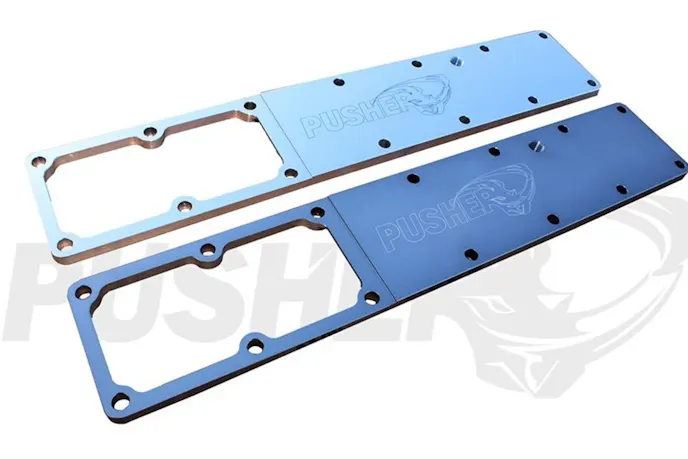
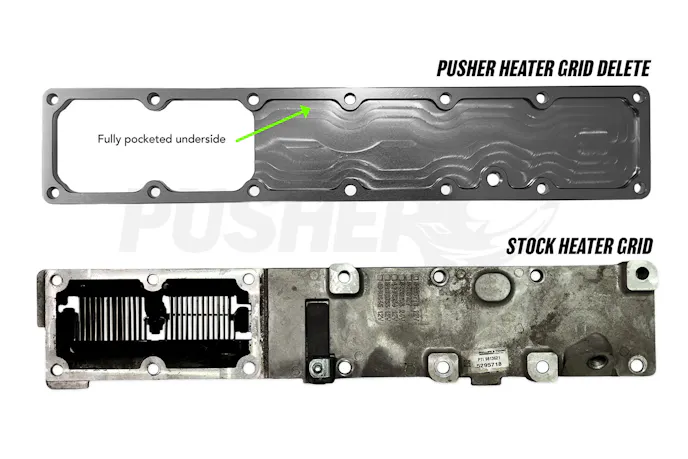
Pusher’s replacement is cut from 6061-T6 aluminum. Its opening is gasket-matched and, in the technician’s words, “as big as it can be,” with the company rating the inlet at 120 percent larger than stock. The underside is fully pocketed to add plenum volume, feeding more air to every cylinder rather than favoring the ones nearest the inlet.
The plate is anodized in bright silver or titanium, and the finish is about more than looks. Heavy degreasers and solvents can turn bare aluminum chalky or milky, while the anodizing keeps the part “looking this way for a really long time.”
The Numbers
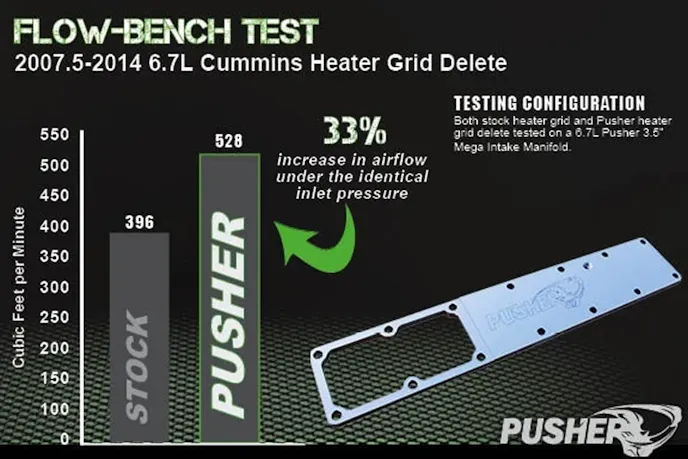
Pusher tested the part on a SuperFlow SF-750 flow bench, and Central Florida Machine & Speed independently verified the results. The baseline was Pusher’s own intake manifold with the factory heater grid bolted to its outlet flange, which flowed 396 cfm. Swapping in the delete plate at the same inlet pressure produced 528 cfm, a gain of roughly one third.
Pusher says owners can expect exhaust gas temperatures to drop 50 to 100 degrees Fahrenheit and fuel economy to rise 0.25 to 0.5 mpg, along with sharper throttle response and faster turbo spool.
On The Bench And Under The Hood
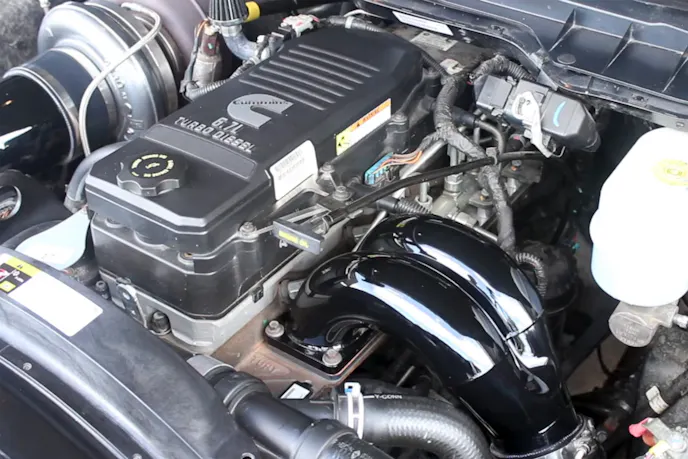
This is not a five-minute bolt-on. Reaching the grid means removing the factory intake manifold, the foam cover on later trucks, all six injector lines, the fuel supply and return lines, and the fuel rail. Pusher’s advice is to lay each line on a cart “in the orientation and position that it came off the truck,” then reinstall from back to front. A 19 mm open-end wrench handles the front lines. For the cramped rear ones, the technician slips a length of thin-wall tube with a 30-degree bend over the wrench for breaker-bar leverage, or reaches for crow’s feet and a ratcheting breaker bar.
With the grid out, the old bolt seals tend to disintegrate into the plenum, so a thorough shop-vac pass comes before reassembly. The new gasket goes on with its extra material at the rear driver-side corner, which maximizes airflow and lets the intake air temperature sensor thread into the plate. Pusher recommends transferring that sensor on the bench. Four supplied aluminum standoffs then center over the rail’s bolt holes, and the fuel rail sits on top of them. On 2013 and newer trucks the sensor’s harness branch is short, so the technician frees about three inches of wire from its corrugated loom before the injector lines go back on. One customer reviewer put the whole job at about two hours.
Building On It
Pusher’s demonstration truck went back together with the company’s 3.5-inch MEGA intake manifold, which the technician says is “good for right at 50 percent more flow than the factory one,” plus a 3.5-inch driver-side charge tube. Together they open up the entire driver side of the charge system. His verdict on the finished truck: “This thing’s gonna run a lot better, a lot cooler.”
You might also like
Is Your Diesel Running Dirty? Cataclean May Be The Answer
Discover how Holley's Cataclean Diesel helps reduce carbon buildup, clean DPFs, and maintain diesel performance and emissions efficiency.