When enthusiasts start talking about airflow upgrades, the conversation almost always revolves around one thing: bigger. Bigger tubing, larger intercooler pipes, larger intake openings, and more overall volume are often viewed as the keys to making more power.
While size certainly matters, it tells only part of the story.
The shape of the airflow path can be every bit as important as the amount of air an intake system is capable of moving. Whether you’re building a high-horsepower competition truck or simply looking for a more efficient daily driver, understanding how air behaves inside an engine can help explain why some aftermarket components outperform others—even when they appear similar on paper.
We sat down with the experts at Pusher Intakes and had them walk us through this very important, and often misunderstood, topic.
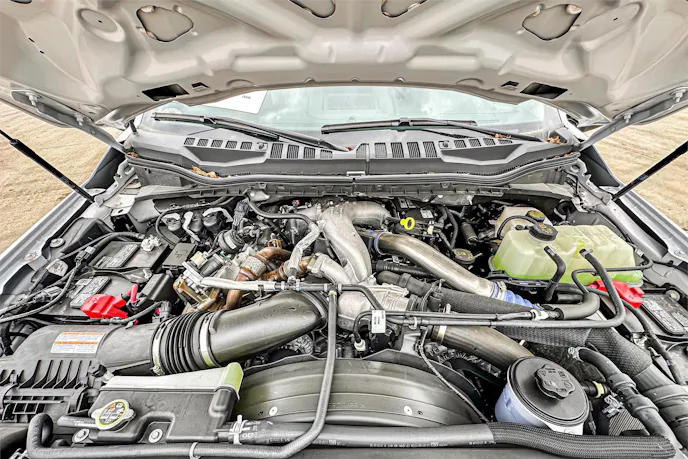
Following The Path Of Least Resistance
One of the easiest ways to visualize airflow is to imagine riding down a water slide. A long, smooth, sweeping slide allows you to carry speed and momentum with very little interruption. Introduce a sharp 90-degree turn, however, and everything changes. The abrupt transition scrubs away momentum, forcing a dramatic change in direction before you can continue.
Air doesn’t behave exactly like water, but the comparison illustrates a fundamental engineering principle.
Whenever airflow encounters sudden turns, abrupt transitions, or dead-end style passages, it becomes increasingly turbulent. Instead of flowing smoothly through the intake tract, the air loses efficiency as energy is spent changing direction rather than continuing toward the combustion chambers.
For a turbocharged diesel engine that depends on moving large volumes of air as efficiently as possible, minimizing unnecessary turbulence can play an important role in overall system performance.
Why Intake Manifold Geometry Matters
This is where intake manifold design becomes far more than just a packaging exercise.
Inside many V8 diesel engines, incoming charge air must divide evenly between two cylinder banks. How that air is split has a direct impact on how smoothly it reaches each bank of cylinders.
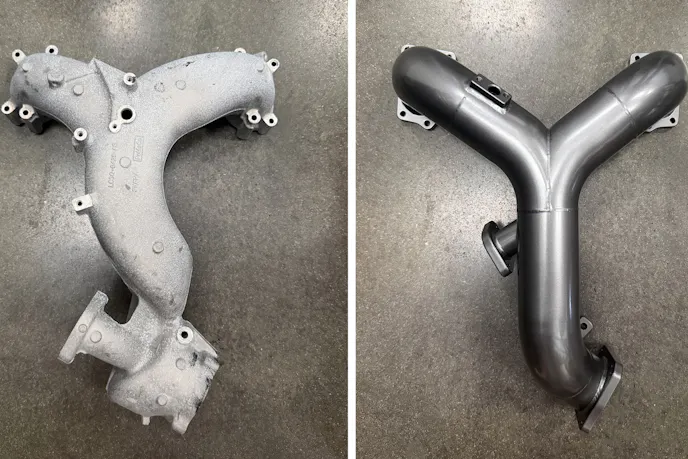
A traditional T-style manifold provides a relatively simple layout, but it asks airflow to make a much sharper directional change as it divides between the two banks. A smoother Y-style transition, on the other hand, gives the incoming air a more gradual path, reducing harsh directional changes while promoting more efficient distribution throughout the manifold.
While every intake design involves engineering compromises, smoother transitions generally help maintain airflow velocity and reduce turbulence, allowing the air to move through the system with fewer disruptions.
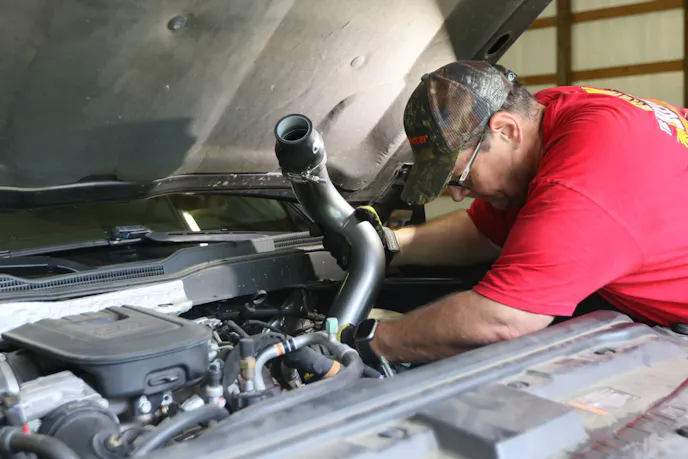
Bigger Isn’t Always Better
Volume remains an important part of the equation, but it shouldn’t be viewed in isolation.
Think about breathing through a drinking straw versus breathing through a snorkel. Both allow air to pass, but one requires considerably more effort to move the same amount of air. The larger passage simply offers less restriction.
The same principle applies to engine airflow. Restrictive passages can limit an engine’s ability to breathe efficiently, particularly as horsepower and airflow demands increase. However, simply enlarging every passage isn’t a guaranteed solution.
An oversized component with poor internal geometry may still create unnecessary turbulence and uneven airflow. A truly effective upgrade balances sufficient volume with carefully engineered transitions that allow air to change direction naturally as it travels through the intake system.
Understanding OEM Compromises
Many truck owners assume that factory components represent the optimal engineering solution. In reality, original equipment manufacturers must satisfy a long list of design requirements that extend well beyond maximizing airflow.
Engine bay packaging, production costs, manufacturing methods, emissions compliance, durability targets, serviceability, noise reduction, and assembly-line efficiency all influence the final design. Those constraints don’t mean OEM intake systems are poorly engineered—they’re often exceptionally well designed for their intended purpose—but they do mean airflow optimization is only one factor among many.
For enthusiasts who prioritize performance, towing capability, or future power upgrades, those factory compromises can create opportunities for aftermarket improvements that place airflow much higher on the list of priorities.
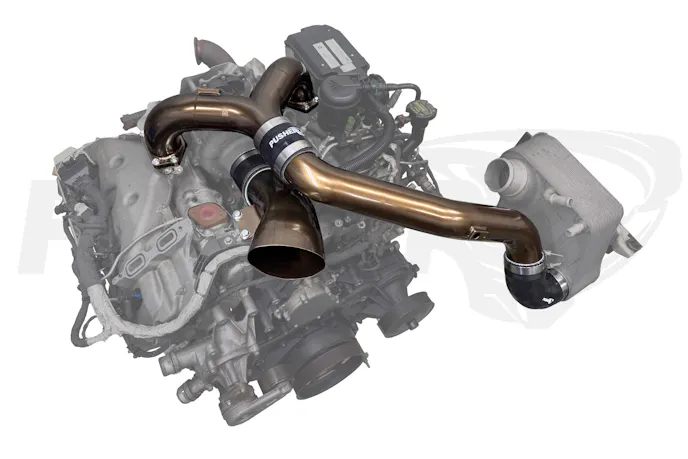
Engineering Airflow For The 6.7L Power Stroke
Those principles aren’t merely theoretical—they form the foundation of how companies such as Pusher Intakes approach product development.
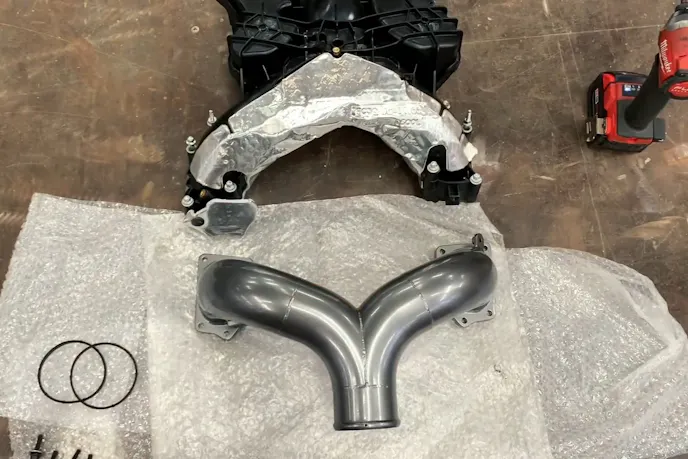
Rather than simply producing a larger replacement intake manifold for the 6.7-liter Power Stroke, Pusher designed its system around airflow efficiency. Central to that philosophy is a smooth Y-style manifold layout intended to provide a more natural path as air is divided between the engine’s cylinder banks, reducing abrupt transitions throughout the intake tract.
Instead of focusing exclusively on larger dimensions, the company emphasizes how air actually moves through the system. That design philosophy prioritizes efficient airflow, quality construction, and practical real-world performance rather than relying solely on impressive specifications.
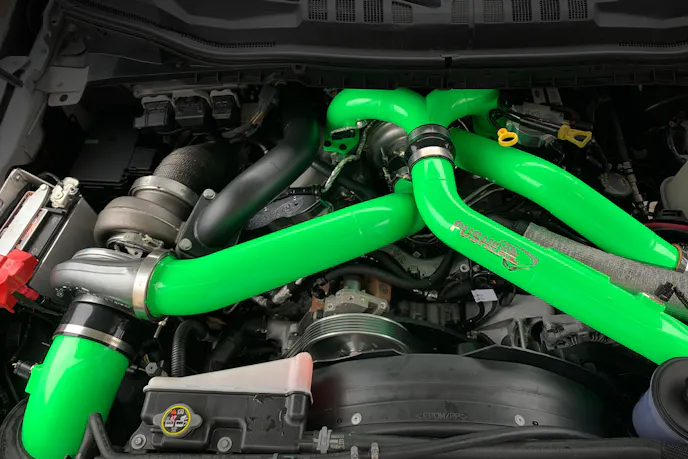
Beyond Performance
Engineering doesn’t stop once airflow calculations are complete. Pusher has built a reputation within the diesel aftermarket by paying close attention to installation quality and long-term ownership. The company’s products are designed and manufactured in Southeast Florida, with careful attention given to fitment, flange design, fabrication quality, durability, and customer support after the sale.
Those details often determine whether an aftermarket component simply looks impressive in a catalog or installs cleanly, performs consistently, and withstands years of demanding service.
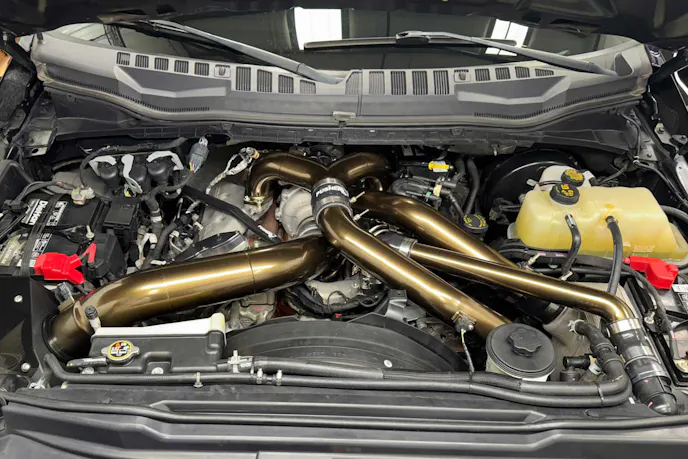
Looking Beyond The Spec Sheet
For 6.7-liter Power Stroke owners considering intake upgrades, the takeaway is straightforward.
Don’t evaluate an intake system based solely on its size. Consider the entire airflow path. Examine how air enters the system, how smoothly it changes direction, how evenly it distributes through the manifold, and whether the overall design supports efficient airflow from beginning to end.
The most effective airflow upgrades combine adequate volume with thoughtful engineering, creating a complete system rather than simply replacing one restrictive component with a larger one.
That philosophy defines Pusher’s approach to its 6.7-liter Power Stroke lineup. Rather than focusing exclusively on making individual components larger, the company has concentrated on building a smarter airflow path—one engineered to help air move more efficiently from the turbocharger to the cylinders, one transition at a time.
You might also like
Grind Hard Diesel Swapped The World's Cheapest Electric Car!
Grind Hard Plumbing Co. built a turbodiesel electric car. The modified Chang Li hit the dirt trails with a new 420cc engine.