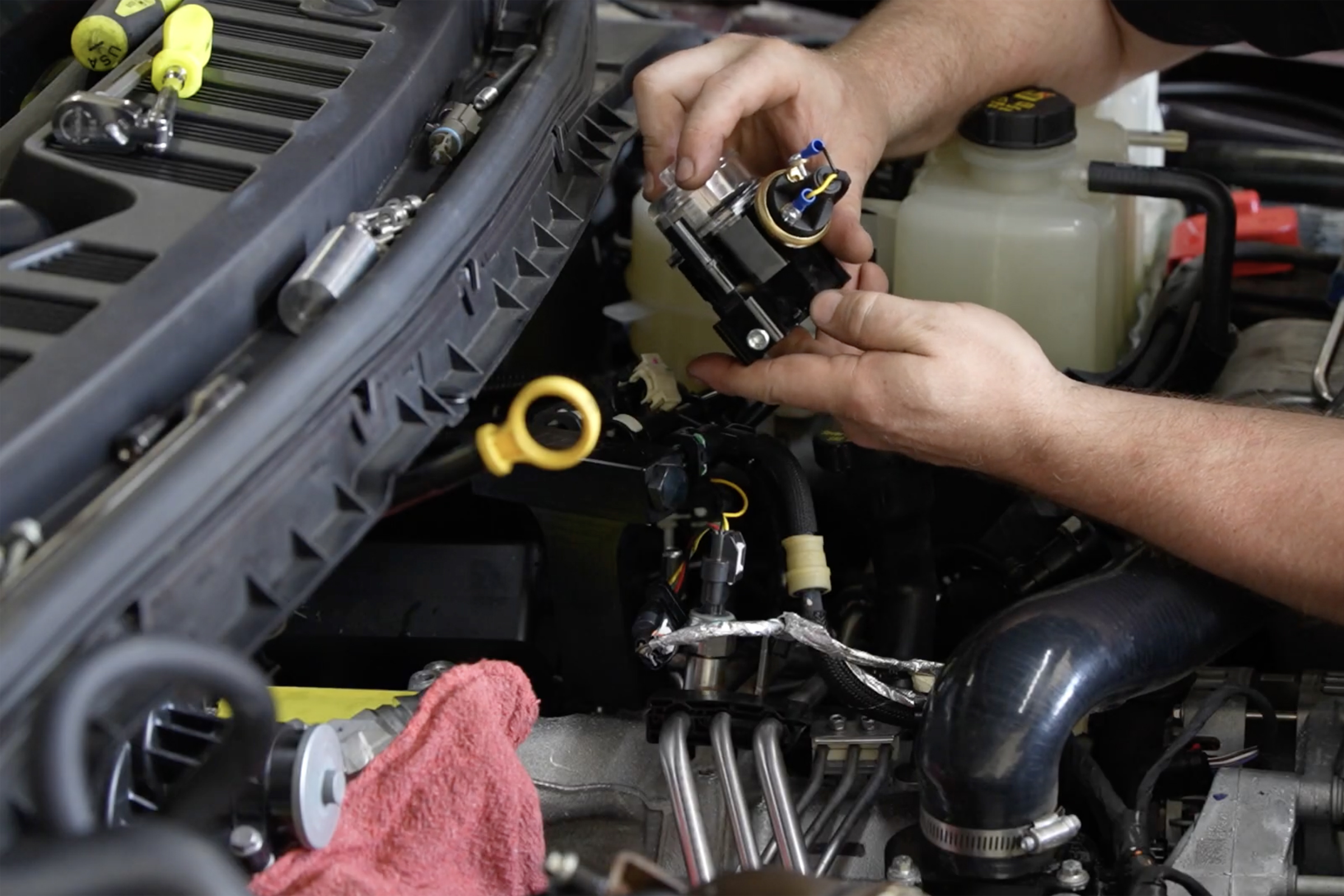
If you’ve spent any time around the 6.7-liter Power Stroke platform, you already know the CP4 high-pressure fuel pump has a reputation—and not a good one. When it fails, it doesn’t just fail quietly. It can send metal debris throughout the entire fuel system, contaminating injectors, rails, and lines in seconds. The result is often a catastrophic repair bill that can easily climb into five figures. That’s the exact problem SPE Motorsport set out to solve with its Disaster Prevention Kit (DPK).
Why The 6.7 Power Stroke Needs A Disaster Prevention Kit
To understand the value of the DPK, you first have to understand the failure mode of the CP4 pump. In its factory configuration, fuel enters the pump and fills the crankcase, lubricating internal components before being routed upward to the metering valve (also called the MPROP or volume control valve). From there, fuel is sent to the high-pressure pump heads and ultimately to the injectors.
The issue is simple but devastating: if the pump begins to fail internally—whether from bearing damage, roller wear, or contamination—that debris is immediately carried with the fuel through the metering valve and straight into the injectors.
That means a single point of failure can take out the entire fuel system.
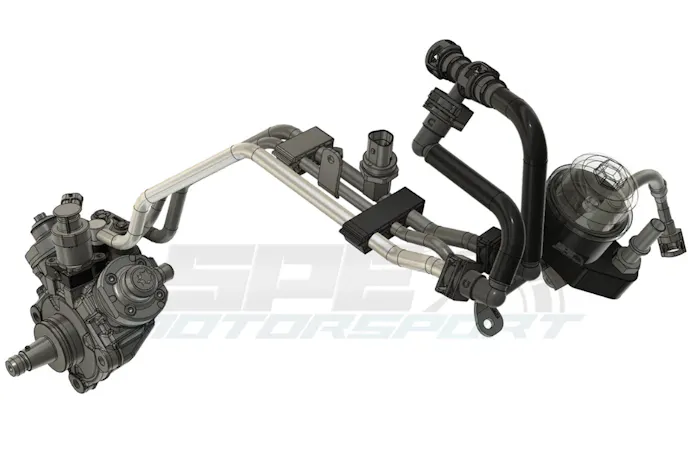
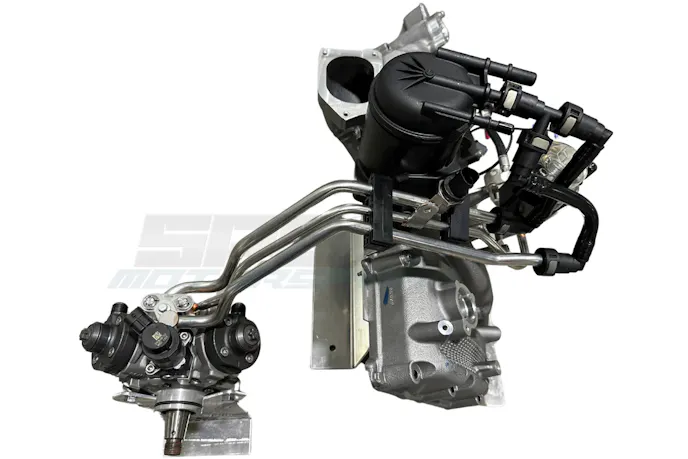
SPE’s solution changes the path of fuel delivery in a fundamental way. Instead of allowing crankcase fuel to feed the high-pressure side, the system introduces a secondary, clean fuel feed directly from the filter to the metering valve. Meanwhile, the factory feed is retained solely for lubrication of the pump’s internal components.
The result is a critical separation: if the CP4 fails, contaminated fuel is effectively isolated within the pump and return system, preventing it from ever reaching the injectors. In real-world terms, that can mean replacing a pump instead of an entire fuel system—a massive difference in both cost and downtime.
The Evolution To Version 2.0
The original SPE Disaster Prevention Kit broke new ground, but Version 2.0 is a clear example of what happens when a company listens to its customers and refines every detail.
One of the biggest areas of improvement comes from simplification. The Gen 1 kit relied on threaded NPT fittings, sealing compounds, crush washers, and multiple connection points. While functional, these added complexity during installation and introduced additional potential failure points.
Version 2.0 eliminates those concerns almost entirely.
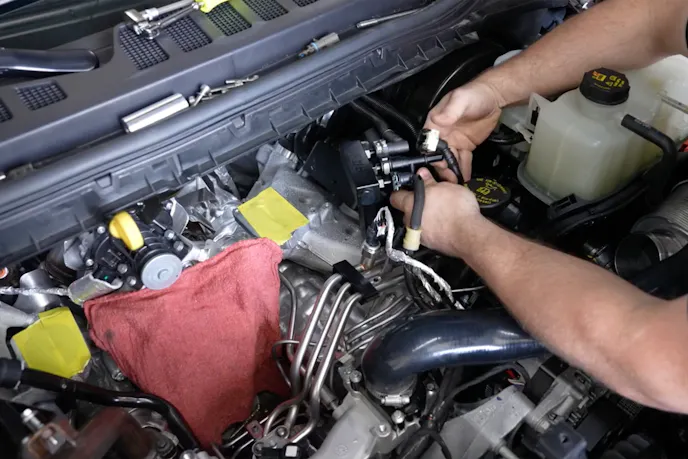
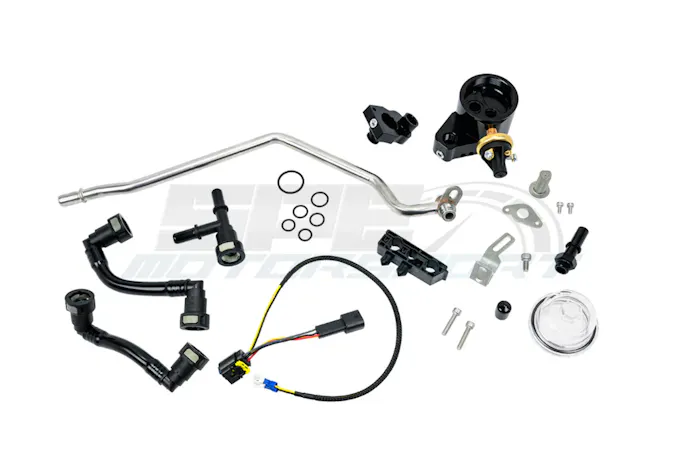
SPE redesigned the system with OEM-style engineering in mind. Threaded fittings are gone, replaced by O-ringed connections and hard lines that mirror factory construction. The new design uses precision-formed hard lines that integrate directly with the system and are secured using factory mounting points and hardware.
This new approach cleans up the installation, reduces leak potential, shortens install time, and creates a system that looks and behaves like it could have come from Ford itself.
Engineering Without Compromise
Beyond ease of installation, SPE addressed one of the more subtle but critical concerns in the aftermarket: flow restriction.
In many competing designs, the internal passages feeding the metering valve can become a bottleneck, potentially affecting fuel delivery and rail pressure. SPE tackled this head-on by ensuring that every passage in the system—including the MPROP adapter and feed line—matches the internal diameter of the factory fuel line.
The system also incorporates factory-style nylon quick-connect lines and a purpose-built three-line clamp that organizes the plumbing cleanly and securely.
A Smarter Approach To Contamination Control
One of the defining features of SPE’s original kit was its return-side filtration system, and Version 2.0 takes that concept even further.
When a CP4 fails, debris doesn’t just threaten injectors—it can also circulate back to the fuel tank through the return system. That contamination can re-enter the system and continue causing damage.
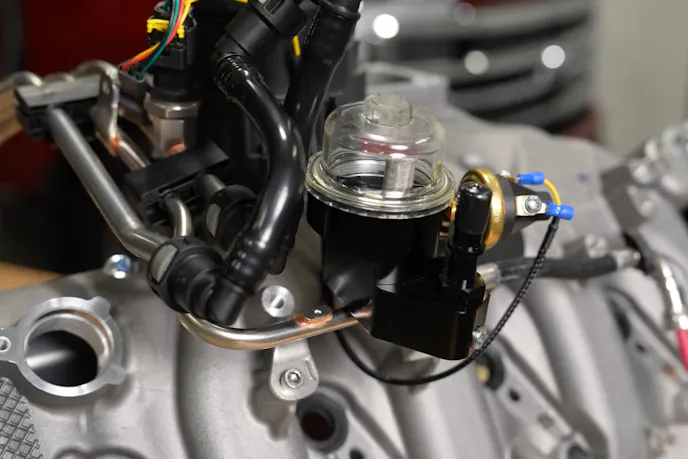
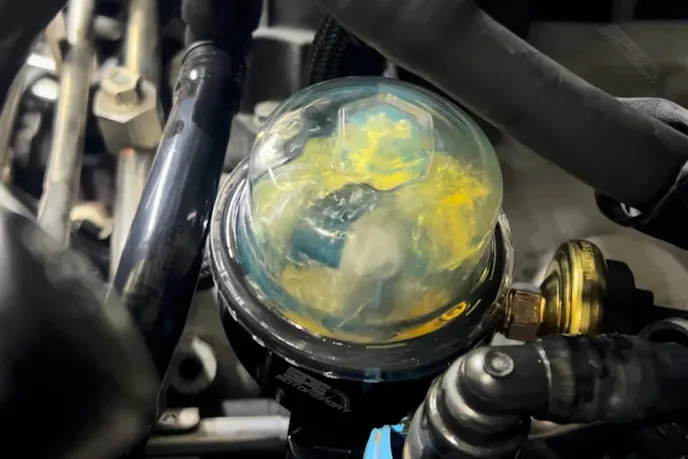
SPE’s solution is a reusable, screen-based return filter designed to capture debris before it makes its way back to the tank. Unlike disposable, paper-based filters used in some competing systems, this screen is not a maintenance item. It can be cleaned and reused, eliminating recurring replacement costs while still providing effective filtration.
But the real innovation lies in visibility and feedback.
The redesigned filter housing allows users to visually inspect fuel condition without disassembly—an immediate diagnostic advantage. And for the first time, SPE has integrated a contamination detection system that actively alerts the driver if an issue develops.
Using a pressure-based sensor tied into the factory fuel pressure system, the kit can detect when the filter begins to clog from debris. When that happens, it triggers a warning through the truck’s existing electronics.
Designed Like The Factory Should Have Done It
Perhaps the most compelling aspect of the Disaster Prevention Kit 2.0 is the philosophy behind it.
SPE didn’t just set out to build an aftermarket fix—they approached the design as if they were the OEM correcting a known issue. That mindset is evident everywhere, from the use of factory hardware and mounting points to the elimination of unnecessary components and the integration of clean, durable materials.
Installation reflects that same thinking. With fewer connections, no sealants, and factory-style routing, the kit significantly reduces install time while improving reliability.
Even the return system has been reworked to avoid cutting or modifying factory fuel lines. Everything is designed to bolt on cleanly, using O-ring seals and direct-fit components that maintain the integrity of the original system.
What Sets SPE Motorsport Apart
In a market that now includes several CP4 “disaster prevention” solutions, SPE Motorsport continues to distinguish itself through a combination of innovation, refinement, and attention to detail.
They were first to market with a return filtration system, addressing a critical oversight even in OEM repair kits. They avoided disposable filters in favor of a reusable design that prioritizes long-term ownership costs. And with Version 2.0, they’ve added real-time contamination detection—something no competitor had previously offered.
Just as importantly, SPE has demonstrated a willingness to evolve. Customer feedback directly influenced the redesign, leading to a cleaner, more reliable, and more intuitive product. That iterative approach—combined with a clear focus on OEM-level engineering—positions the DPK 2.0 as a maturation of the concept itself.
The Bottom Line
It would appear that the CP4 pump isn’t going away anytime soon, and neither is the risk associated with it. For 6.7-liter Power Stroke owners, the question isn’t whether the failure mode exists—it’s how you plan to mitigate it.
SPE Motorsport’s Disaster Prevention Kit 2.0 offers a comprehensive answer. By isolating contamination, improving system design, and adding intelligent monitoring, it transforms a known weak point into a manageable risk.
You might also like
Why Ford Might Skip The 8.0-Liter Power Stroke Diesel For A Hybrid
Ford's 2027 Super Duty order guide puts 8.0-Liter Power Stroke Diesel rumors to rest. A 7.3L gas hybrid makes far more sense for 2028.