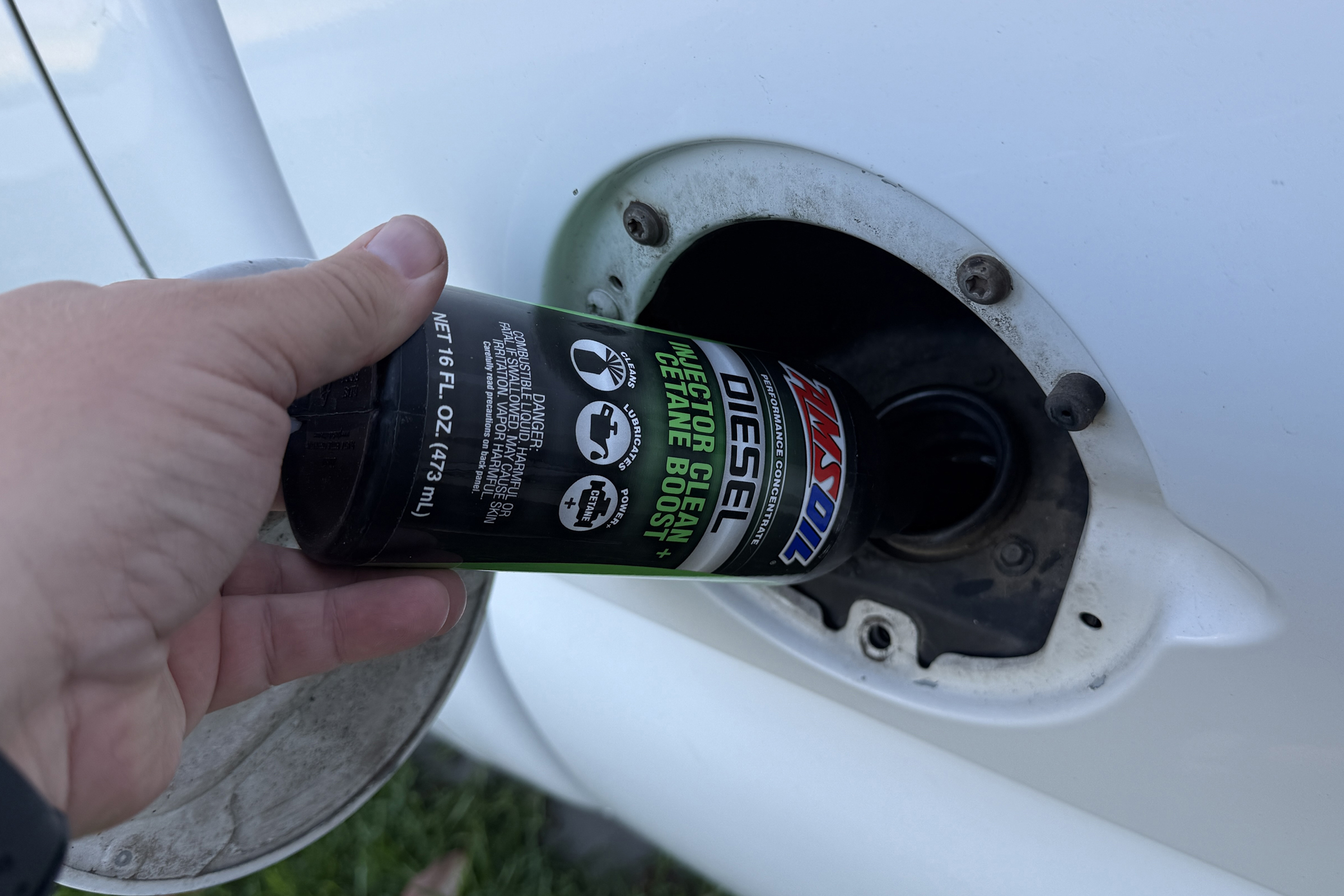
Modern diesel engines are marvels of precision. With injection pressures that can exceed 30,000 psi and tolerances measured in microns, today’s high-pressure common-rail (HPCR) systems demand a level of fuel quality that simply didn’t exist a generation ago. At the same time, the fuel itself has changed—dramatically.
The result is a widening gap between what diesel engines need and what pump diesel delivers. That gap is exactly where fuel additives come in.

The ULSD Trade-Off: Cleaner Emissions, Compromised Protection
The biggest shift in diesel fuel over the past two decades came with the introduction of ultra-low-sulfur diesel (ULSD). Driven by emissions regulations, sulfur content dropped from as high as 5,000 parts per million (ppm) to just 15 ppm. This change enabled modern emissions systems like diesel particulate filters (DPFs) to function effectively, significantly reducing harmful exhaust output.
However, the refining process that removes sulfur also strips out naturally occurring compounds responsible for fuel lubricity. While sulfur itself was not the lubricant, the associated compounds removed during desulfurization played a critical role in protecting fuel system components. Industry standards such as ASTM D975 still require a minimum level of lubricity, but that minimum does not meet the higher threshold recommended by the Engine Manufacturers Association (EMA) for optimal durability.
In practical terms, modern diesel fuel is significantly “drier” than what many fuel systems were originally designed around.
Why Lubricity Matters More Than Ever
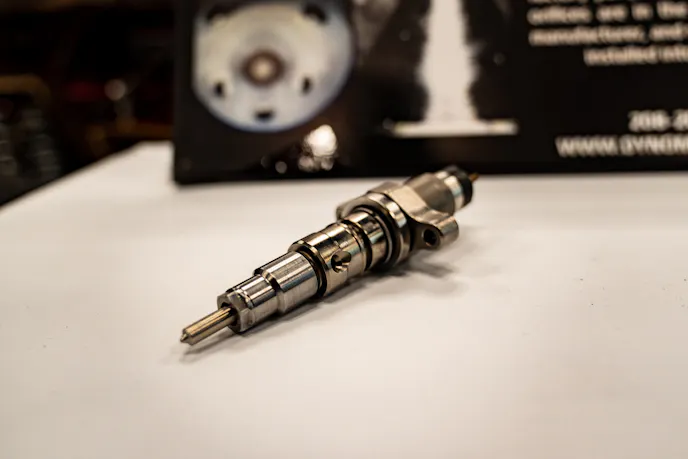
This loss of lubricity is especially critical in high-pressure common-rail systems. These engines rely on extremely precise fuel delivery, using ultra-high-pressure pumps and injectors with microscopic internal clearances. Without sufficient lubrication, metal-on-metal contact increases, accelerating wear in pumps and injectors.
As wear progresses, injectors can no longer maintain an optimal spray pattern. Instead of a fine, controlled mist, fuel delivery becomes inconsistent, leading to incomplete combustion. The consequences are noticeable, including reduced power, lower fuel economy, increased emissions, and in severe cases, costly component failure.
Modern diesel engines, by design, are less tolerant of marginal fuel quality than older mechanical systems, making lubricity a critical factor in long-term reliability.
Deposits, Combustion, And The Efficiency Equation
Beyond lubrication, deposit formation presents another major challenge. As diesel fuel moves through the system and into the combustion chamber, it leaves behind carbon deposits, particularly in high-temperature, high-pressure environments. Over time, these deposits accumulate on injector nozzles and internal components, restricting fuel flow and altering spray patterns.
Even small disruptions in atomization can have a significant impact on combustion efficiency. Poor combustion leads to increased soot production, which places additional strain on emissions systems like the DPF. This can result in more frequent regeneration cycles, reduced efficiency, and increased maintenance demands.

Cold Weather: Another Weak Link
Diesel fuel also faces inherent limitations in cold weather. As temperatures drop, paraffin wax naturally present in diesel begins to crystallize. This process starts with fuel clouding and can progress to filter plugging and eventually complete fuel gelling.
For diesel owners operating in colder climates, this can prevent engines from starting altogether or cause sudden power loss during operation, making cold-flow performance a critical consideration.

The Role Of Additives: Restoring What Fuel Lost
Diesel additives exist primarily to restore the properties lost during refining and to compensate for real-world fuel variability. Rather than simply enhancing fuel, they address specific shortcomings in modern diesel formulations.
A properly formulated additive can improve lubricity to protect critical components, clean injectors to maintain proper spray patterns, and enhance cetane levels to promote more efficient combustion. It can also prevent fuel gelling in cold conditions and help reduce emissions by supporting a cleaner burn.
Given the variability in fuel quality depending on source, storage conditions, and seasonal formulation, additives also provide a level of consistency that pump diesel alone cannot guarantee.
AMSOIL’s Approach: Targeted Solutions For Modern Diesel
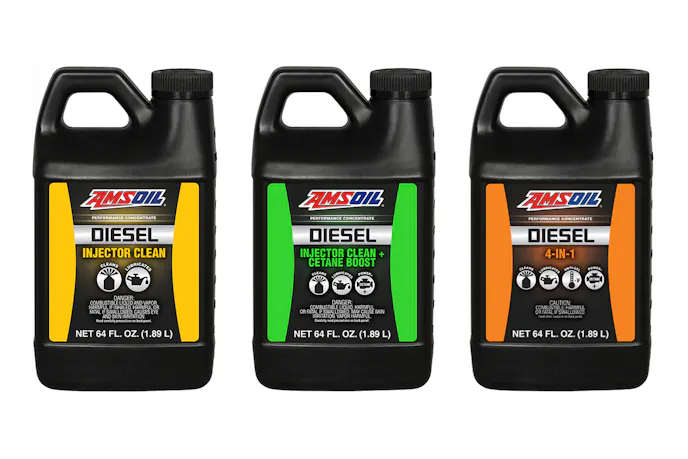
Recognizing the challenges posed by ULSD and the increasing demands of modern diesel engines, AMSOIL has developed a range of additives designed to directly address these issues. Each product targets specific aspects of fuel performance, allowing users to tailor their approach based on operating conditions and engine needs.
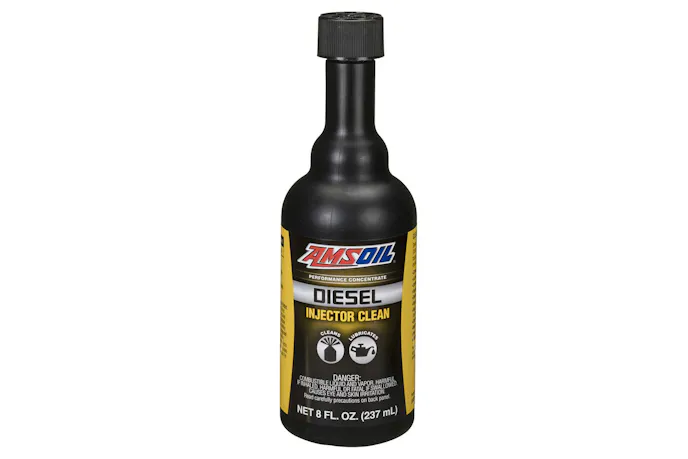
Diesel Injector Clean
Injector performance sits at the heart of diesel efficiency, and AMSOIL Diesel Injector Clean is formulated to restore and maintain that performance. Its concentrated chemistry works to increase fuel lubricity, reducing wear on both fuel pumps and injectors while actively removing deposits from injector nozzles, combustion chambers, and internal injector components.
By restoring proper spray patterns and improving atomization, the additive helps maximize combustion efficiency. This translates to measurable gains in both horsepower and fuel economy, with improvements of up to eight percent possible under certain conditions.
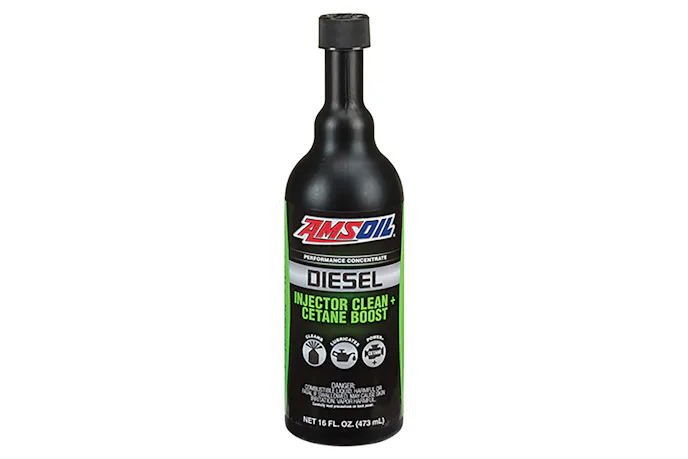
Diesel Injector Clean + Cetane Boost
For applications where improved combustion quality is just as important as cleanliness, AMSOIL offers a combined solution that pairs injector cleaning with cetane enhancement. This formulation retains the strong deposit-removal capabilities of Diesel Injector Clean while introducing cetane-boosting chemistry that promotes faster, more complete ignition.
The result is smoother engine operation, reduced smoke and emissions, and improved drivability, particularly in engines that experience rough idle or hard starting. By refining the combustion process, it helps engines operate more efficiently across a wider range of conditions.
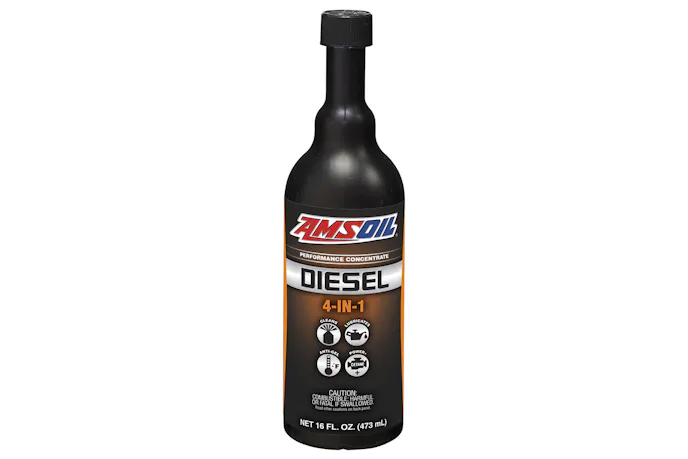
Diesel 4-in-1: The Comprehensive Package
For those seeking a single, all-encompassing solution, AMSOIL Diesel 4-in-1 integrates multiple additive functions into one formulation. It combines injector-cleaning detergents, cetane enhancement, cold-flow improvers, and lubricity agents into a unified package designed for year-round use.
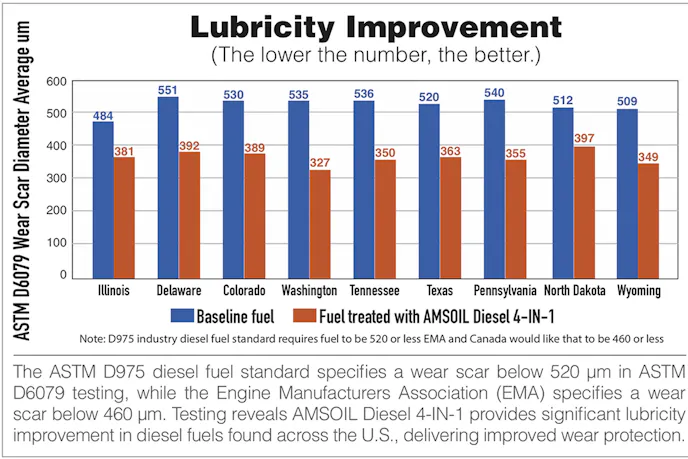
This approach addresses not only deposit control and combustion efficiency but also cold-weather performance and long-term component protection. Diesel 4-in-1 has been independently tested using ASTM D6079 standards, demonstrating its ability to improve fuel lubricity and protect against injector wear, two of the most critical concerns in modern diesel systems.
The Bottom Line: A Necessary Evolution
Diesel fuel has evolved significantly in response to emissions regulations, but those changes have introduced new challenges for engine durability and performance. Ultra-low-sulfur diesel supports cleaner exhaust systems but lacks the natural lubricity that fuel systems depend on. At the same time, modern engines have become more precise and less forgiving, amplifying the impact of even minor fuel deficiencies.
Fuel additives have emerged as a practical solution to these challenges, bridging the gap between minimum fuel standards and optimal engine performance. For diesel owners, whether running a daily driver, a tow rig, or a dedicated off-road machine, additives are no longer just a performance upgrade. They have become an essential tool for maintaining reliability, efficiency, and longevity in an increasingly demanding environment.
You might also like
Why Ford Might Skip The 8.0-Liter Power Stroke Diesel For A Hybrid
Ford's 2027 Super Duty order guide puts 8.0-Liter Power Stroke Diesel rumors to rest. A 7.3L gas hybrid makes far more sense for 2028.